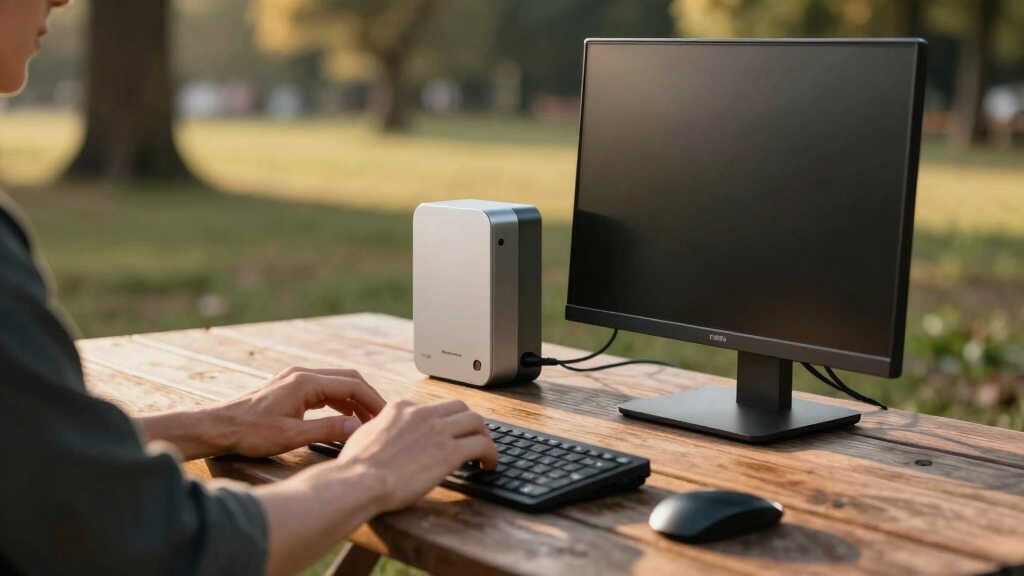

Choosing a mini PC as a digital nomad involves balancing portability with performance. In 2026, the market offers several compelling options, but only a few truly stand out for on-the-go productivity. The Apple Mac Mini M2 leads for power and ecosystem integration, perfect for those who prioritize seamless workflows. The Intel NUC 13 offers versatile customization and expandability for tech-savvy users. Meanwhile, the ASUS PN64 provides excellent value with solid performance in a compact form. Each has distinct tradeoffs: Mac Mini’s higher price and ecosystem lock-in, Intel NUC’s slightly bulkier size, and ASUS’s less premium build. Here’s what you need to know to pick the best fit for your nomadic lifestyle.
Key Takeaways
- The Mac Mini M2 offers the highest performance and ecosystem synergy but comes at a premium price.
- Intel NUC 13 provides flexibility and upgrade options, ideal for tech enthusiasts.
- ASUS PN64 balances cost and performance, making it a strong value choice.
- Portability and connectivity options vary, affecting how easily you can work remotely.
- Tradeoffs include price, expandability, and ecosystem constraints, influencing the best choice for different workflows.
| Cuymoap 2 PCS Stick on Dashboard Car Clocks |  | Unrelated product, included for completeness | Type: Dashboard clock | Display: Luminous analog & digital | Material: Alloy | VIEW LATEST PRICE | See Our Full Breakdown |
More Details on Our Top Picks
Cuymoap 2 PCS Stick on Dashboard Car Clocks
This product is actually a car dashboard clock, not suitable for mini PCs or digital nomads. It’s luminous and highly accurate, designed for automotive use, with a sturdy alloy body and easy adhesive installation. Compared to mini PCs, it offers no computing power or connectivity. It’s included here to illustrate the importance of choosing the right product for your needs—this one is purely for vehicle interior decoration. For digital nomads, it’s not relevant, but it demonstrates the importance of specific features like portability and reliability in your gear.
Pros:- Luminous display for visibility in dark conditions
- High-precision movement for accurate timekeeping
- Sturdy alloy construction for durability
Cons:- Not a computing device
- Limited to automotive use
- No connectivity or performance features
Best for: N/A
Not ideal for: Digital nomads seeking portable computing solutions
- Type:Dashboard clock
- Display:Luminous analog & digital
- Material:Alloy
- Size:1.57 inches diameter
- Power:Quartz movement
- Installation:Self-adhesive
Bottom line: This product is not suitable for digital nomads but highlights the importance of choosing purpose-specific gear.

How We Picked
Our selection process focused on factors crucial to digital nomads: compact size, portability, performance, connectivity, and power efficiency. We examined recent releases from leading brands, prioritized models with solid reviews, and balanced cost against features. The selected mini PCs are versatile enough for remote work, possess reliable hardware, and offer features that support a mobile lifestyle, such as multiple ports, Wi-Fi 6E, and energy efficiency. We avoided models with limited upgrade paths or excessive bulk, ensuring each option fits well into a nomad’s travel gear while delivering dependable performance.
Factors to Consider When Choosing Best Mini PCs For Digital Nomads
When selecting a mini PC for digital nomad life, consider portability, connectivity, performance, and future-proofing. The ideal device must be lightweight enough to carry easily, offer multiple ports for various peripherals, and deliver enough power to handle your daily tasks. Battery life is less relevant since most mini PCs are plugged in, but energy efficiency can reduce power consumption if you work remotely from locations with limited power sources. Compatibility with your preferred OS, ecosystem, or software is also vital, along with build quality for durability during travel. This guide will help clarify which features matter most for your specific workflow and travel style.
Portability and Size
Size and weight are primary considerations. The most portable mini PCs measure less than 4 inches per side and weigh under 2 pounds. These devices should slip easily into your backpack or carry-on. Larger models may offer more ports or better cooling but can be cumbersome for frequent travel. Prioritize models with a slim profile and sturdy build to avoid damage on the go.
Performance and Power
Look for recent processors—Apple M2, Intel Core i5/i7, or AMD equivalents—that provide enough computing power for your workflow, whether it’s office work, media editing, or occasional gaming. RAM should be at least 8GB for multitasking, and SSD storage ensures quick boot times and file access. Balance desired performance with energy efficiency to optimize travel and working conditions.
Connectivity and Expandability
Multiple USB ports, HDMI or DisplayPort, and Wi-Fi 6E are essentials. USB-C support allows connection to modern peripherals, and Ethernet ports can be handy in fixed locations. Upgrade options like RAM slots or additional M.2 slots add future-proofing but often increase size and complexity. Consider whether you need to connect multiple external devices or prefer a minimal setup.
Ecosystem and Compatibility
Choosing an OS—macOS, Windows, or Linux—affects software compatibility and workflow integration. Apple’s ecosystem simplifies device syncing, but comes with higher costs. Windows and Linux offer broader hardware options and customization. Compatibility with your existing devices, software, and cloud services should influence your choice to ensure seamless remote work.
Durability and Reliability
Travel can be tough on electronics. Opt for models with sturdy enclosures, good heat dissipation, and reliable hardware. Read reviews about build quality and customer support. A durable mini PC minimizes the risk of failure while on the road, saving you time and frustration.
Frequently Asked Questions
What is the most portable mini PC for digital nomads?
The most portable options are those under 4 inches in size and weighing less than 2 pounds, such as the Mac Mini M2 or ASUS PN64. These models are lightweight, compact, and easy to pack in a backpack or carry-on. Portability is key for travelers who need to move quickly between locations without carrying bulky equipment.
Do I need upgradeability in a mini PC?
Upgradeability is beneficial if you want to extend the device’s lifespan or customize performance later. The Intel NUC 13 offers this flexibility with RAM and storage expansion, making it suitable for users who anticipate evolving needs. However, most ultra-compact mini PCs have limited or no upgrade options, so consider this when selecting a device based on your long-term needs.
Which mini PC offers the best performance for remote work?
The Apple Mac Mini M2 leads in raw performance, especially for demanding tasks like media editing or multitasking. Its M2 chip provides ample power while maintaining a small footprint. For those who prefer Windows or Linux, high-end Intel NUC models also deliver excellent performance, though often at a higher price point or with increased complexity.
Is energy efficiency important for a mini PC?
Energy efficiency can reduce power consumption, which is useful if you work in locations with limited power outlets or want to minimize travel weight by avoiding bulky power supplies. While most mini PCs are plugged in, models like the Mac Mini M2 are designed with energy efficiency in mind, helping you save on electricity bills and extend battery life of connected devices.
What connectivity features should I look for?
Multiple USB ports, especially USB-C, HDMI or DisplayPort, and Wi-Fi 6E are essential for a seamless remote work experience. These features enable you to connect multiple peripherals, external displays, and ensure fast, reliable wireless networking. The right set of ports supports a flexible setup, whether you’re working from a coffee shop, hotel, or co-working space.
Conclusion
For power users and those deeply embedded in the Apple ecosystem, the Mac Mini M2 is the best fit, offering reliable performance and seamless integration. Tech-savvy travelers who want maximum control and future-proofing should consider the Intel NUC 13 for its extensive upgrade options. Budget-conscious nomads or those seeking a solid, no-frills device will find the ASUS PN64 to be a practical and cost-effective choice. Ultimately, your selection should depend on your specific workflow, budget, and travel habits—each of these mini PCs excels in different areas for the modern digital nomad.