
TL;DR

Get hardware and tech essentials delivered free with Prime
- Fast, free delivery on millions of items
- Prime Video, Amazon Music and more included
- Member-only deals all year
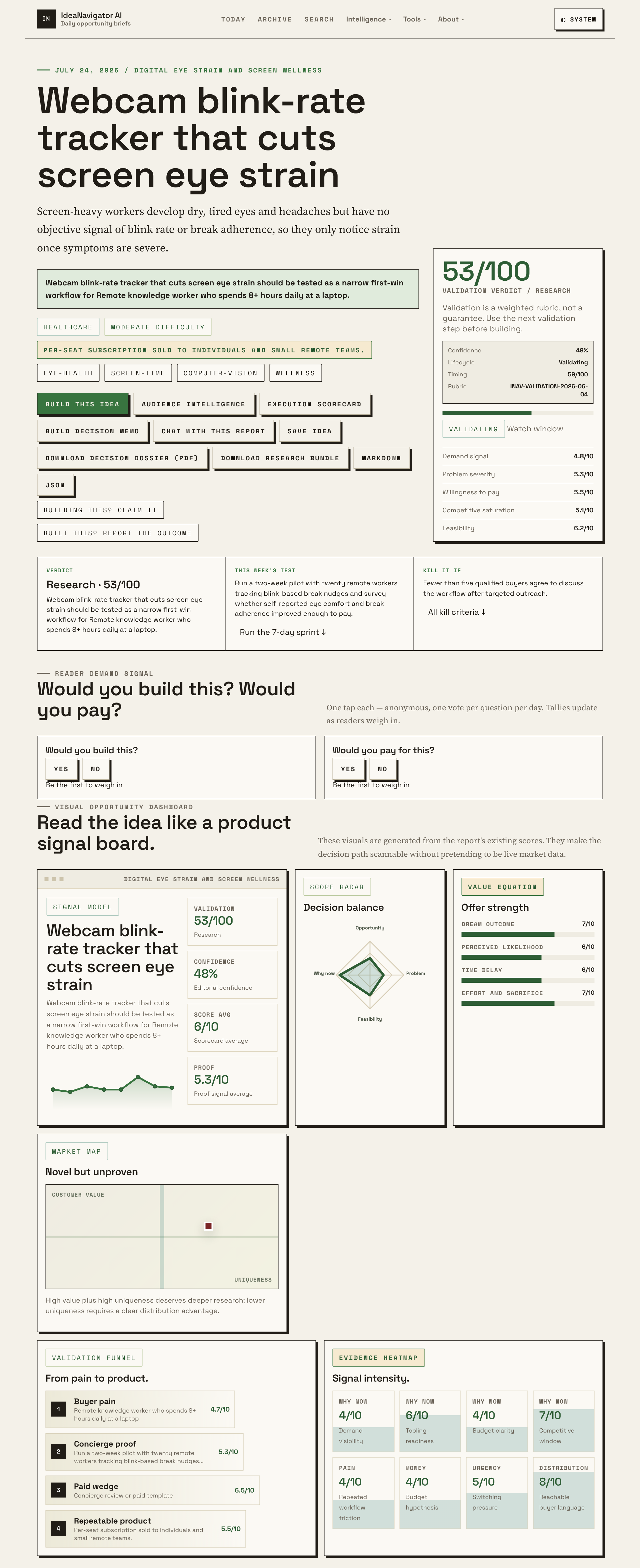
A webcam-based blink-rate tracker is being developed to help remote workers reduce eye strain by monitoring blinking and encouraging regular breaks. Pilot testing with small teams is planned to validate its effectiveness.
A new webcam application that estimates blink rate and prompts break adherence is being prepared for pilot testing to address digital eye strain among remote workers. This development responds to increased screen time due to remote and hybrid work models and leverages on-device computer vision technology.
The proposed webcam app aims to monitor blink rate in real-time without transmitting video data externally, using on-device computer vision. When blinking drops below a certain threshold, the app will notify users to take a break, following the popular 20-20-20 rule. The goal is to log daily eye comfort scores and improve break adherence among remote knowledge workers who spend over eight hours daily at their laptops.
According to IdeaNavigator AI, the app’s initial focus is to serve individual users and small remote teams through a per-seat subscription model. The plan is to conduct a two-week pilot with twenty participants, assessing whether the intervention reduces eye strain symptoms and increases break compliance. The approach is designed to be a simple, privacy-conscious workflow that can be integrated into existing remote work routines.
Potential Impact on Remote Work Eye Health
This development could provide a practical, objective tool to combat digital eye strain, a growing concern for remote workers. By offering real-time feedback based on blink rate, it may improve break adherence and reduce symptoms like dry eyes and headaches. If successful, it could influence workplace wellness strategies and promote healthier screen habits for millions of remote knowledge workers.
As an affiliate, we earn on qualifying purchases.
Increasing Screen Time and Eye Strain Concerns
The shift to remote and hybrid work arrangements has significantly increased daily screen time for knowledge workers, raising concerns about eye health. Traditionally, workers only notice symptoms once they become severe, but recent advances in computer vision enable objective monitoring of blinking behavior. The idea of using webcams to track eye health is gaining traction as a non-intrusive, on-device solution that respects user privacy. Pilot projects like this aim to validate whether such tools can effectively reduce eye discomfort and improve work habits.
“Utilizing on-device computer vision to monitor blink rate offers a promising way to objectively assess eye strain risk without compromising privacy.”
— an anonymous researcher
As an affiliate, we earn on qualifying purchases.
Uncertainties Around Effectiveness and Adoption
It is not yet confirmed whether the blink-rate tracker will significantly improve eye comfort or break adherence in real-world settings. The pilot study results are still pending, and user acceptance of the app remains to be seen. Additionally, questions about long-term effectiveness and integration into diverse remote work environments are still developing.
As an affiliate, we earn on qualifying purchases.
Upcoming Pilot Testing and Validation Results
The next step is to conduct the planned two-week pilot with twenty remote workers, collecting data on eye comfort, break adherence, and user feedback. Results from this pilot will determine whether the app can be scaled or integrated into broader remote work wellness programs. Further development may include refining the alert system and expanding features based on user input.
As an affiliate, we earn on qualifying purchases.
Key Questions
How does the webcam blink-rate tracker work?
The tracker uses on-device computer vision to estimate blink rate in real-time, without transmitting video data externally. When blinking drops below a certain level, it prompts the user to take a break.
Will this app be available for all remote workers?
The initial plan is to offer it via a per-seat subscription to individual users and small teams. Broader availability will depend on pilot results and further development.
Is this technology privacy-safe?
Yes, the app is designed to run entirely on the user’s device, analyzing video locally without sending footage or images elsewhere.
When will the app be generally available?
There is no confirmed release date yet; the pilot testing is expected to conclude soon, with potential wider rollout depending on pilot outcomes.
Can this help reduce eye strain for all screen users?
While promising, the app is currently targeted at remote knowledge workers. Its effectiveness for other user groups remains to be seen, pending further research and development.
Source: IdeaNavigator AI
Halloween Picks
halloween
As an affiliate, we earn on qualifying purchases.