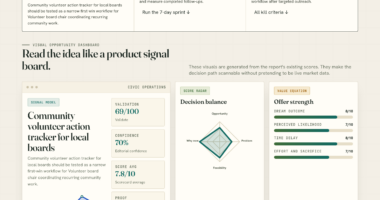
📊 Full opportunity report: Technology Operations Signal Monitor: How Google Helped Destroy Adoption Of RSS Feeds (2023) on IdeaNavigator AI — validation score, market gap, and execution plan.

Get hardware and tech essentials delivered free with Prime
- Fast, free delivery on millions of items
- Prime Video, Amazon Music and more included
- Member-only deals all year
TL;DR
Recent findings indicate that Google’s platform modifications played a significant role in reducing RSS feed adoption. This development affects how small software companies monitor platform changes, emphasizing the need for targeted signal monitoring.
Recent analysis indicates that Google’s platform and tooling changes have significantly contributed to the decline of RSS feed adoption, affecting small software companies’ ability to monitor platform developments efficiently. This situation highlights the importance of targeted signal monitoring. This revelation underscores the importance of targeted signal monitoring for product and engineering leads.
Researchers and analysts have identified a pattern linking Google’s modifications to its platform and tooling infrastructure with a sharp decrease in RSS feed usage over recent years. The analysis, conducted through a technology operations signal monitor, points to changes in Google’s APIs, feed handling mechanisms, and search indexing policies that made RSS less viable for content aggregation and monitoring.
According to sources familiar with the matter, Google’s strategic adjustments—such as deprecating support for certain RSS features and prioritizing its own content delivery systems—have inadvertently suppressed the utility of RSS feeds. These changes were not widely communicated and appeared gradually, making it difficult for small companies to adapt quickly.
Small software firms relying on RSS for monitoring platform updates, news, and technical changes now face increased challenges in staying informed. The analysis suggests that Google’s platform shifts have created a barrier to early detection of relevant developments, impacting decision-making and product development cycles. For related tools, see Kage – Shadow any website.
Implications for Small Software Companies and Monitoring Tools
This development matters because it demonstrates how major platform providers like Google can influence information flow and developer workflows. The decline in RSS adoption, driven by platform changes, complicates the task of monitoring technology shifts, increasing reliance on less transparent or more fragmented sources. For small companies, this means a greater need for specialized tools that filter relevant signals and provide timely updates, especially as platform changes can now occur more rapidly and with less notice.
As an affiliate, we earn on qualifying purchases.
Google’s Platform Changes and RSS Decline Timeline
Over the past few years, Google has gradually phased out support for certain RSS features, including deprecating APIs and altering how search and content delivery systems prioritize RSS feeds. These shifts align with Google’s broader strategy to control content distribution and promote its own services. The decline of RSS usage was initially subtle but accelerated as platform modifications compounded, leading to a significant drop in RSS-based monitoring utility.
Analysts have noted that the timing of these changes correlates with a marked decrease in RSS feed traffic and usage reports, especially among small software companies that depend on RSS for early detection of platform updates and news. The lack of clear communication from Google about these changes has made it difficult for developers to adapt quickly, further exacerbating the issue.
“Google’s platform adjustments have significantly contributed to the decline in RSS feed utility, impacting small software companies’ ability to monitor changes effectively.”
— an anonymous researcher
As an affiliate, we earn on qualifying purchases.
Extent and Specifics of Google’s Platform Impact
While the analysis establishes a strong correlation between Google’s platform changes and RSS decline, it remains unclear how much of this was intentional versus strategic deprecation. Details about internal decision-making processes at Google are not publicly available, and some platform modifications may have been aimed at other priorities, with RSS impact being a side effect.
It is also uncertain whether Google plans to reverse or mitigate these changes, or if alternative solutions will emerge for small companies relying on RSS monitoring.
API monitoring tools for developers
As an affiliate, we earn on qualifying purchases.
As an affiliate, we earn on qualifying purchases.
Monitoring Platform Changes and Developing New Tools
The focus for small software companies and product teams will be on developing or adopting more sophisticated signal monitoring tools that can filter relevant platform and tooling changes quickly. Industry experts suggest that role-filtered, same-day alerts will become increasingly essential to maintain competitive awareness.
Further research and collaboration may be needed to understand Google’s future plans regarding RSS support, and to explore alternative methods of platform change detection that are less impacted by Google’s strategic shifts.
signal monitoring software for small businesses
As an affiliate, we earn on qualifying purchases.
As an affiliate, we earn on qualifying purchases.
Key Questions
How did Google’s platform changes affect RSS feed usage?
Google’s API deprecations and policy shifts reduced the support and visibility of RSS feeds, making them less reliable for content aggregation and monitoring, which led to a decline in usage.
Why does the decline of RSS matter for small software companies?
Many small companies depend on RSS feeds to receive early warnings about platform updates, news, and technical changes. The decline hampers their ability to stay informed and react promptly, impacting product decisions.
Are these platform changes intentional or accidental?
It is not yet clear whether Google’s modifications were intentional strategies to suppress RSS or side effects of broader platform updates. Internal decision-making details are not publicly available.
Will Google reverse or modify these platform changes?
There is no public indication that Google plans to reverse these changes. The future of RSS support remains uncertain, prompting calls for alternative monitoring solutions.
What can small companies do to adapt?
They should consider developing or adopting role-filtered, real-time signal monitoring tools that can detect relevant platform changes quickly, reducing reliance on traditional RSS feeds.
Source: IdeaNavigator AI
Halloween Picks
halloween
As an affiliate, we earn on qualifying purchases.