
📊 Full opportunity report: Spatial Focus Room: Make Distraction Impossible on ThorstenMeyerAI.com — validation score, market gap, and execution plan.

Get hardware and tech essentials delivered free with Prime
- Fast, free delivery on millions of items
- Prime Video, Amazon Music and more included
- Member-only deals all year
TL;DR
Spatial Focus Room, an app for Apple Vision Pro, creates immersive environments designed to eliminate distractions and enhance deep work. It logs focus sessions, attaching specific tasks to improve accountability. This innovation shifts focus from resisting distractions to physically removing them.
Spatial Focus Room, a new app designed for the Apple Vision Pro headset, aims to eliminate distractions by creating immersive environments that replace the physical room. This approach offers a different paradigm for focus, shifting from resisting interruptions to physically removing them. The app is intended to enhance deep work by making distraction physically unavailable, leveraging the capabilities of the headset.
The app offers three distinct environments: CalmBeach, Rainforest, and DeepSpace. Each provides a 360° skybox with seamless audio loops, generated procedurally to ensure consistency and cost-efficiency. Users can choose between fully immersive environments, which replace the real world entirely, or passthrough modes that overlay ambient sounds and visuals onto their physical desk. The environments are designed to serve as cues for focus, conditioning the brain to associate them with concentration.
Spatial Focus Room logs every session, tracking focus time, streaks, and tasks attached to each session. Users can set specific goals before starting a session, such as working on a particular task for 25 minutes. The app’s approach emphasizes accountability and habit formation, encouraging repeated use through measurable progress and environmental cues. Its design reflects a shift from measuring focus with timers to engineering the surroundings for better concentration.
Make Distraction Impossible
We protect deep work with a timer that lives on the same glowing rectangle holding every feed and notification engineered to pull us out. Spatial Focus Room’s premise: the most reliable way to remove a distraction is to make it physically unavailable — and a headset is the first device that can.
A phone can tell you that you got distracted. A headset can make distraction impossible.
Each is a seamless 360° skybox + a 60-second ambient loop that masks your real room and becomes a cue: “focus starts now.” None of it is licensed stock — every skybox and soundscape is generated procedurally, so the catalog is cheap to expand.
Intent, attached to every session: name one concrete task and it floats in view inside the immersive space. Twenty-five minutes against one named thing — checked off and logged when the session ends. A calm environment becomes accountable deep work.
and becomes a place you go.
Independent commentary, produced with AI assistance under human editorial oversight. The views are the author’s own and may change. This describes a product’s design, features, and business rationale — not business, financial, legal, technical, or medical advice; cost and retention figures are the product’s own framing, not independently verified. Spatial Focus Room is a forthcoming app for Apple Vision Pro (visionOS 26); described features, pricing, and availability are stated by the product and may change. Names are trademarks of their respective owners; mention does not imply endorsement.
Why Eliminating Distractions Changes Deep Work
This development matters because it redefines how people can achieve deep work in an era dominated by constant digital interruptions. By physically removing distractions, the Spatial Focus Room reduces reliance on willpower and internal resistance, potentially increasing productivity and focus sustainability. It also exemplifies a broader trend of using immersive technology to reshape work environments, which could influence future productivity tools and workplace practices. For individual users, this approach offers a more reliable method of maintaining concentration, which is critical in high-stakes or creative tasks.Products Worth Considering
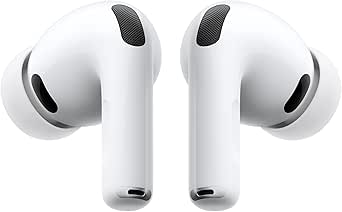
Apple AirPods Pro 3 Wireless Earbuds with Active Noise Cancellation

Sony WH-1000XM6 Wireless Noise-Canceling Over-Ear Headphones, Blue, Bundle

LG UltraGear 27-Inch QHD OLED Gaming Monitor, 240Hz, 0.03ms, G-SYNC Compatible, FreeSync Premium Pro, HDMI 2.1
As an affiliate, we earn on qualifying purchases.
Background of Focus Tools and Immersive Technology
Traditional focus tools, such as timers and app blockers on smartphones, ask users to resist distractions from within the device, which is inherently flawed because it pits willpower against engineered interruptions. Recent advances in immersive technology, particularly the Apple Vision Pro, enable environments that can physically block out external stimuli. Previous efforts to improve focus relied on digital nudges or notifications, but these often failed due to the persistent presence of distractions. The Spatial Focus Room builds on the premise that physical removal of distractions is more effective, leveraging the headset’s capabilities to create dedicated focus environments. This approach aligns with ongoing developments in virtual and augmented reality aimed at enhancing productivity and mental well-being.
“The most reliable way to remove a distraction is to make it physically unavailable — and a headset is the first consumer device that can actually do it.”
— Thorsten Meyer, source from ThorstenMeyerAI.com
Uncertainties About Effectiveness and Adoption
It is not yet clear how widely the Spatial Focus Room will be adopted or how effective it will be across different user demographics and tasks. Long-term behavioral impacts and potential usability issues remain to be studied in real-world settings. Additionally, the cost and accessibility of the Apple Vision Pro headset could influence its adoption rate, and whether similar immersive environments will be developed for other platforms is still uncertain.
Next Steps for Development and User Testing
Apple and the developers behind Spatial Focus Room are expected to release the app publicly later in 2024. User testing, feedback collection, and further refinement of environments and features will likely follow. Monitoring how users integrate this technology into their routines and how it impacts productivity will be crucial. Future updates may include additional environments, customization options, and integration with other productivity tools.
Key Questions
How does Spatial Focus Room differ from traditional focus apps?
Unlike traditional apps that rely on timers or notifications to encourage focus, Spatial Focus Room creates immersive environments that physically eliminate distractions, making focus the default state of the environment.
Can users still see their real surroundings while using the app?
Yes, the app offers a passthrough mode that overlays calming visuals and sounds onto your real desk, allowing you to keep your physical environment visible while still reducing distractions.
Is this technology available to all users now?
As of now, the app is an announcement and is expected to be released later in 2024, with availability depending on Apple’s rollout and user access to the Vision Pro headset.
Will this replace other focus tools like timers or app blockers?
It aims to complement or replace traditional tools by physically removing distractions, shifting the focus from resisting interruptions to creating environments where distractions are inherently unavailable.
What are the potential limitations of this approach?
Limitations could include the cost of hardware, user comfort with wearing headsets, and whether immersive environments are suitable for all types of work or user preferences.
Source: ThorstenMeyerAI.com