

As you look toward 2040, you might wonder what work will look like for you. Automation and AI are already changing industries, and experts predict these shifts will only accelerate. Will your job evolve, or will you need to find a new path? The choices you make now could determine whether you’re working alongside intelligent systems or steering through a very different workplace—something worth considering as the future unfolds.
Key Takeaways
- Automation and AI will transform many jobs, requiring workers to adapt and develop new skills.
- New roles focused on managing, maintaining, and overseeing automated systems will emerge.
- Continuous learning and reskilling will be essential to stay relevant in the evolving workplace.
- Emotional intelligence and critical thinking will become highly valued skills alongside technical expertise.
- Proactive preparation and staying informed about technological advancements will influence future employment opportunities.
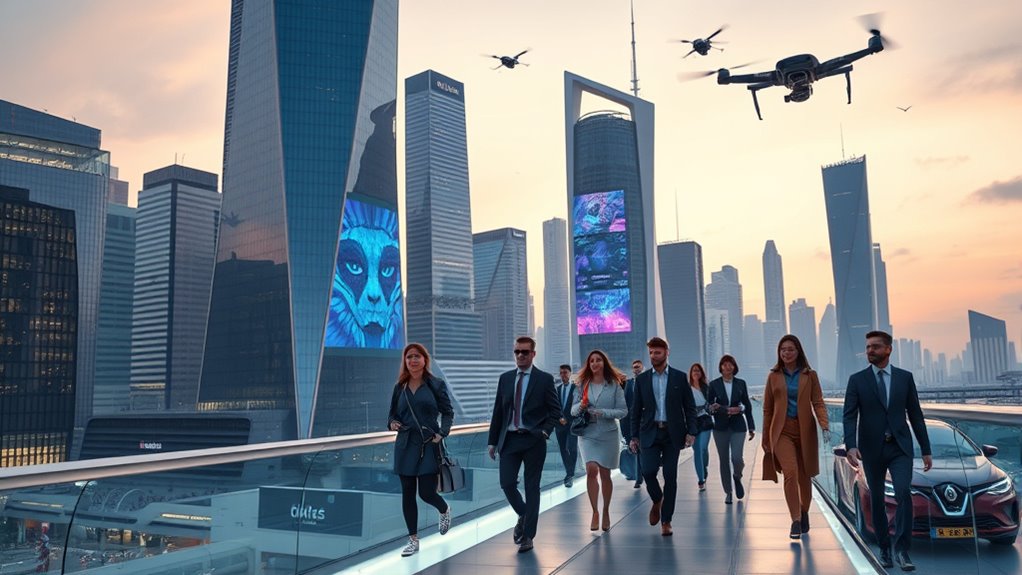
Have you ever wondered what the future of work will look like in 2040? It’s a question many of us ponder as technology accelerates at an unprecedented rate. One thing is certain: automation challenges will play a significant role in shaping that future. Industries across the board are adopting automated systems, from manufacturing to services, and your job might not look the same as it does today. Automation brings efficiency and cost savings, but it also raises concerns about job displacement. You may find some roles completely transformed or even eliminated as machines handle repetitive tasks more quickly and accurately than humans ever could. However, this shift also creates opportunities for new types of jobs—positions that require oversight, maintenance, and development of these automated systems. To thrive, you’ll need to stay adaptable, continuously upgrading your skills to keep pace with technological advancements. Embracing ongoing learning and reskilling will be essential as the workforce evolves. AI integration is another major factor influencing the future of work. Artificial intelligence is no longer just a tool; it’s becoming a partner in many workplaces. AI can analyze vast amounts of data, predict trends, and even make decisions that once required human intuition. As AI becomes more integrated, you might find yourself collaborating with intelligent systems rather than competing against them. This integration can boost productivity and open doors for more creative and strategic roles, but it also demands that you understand how to work alongside AI tools. The key challenge will be learning to leverage AI effectively without becoming overly dependent on it. If you embrace AI integration, you’ll need to develop a new set of skills—such as data literacy, critical thinking, and emotional intelligence—that machines can’t replicate. The path forward isn’t just about technology replacing jobs; it’s about how you adapt to and shape these changes. Governments and organizations are beginning to invest in reskilling and lifelong learning initiatives, but ultimately, your ability to stay relevant hinges on your willingness to learn new skills and adjust your mindset. The automation challenges and AI integration are not insurmountable barriers but rather signals that the nature of work will evolve. You’ll need to be proactive—seeking out opportunities to learn about emerging technologies, understanding their implications, and positioning yourself as someone who can work effectively alongside them. Staying informed about technological advancements will be crucial for your future success. The future of work in 2040 isn’t written in stone; it depends on how you prepare today.
Conclusion
By 2040, your success will depend on how well you adapt, learn new skills, and collaborate with AI. While some jobs may disappear, new opportunities for oversight and strategic work will emerge for those willing to stay flexible. Embracing continuous learning isn’t just a tip—it’s essential. The truth is, those who proactively develop their emotional intelligence and tech literacy will thrive, proving that your future work life is as much about adaptability as it is about technology.