
Societies that thrived through shared effort, collective care, and mutual aid challenged the idea that individual work is the only path to prosperity. They relied on cooperation, reciprocity, and social bonds to sustain themselves, often flourishing without traditional jobs or cash economies. These examples invite you to contemplate how community-driven models could reshape modern living—if the foundation of well-being isn’t solely tied to employment, then what possibilities might emerge?
Key Takeaways
- Historical societies thrived through communal resource sharing and collective effort, minimizing reliance on formal employment.
- Economies based on mutual aid and social bonds fostered resilience and well-being without traditional jobs.
- Shared resources and cooperative practices enhanced social cohesion and addressed environmental and economic stresses.
- Reimagining economies around community cooperation can reduce inequality and support human flourishing.
- Lessons from history demonstrate that sustainable, collective living models can sustain societies without conventional employment.
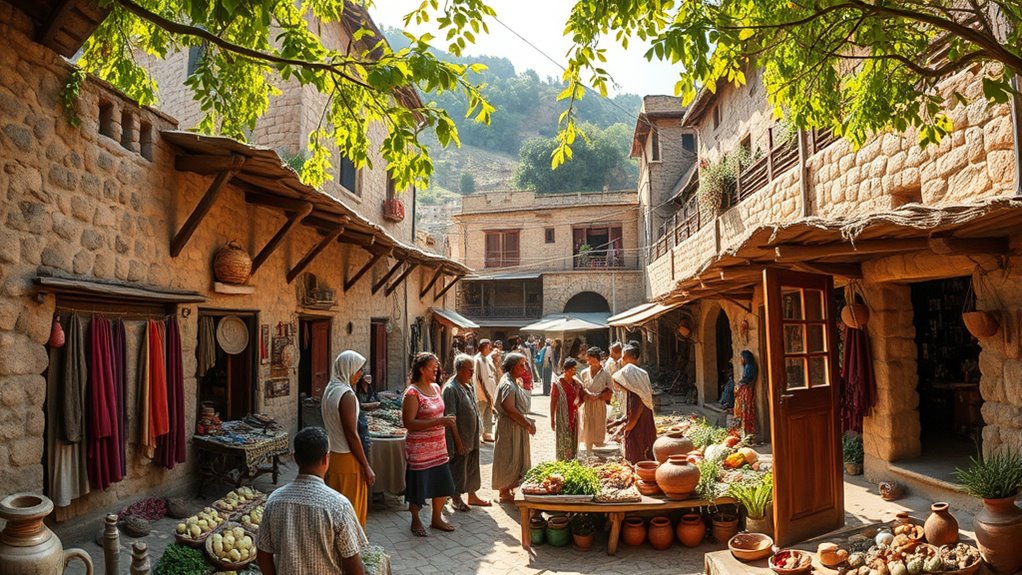
Throughout history, some societies have thrived despite lacking traditional notions of employment, offering valuable lessons for today’s debates on work and automation. These communities often relied on alternative economies and communal living arrangements that prioritized shared resources and collective well-being over individual labor for profit. Instead of a rigid work structure, they fostered systems where people contributed what they could and received what they needed, creating a sustainable balance that sustained their social fabric.
Ancient societies thrived through shared resources and communal effort, challenging the need for traditional employment and profit-driven work.
In these societies, economic activity wasn’t driven by individual wages or capitalist markets but by mutual aid and shared responsibilities. For example, in certain indigenous communities, resources like food, tools, and shelter were collectively managed, ensuring everyone’s needs were met without the need for formal employment. Such setups reduced reliance on cash-based economies and minimized inequality, demonstrating that a society can function well without everyone holding a traditional job. Communal living played a key role here; it strengthened social bonds and created a sense of shared purpose, making economic survival a collective effort rather than a series of individual transactions.
By embracing alternative economies, these societies showed that work could be integrated into daily life in more meaningful, interconnected ways. Instead of chasing after monetary gain, community members focused on reciprocal relationships and cooperative endeavors. This approach fostered resilience, especially during times of crisis or environmental stress, where collective action was more effective than individual pursuits. The success of these communities underscores that work doesn’t have to be compartmentalized or tied solely to monetary compensation to be valuable or sustainable. Additionally, these models demonstrate how communal resource management can promote sustainability and reduce inequality.
For you, examining these historical models offers a compelling perspective on current discussions about automation and job displacement. They highlight that well-being doesn’t depend solely on traditional employment or income, but on the strength of social bonds, shared resources, and community cooperation. As automation potentially reduces the need for human labor in many sectors, the lessons from these societies suggest that rebuilding or reimagining our economic systems around communal living and alternative economies could help address issues like inequality and social isolation. These examples challenge the notion that progress must follow a linear path of increased work and productivity, instead emphasizing that human flourishing can occur through collective effort and shared purpose.
In essence, history teaches us that societies can thrive without conventional jobs by fostering communal living and alternative economies. These lessons remind us that sustainability, equity, and community resilience are achievable when we prioritize collective well-being over individual wealth accumulation. As you consider the future of work, reflecting on these historical examples can inspire innovative ways to create societies where everyone’s needs are met without relying solely on traditional employment models.
Conclusion
Just like a thriving garden relies on every plant sharing sunlight and nutrients, societies flourish when everyone contributes beyond just jobs. History shows that when we nurture community bonds and shared resources, resilience blossoms. The true harvest isn’t measured by individual income but by the strength of our collective roots. Embrace this symbol of unity, and you’ll see how a society rooted in cooperation can bloom brighter than any job-driven economy.