

As automation and AI transform industries, your work will shift from routine tasks to roles emphasizing creativity, critical thinking, and emotional intelligence. Machines handle repetitive jobs, freeing you to focus on innovation and human connection. This new era encourages you to develop skills that machines can’t replicate. If you stay adaptable and learn how to collaborate with emerging technologies, you’ll find new opportunities to thrive and create meaningful contributions in a changing world. More insights await as you explore further.
Key Takeaways
- Automation shifts focus from routine tasks to roles emphasizing creativity, emotional intelligence, and problem-solving.
- The post-labor era encourages human-AI collaboration, fostering innovative and meaningful work opportunities.
- Society must prioritize retraining programs and inclusive policies to ensure equitable access to new job types.
- Ethical considerations and data privacy are essential in shaping responsible AI integration into future work.
- Work will evolve to emphasize societal well-being, emphasizing innovation, connection, and human-centric pursuits.
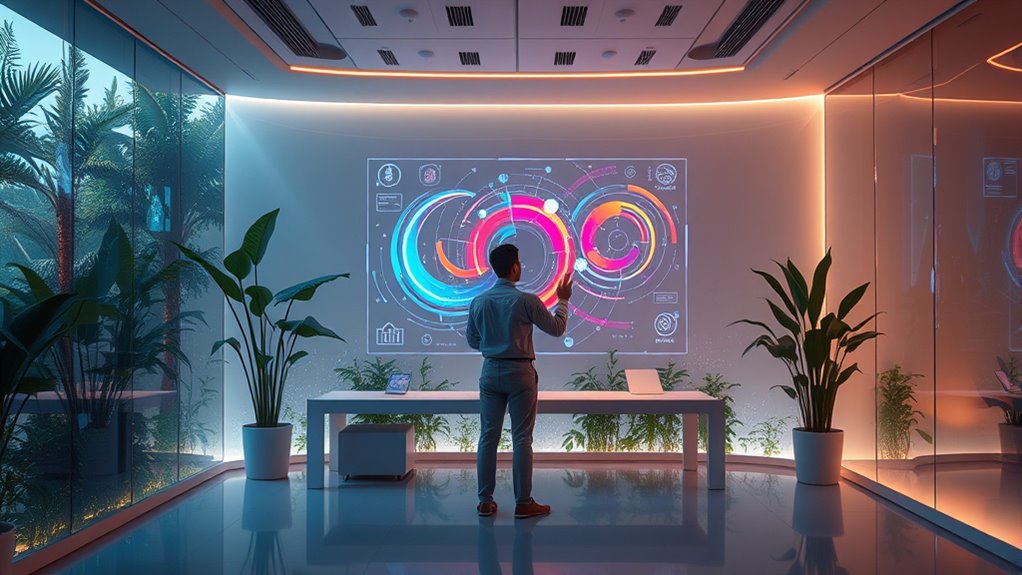
As automation and artificial intelligence continue to advance, the traditional notion of work is rapidly transforming. Tasks once performed by humans are now handled by machines, leading to significant shifts in job markets worldwide. This evolution presents automation challenges, such as the risk of widespread unemployment and economic instability. As routines and repetitive jobs become obsolete, you might wonder what happens to the workforce. The key lies in understanding that automation isn’t just about replacing jobs; it’s about redefining what work means. However, this shift also raises ethical considerations. For example, who bears responsibility when AI makes decisions that negatively impact people’s lives? Ensuring that automation benefits society as a whole requires careful regulation and ethical frameworks. You need to be aware that these challenges aren’t purely technical—they’re deeply social and moral issues that demand thoughtful solutions. As companies deploy AI to optimize efficiency, questions about fairness, transparency, and accountability become more pressing. It’s your role, whether as a worker, consumer, or policymaker, to advocate for responsible AI use. The future of work in a post-labor era isn’t solely about replacing human effort but about transforming work into more creative, meaningful pursuits. Automation challenges push you to think beyond traditional roles, encouraging you to develop skills that machines can’t easily replicate—like critical thinking, emotional intelligence, and creativity. These skills become crucial in a landscape where routine tasks are automated. The ethical considerations also involve ensuring equitable access to new opportunities. Without deliberate action, there’s a risk that automation exacerbates existing inequalities, leaving marginalized groups behind. You should consider how policies can promote inclusive growth, providing education and retraining programs that help people transition into new roles. In this new era, work may shift from manual or repetitive tasks to roles centered on innovation and human connection. You might find yourself working more closely with AI tools, leveraging technology to enhance your abilities rather than compete against it. As automation challenges continue to unfold, society must grapple with how to balance technological progress with ethical responsibility. This includes safeguarding privacy, preventing bias in AI systems, and ensuring that technological advancements serve the common good. Additionally, understanding the privacy policies and how cookies are managed will be essential as digital interactions become more personalized and data-driven. Ultimately, the post-labor era offers an opportunity to redefine your relationship with work, emphasizing creativity, collaboration, and societal well-being. By understanding automation challenges and ethical considerations now, you’re better prepared to navigate and shape the future of work—one where technology amplifies human potential rather than diminishes it.
Frequently Asked Questions
How Will Income Distribution Adapt Without Traditional Jobs?
You’ll likely see income distribution shift through increased wealth redistribution efforts, such as universal basic income or progressive taxation. These measures aim to promote economic equality and make certain everyone has access to essentials, regardless of traditional employment. As work becomes more creative and less tied to jobs, society adapts by prioritizing fairer resource sharing, helping bridge income gaps and support those who might otherwise fall behind in a post-labor world.
What Skills Will Be Essential in a Laborless Economy?
Think of skills in a laborless economy as your toolkit for a new frontier. You’ll need automated skill development to stay ahead and AI collaboration to innovate effectively. Adaptability becomes your compass, guiding you through constant change. Critical thinking and emotional intelligence also grow in importance, helping you navigate complex, AI-driven environments. Mastering these skills guarantees you thrive, turning challenges into opportunities in this new era of work.
How Will Societal Roles Evolve Without Employment?
Without employment, your social identity shifts from job titles to personal passions and community involvement. You’ll find new ways to connect, fostering community cohesion through shared interests and collaborative projects. Society will emphasize collective well-being over individual work roles, encouraging participation in cultural, creative, and social activities. This evolution promotes a sense of purpose and belonging, transforming societal roles into more fluid, inclusive, and meaningful contributions beyond traditional employment.
Will Universal Basic Income Be Sufficient for Everyone?
Universal basic income can provide income security, but it might not fully cover social welfare needs. Studies show UBI’s impact varies, and some argue it needs to be supplemented by other support systems. While it offers financial stability, it may not address all social services, healthcare, or housing costs. So, relying solely on UBI might not be enough; a thorough approach ensures everyone’s well-being and social welfare.
How Might Leisure and Creativity Be Valued in the Future?
In the future, leisure and creativity could be highly valued as sources of personal fulfillment and artistic expression. You’ll have more time to explore passions, develop skills, and share your ideas, making creativity a central part of life. Society might celebrate individual expression more than ever, recognizing that personal fulfillment through art and leisure enriches communities and promotes well-being. Your creative pursuits could become essential to your identity and happiness.
Conclusion
As you navigate this post-labor era, remember that over 60% of jobs could be transformed or replaced by automation. Embracing creativity and adaptability becomes essential, as traditional work shifts toward innovation and personal fulfillment. Instead of fearing change, see it as an opportunity to redefine your purpose and skills. The future of work isn’t about less work, but about more meaningful, human-centered pursuits that foster growth and imagination.