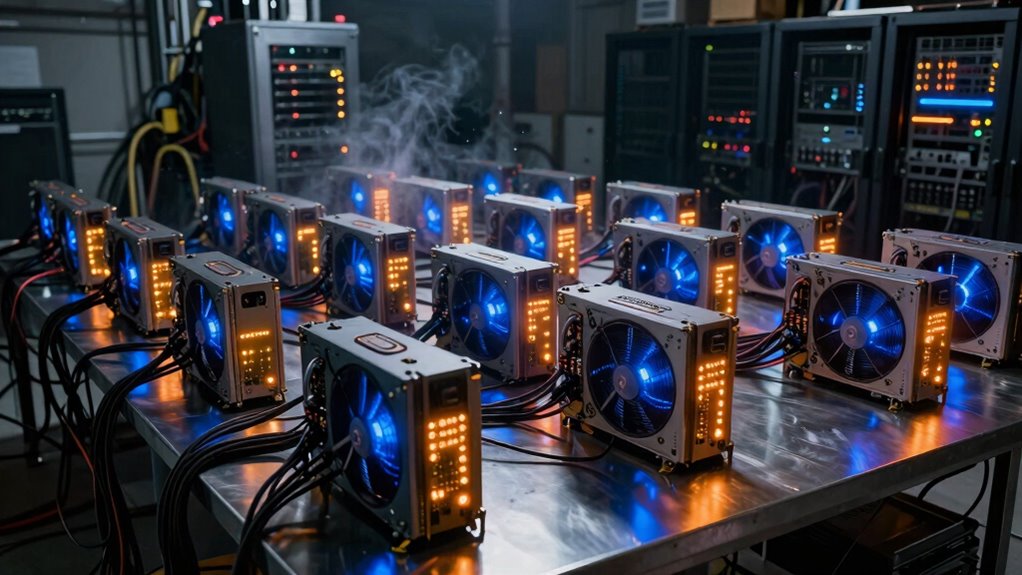

Mining teaches you that economic incentives drive participation, security, and decentralization in crypto networks. When miners are rewarded with coins and fees, they’re motivated to support the network’s integrity. Proper incentive structures encourage honest behavior and prevent centralization, ensuring a resilient system. If incentives aren’t balanced, participation and security can decline. Keep exploring to understand how these incentives shape the long-term stability and growth of crypto ecosystems.

Get hardware and tech essentials delivered free with Prime
- Fast, free delivery on millions of items
- Prime Video, Amazon Music and more included
- Member-only deals all year
Key Takeaways
- Mining incentives align individual profit motives with network security through rewards like coins and transaction fees.
- Properly balanced rewards prevent centralization by encouraging diverse participation among miners.
- Incentive structures ensure honest behavior by making malicious attacks economically unfeasible.
- Difficulty adjustments maintain competitive mining, promoting fairness and decentralization over time.
- Token distribution strategies influence network resilience by motivating widespread, sustained participation.
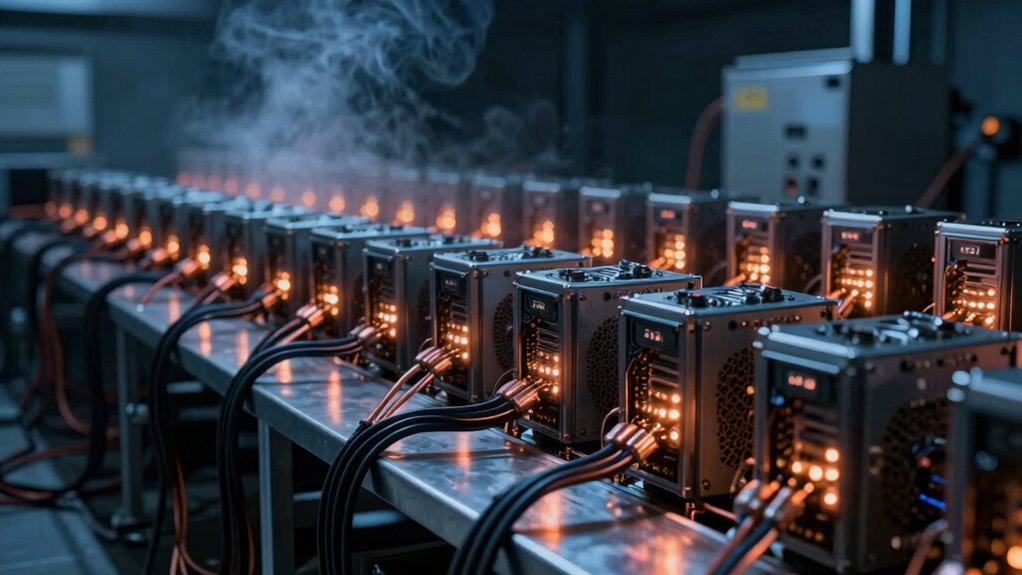
Mining is the backbone of many crypto networks, serving as the process that verifies transactions and adds new coins into circulation. When you mine, you’re not just supporting the network—you’re actively participating in its core mechanisms of token distribution and network security. As miners compete to solve complex puzzles, they help determine how new tokens enter the system, shaping the distribution of tokens across participants. This process ensures that tokens are allocated fairly based on effort and investment, rather than central authority, reinforcing the decentralized nature of cryptocurrencies.
Mining verifies transactions, distributes tokens fairly, and strengthens decentralization by rewarding effort and investment.
Through mining, you learn that incentives are central to maintaining a healthy, secure network. Miners are motivated by rewards—both in the form of newly minted coins and transaction fees—encouraging continuous participation. These incentives align individual interests with the network’s overall security. When miners invest computational power, they’re effectively securing the blockchain, making it exceedingly difficult for malicious actors to manipulate transactions or double-spend coins. This economic incentive structure creates a robust defense mechanism, where the cost of attacking the network outweighs any potential gains. Additionally, the economic incentives in place influence the behavior of participants and the overall health of the system. Understanding the token distribution process reveals how incentives shape the decentralization of the network and prevent dominance by a few large players. Recognizing the importance of blockchain security helps explain why incentive design is critical for network resilience.
You also see that token distribution isn’t just about handing out coins; it’s a strategic process that influences network security and decentralization. As miners compete for rewards, they validate transactions and uphold the integrity of the ledger. This competitive environment ensures that no single miner or group can dominate easily, fostering decentralization. When token distribution favors miners who invest significant resources, it encourages widespread participation, which is essential for the network’s resilience. Additionally, the incentive structures in place help prevent centralization by rewarding diverse participants. Moreover, the process of difficulty adjustment ensures that mining remains competitive over time and that the network’s security is maintained despite fluctuations in mining power.
Mining teaches you that incentives must be carefully balanced. If rewards are too low, participation wanes, risking security lapses. If rewards are too high, it can lead to centralization, where only those with substantial resources can compete effectively. The design of these incentives influences not only how tokens are distributed but also how secure and decentralized the network remains. Over time, you observe that well-structured incentives can lead to a self-sustaining ecosystem where participants are motivated to act honestly because their economic interests are aligned with network health.
Frequently Asked Questions
How Do Mining Rewards Influence Long-Term Network Security?
Mining rewards directly influence your motivation to maintain network security by shaping block reward dynamics. When rewards are high, miners see increased profitability, encouraging them to invest in powerful hardware and secure the network. Conversely, declining rewards push miners to adopt profitability strategies, like optimizing energy use or transaction fees. This balance guarantees long-term incentives remain aligned, keeping the network secure even as block rewards decrease over time.
What Role Do Transaction Fees Play in Miner Incentives?
Ever wondered how miners stay motivated? Transaction fees are essential, especially as block rewards decrease. They incentivize miners to prioritize transactions during block propagation, ensuring network efficiency. Higher fees encourage miners to include valuable transactions first, promoting network security and user satisfaction. Without sufficient fees, miners might neglect transaction prioritization, risking network reliability. So, transaction fees directly influence miner incentives, shaping how quickly and securely crypto networks operate.
How Does Mining Centralization Affect Incentive Distribution?
Mining centralization, especially through mining pools, impacts incentive distribution by concentrating rewards among fewer participants. This can lead to misaligned incentives, where large pools prioritize their interests over network security and decentralization. You might notice that when pools dominate, individual miners have less influence, making incentive structures less aligned with the network’s health. To maintain a balanced ecosystem, it’s vital to promote decentralization and guarantee incentive alignment across all miners.
Can Incentives Lead to Network Censorship or Manipulation?
Think of incentives as a double-edged sword, wielding the power to cut both ways in crypto networks. If miners prioritize regulatory compliance or environmental impact over decentralization, they might manipulate or censor transactions to serve their interests. This can threaten network integrity, turning the once-open landscape into a controlled terrain. Carefully aligned incentives are vital to prevent censorship and manipulation, ensuring the network remains fair and transparent.
How Are Incentives Adjusted During Network Upgrades or Forks?
During network upgrades or forks, incentives are adjusted through changes to the block reward or protocol rules, guiding miners toward desired behaviors. You’ll see economic signaling as miners respond to these incentives, aligning their actions with the network’s new goals. These adjustments guarantee miners continue to validate transactions securely while supporting the network’s evolution, fostering a balance between economic incentives and network stability during the shift.
Conclusion
Mining reveals that strong incentives drive network security and growth. When miners are rewarded fairly, they’re motivated to maintain the system’s integrity, ensuring decentralization and trust. Notably, Bitcoin’s mining difficulty adjusts roughly every two weeks to keep block times around 10 minutes, illustrating how incentives and mechanisms work together to stabilize the network. Embracing these lessons helps you understand how incentives shape the resilience and future of crypto systems.
Fall Picks
fall essentials
As an affiliate, we earn on qualifying purchases.