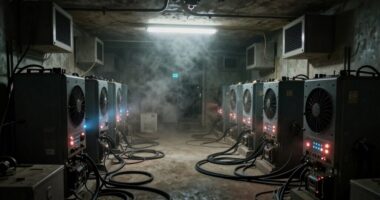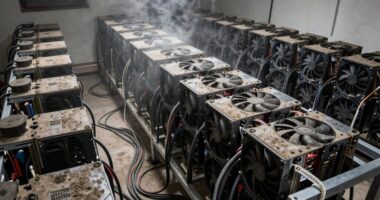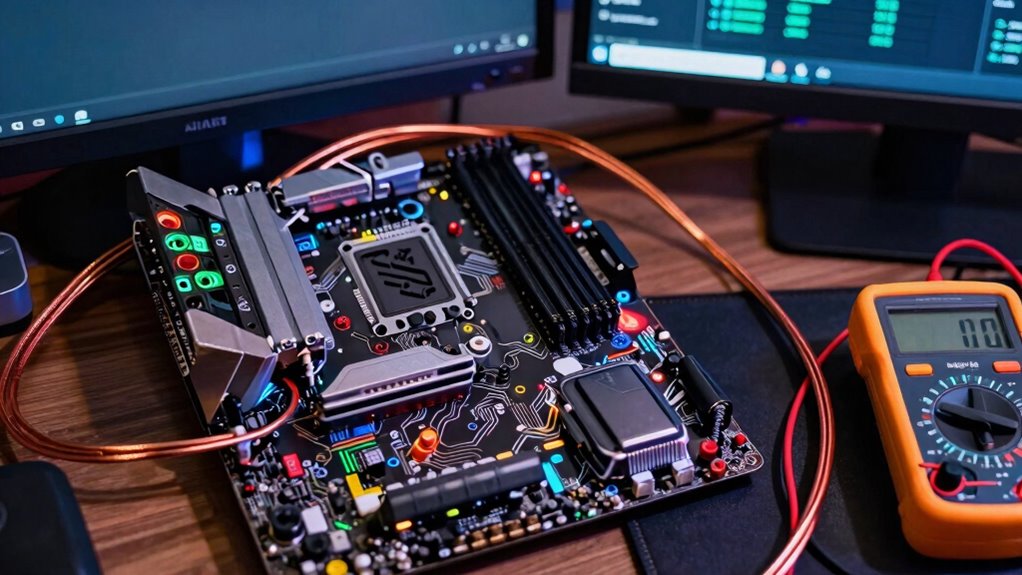

Many beginners only realize too late that choosing the right mining motherboard is essential for stability and future upgrades. A poor choice can cause hardware failures, power issues, or limited expansion. Ensuring it supports multiple GPUs, has enough PCIe slots, and aligns with your power supply plans saves money and headaches later. If you keep these factors in mind, you’ll set yourself up for success and avoid costly mistakes. There’s more to discover that can help you optimize your setup.

Get hardware and tech essentials delivered free with Prime
- Fast, free delivery on millions of items
- Prime Video, Amazon Music and more included
- Member-only deals all year
Key Takeaways
- Choose a motherboard with sufficient PCIe slots to support multiple GPUs for effective mining.
- Ensure the motherboard and CPU are compatible with high power and overclocking needs.
- Plan for adequate power supply capacity to handle multiple GPUs and overclocked performance.
- Prioritize stability and durability over initial cost to prevent hardware failures during mining.
- Research and select a motherboard with good VRMs and cooling features for reliable long-term operation.
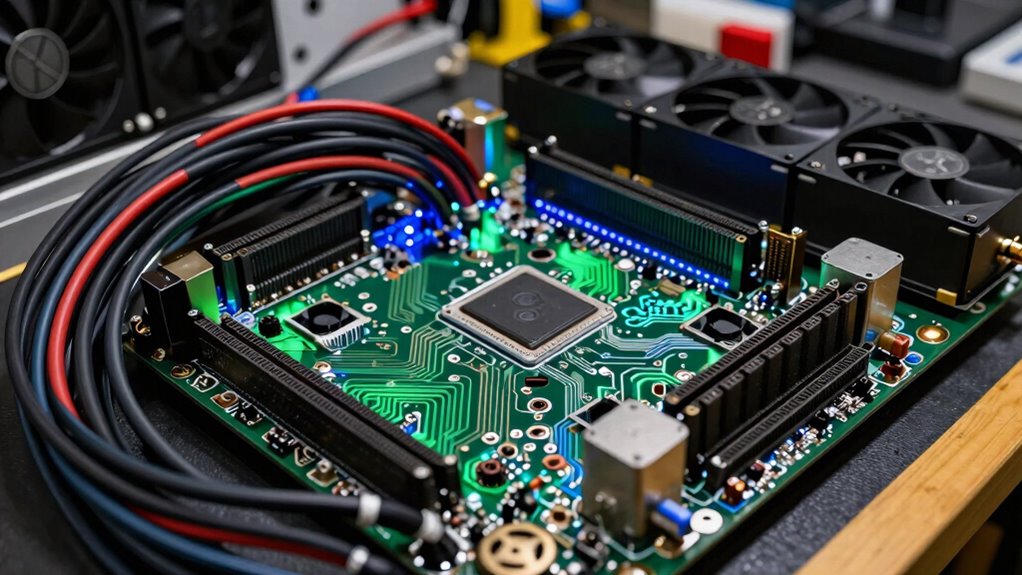
Getting started with mining motherboards can be overwhelming for beginners, especially when you’re faced with a multitude of technical questions. One of the most common is whether you should overclock your system to boost performance. Overclocking strategies might seem tempting because they promise higher hash rates, but they also increase power consumption, heat output, and the risk of hardware instability. If you don’t plan carefully, you could end up damaging your components or shortening their lifespan. It’s crucial to understand your motherboard’s limits and to approach overclocking gradually, testing stability at each step. Overclocking isn’t just about pushing your hardware to the max; it’s about finding a balance where your system runs efficiently without risking failure. Proper overclocking techniques can help you optimize performance safely, but only if you understand your hardware’s capabilities.
Another critical question that often gets overlooked early on is power supply considerations. Beginners tend to underestimate the importance of choosing a reliable, adequately rated power supply. Your mining motherboard and GPUs require a stable power source capable of handling peak loads. If your power supply is underpowered or low quality, you risk sudden shutdowns, hardware damage, or inconsistent mining performance. It’s wise to invest in a high-quality PSU with enough wattage and good efficiency ratings. Proper power supply considerations also mean planning for future upgrades—if you think you might add more GPUs later, make sure your power supply can handle that increase comfortably.
Many newcomers realize too late that neglecting these aspects can be costly. Failing to take into account overclocking strategies can leave you underperforming or cause hardware failures, while ignoring power supply considerations might lead to unstable mining operations or even damage your equipment. The key is to plan ahead. Before you start overclocking, do your research on safe voltage and temperature thresholds for your components. Similarly, always opt for a power supply that exceeds your current needs to ensure stability and longevity. Additionally, understanding the hardware limitations of your setup is essential to avoid unnecessary risks. Recognizing the power demands of your system can help you select the right components upfront, preventing costly upgrades later on.
In the end, these questions—overclocking strategies and power supply considerations—are not just technical details; they’re foundational to your mining success. Addressing them early allows you to build a reliable, efficient mining setup from the start. Waiting until problems arise means you’ve already faced setbacks that could have been prevented. So, take the time to learn, plan, and choose your hardware wisely. It’s a small investment now that can save you a lot of frustration and money down the line.
As an affiliate, we earn on qualifying purchases.
Frequently Asked Questions
Can I Use a Gaming Motherboard for Mining?
Yes, you can use a gaming motherboard for mining, but you should consider hardware compatibility and power efficiency. Gaming motherboards often support multiple GPUs, which is great for mining, but they might not be optimized for continuous operation. Check if your motherboard has enough PCIe slots and proper power delivery. While they may work, dedicated mining motherboards typically offer better power efficiency and stability for long-term mining setups.
How Many GPUS Can a Mining Motherboard Support?
You can usually support between 6 to 13 GPUs on a mining motherboard, depending on its GPU compatibility and PCIe slots. But don’t forget, your power supply requirements also skyrocket with each added GPU. So, if you’re dreaming of a multi-GPU setup, make sure your power supply can handle the load—otherwise, you’ll be mining disappointment rather than cryptocurrency gold. Irony? More GPUs, more power, more problems!
Is Overclocking Necessary on a Mining Motherboard?
Overclocking isn’t necessary on a mining motherboard, as it can reduce power efficiency and increase the risk of compatibility issues. Your main goal is stability and maximum uptime, so sticking to default settings guarantees consistent performance. Overclocking might boost hash rates temporarily but often leads to overheating and system crashes, which can cause more downtime and decrease overall mining profitability. Focus on proper cooling and power management instead.
What’s the Average Lifespan of a Mining Motherboard?
A mining motherboard typically lasts around 3 to 5 years, depending on usage and maintenance. To maximize lifespan, guarantee it’s compatible with ASIC devices and meets your power supply requirements. Proper cooling and avoiding overclocking help prevent overheating and component stress. Regular cleaning and monitoring also extend your motherboard’s life, ensuring stable, efficient mining operations over time.
Do Mining Motherboards Require Special Cooling Solutions?
Think of your mining setup as a high-performance engine—cooling keeps it running smoothly. Yes, mining motherboards need special cooling solutions. Proper thermal management and airflow optimization prevent overheating, ensuring stability and longevity. Using additional fans, heatsinks, or liquid cooling can help dissipate heat more efficiently. Without these measures, high temperatures could cause hardware failures or reduce lifespan, making cooling a vital part of your mining operation.
high wattage power supply for mining
As an affiliate, we earn on qualifying purchases.
As an affiliate, we earn on qualifying purchases.
Conclusion
Just like Icarus soaring too close to the sun, diving into mining without the right motherboard can lead to a fiery crash. Don’t wait until it’s too late to ask the tough questions—your setup’s stability, expandability, and cooling matter more than you think. Remember, the road to successful mining isn’t about reckless ambition but careful planning. So, arm yourself with knowledge now, and avoid the pitfalls that even seasoned miners wish they’d seen coming.
VRM cooling heatsinks for motherboards
As an affiliate, we earn on qualifying purchases.
As an affiliate, we earn on qualifying purchases.
overclocking motherboard for mining
As an affiliate, we earn on qualifying purchases.
As an affiliate, we earn on qualifying purchases.
Columbus Day / Indigenous Peoples' Day Picks
long weekend sales
As an affiliate, we earn on qualifying purchases.