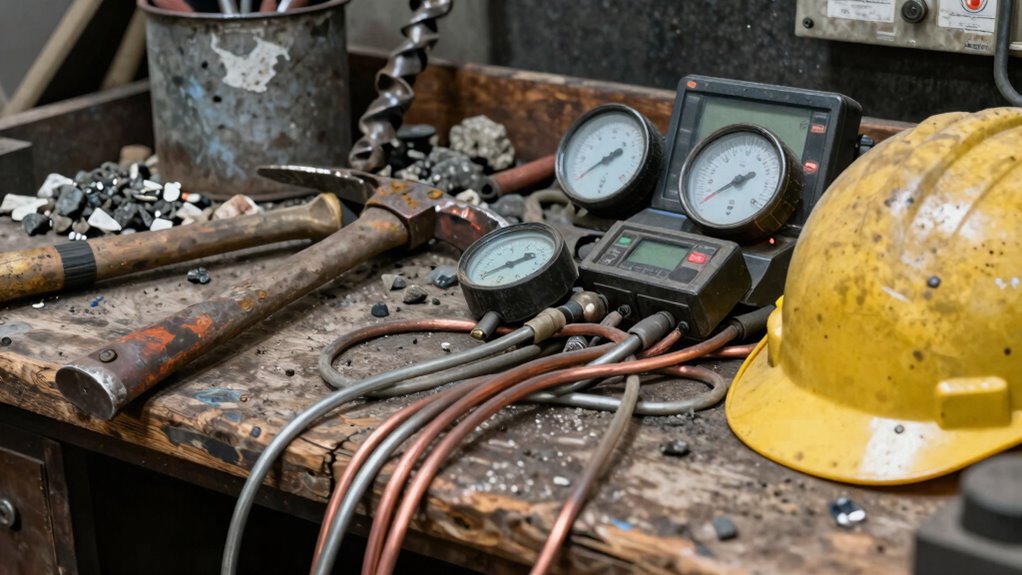

Many mining setup mistakes reappear in new forms, whether it’s neglecting regulatory compliance, poor hardware maintenance, or lack of scalability planning. Ignoring evolving laws can lead to fines or shutdowns, while skipping regular hardware upkeep causes inefficiency and higher costs. Overlooking future growth limits your ability to expand smoothly, risking downtime and setbacks. If you keep repeating these errors, your long-term profitability and stability suffer. Keep exploring to uncover how to break free from these recurring pitfalls.

Get hardware and tech essentials delivered free — and shop member deals
- Fast, free delivery on millions of items
- Access to Prime Big Deal Days deals on October 6–7
- Prime Video, Amazon Music and more included
Key Takeaways
- Failing to stay updated on evolving regulations leads to recurring legal issues and penalties.
- Neglecting hardware maintenance causes persistent hardware failures and efficiency drops.
- Lack of scalability planning results in ongoing logistical struggles during expansion phases.
- Ignoring hardware and regulatory efficiency causes repeated operational cost increases.
- Poor initial infrastructure design leads to recurring downtime and costly adjustments over time.
Setting up a mining operation without proper planning can lead to costly mistakes that hinder your efficiency and profitability. One of the most common pitfalls is overlooking the importance of understanding cryptocurrency regulations. Laws around mining can change rapidly, and staying compliant isn’t a one-time task. If you ignore the evolving legal landscape, you risk fines, shutdowns, or even legal action that can wipe out your investment. It’s vital to keep up with local, national, and international rules, especially as governments crack down on unregulated mining activities. Failing to adapt your setup to these regulations can result in costly downtime or having to restart your operations in a different jurisdiction altogether.
Understanding cryptocurrency regulations is crucial to avoid costly fines, shutdowns, and legal issues in mining operations.
Another recurring mistake is neglecting proper hardware maintenance. Many miners think that once their equipment is running, it can just be left alone. But mining hardware requires regular upkeep to run efficiently and avoid failures. Dust buildup, overheating, and component wear can cause hardware to slow down or break, leading to decreased mining output and increased expenses. If you ignore routine maintenance, you’ll find yourself replacing equipment more often and facing unpredictable downtime, which eats into your profits. Proper maintenance routines, including cleaning and hardware checks, are essential to ensure optimal performance. Additionally, hardware that isn’t properly maintained may consume more power, driving up operational costs and reducing overall margins. Incorporating preventive maintenance into your routine can help extend equipment lifespan and improve overall efficiency. Recognizing the importance of hardware durability and proper care can further reduce long-term costs.
People often repeat the mistake of not planning for future scalability. You might start with a modest setup, but if you don’t consider expansion, you’ll face logistical headaches and costly overhauls down the line. Planning your power supply, space, and cooling capacity for growth ensures your operation can scale smoothly without disrupting your current setup. It’s a mistake to ignore this, as it can limit your ability to capitalize on increasing mining rewards or new opportunities. Recognizing the importance of regulatory compliance and hardware efficiency can help you avoid costly mistakes that keep repeating in new forms. Properly assessing your infrastructure needs now can save significant trouble and expense as your operation grows. Incorporating future growth considerations into your initial planning can make all the difference in maintaining a profitable and compliant operation over time.
cryptocurrency mining hardware maintenance kit
As an affiliate, we earn on qualifying purchases.
As an affiliate, we earn on qualifying purchases.
Frequently Asked Questions
How Can I Prevent Recurring Setup Errors Over Time?
To prevent recurring setup errors, prioritize mining safety and regularly review your procedures. Keep equipment calibration up-to-date and double-check settings before each use. Document any issues and implement corrective actions promptly. Train yourself and your team consistently on new safety protocols and calibration techniques. Staying vigilant and proactive guarantees errors don’t resurface, maintaining a safe, efficient mining operation over time.
What Are the Hidden Costs of Repeated Mining Mistakes?
Think of repeated mining mistakes as hidden leaks in a dam—you might not see the damage immediately, but over time, they weaken your entire structure. The hidden costs include wasted energy, increased hardware wear, and missed profit opportunities. Conducting a thorough cost analysis helps you identify these inefficiencies. By prioritizing error prevention, you safeguard your setup from costly recurring issues, ensuring your mining operation stays resilient and profitable over the long run.
How to Identify New Forms of Old Setup Problems Early?
You can identify new forms of old setup problems early by regularly reviewing your mining configurations and monitoring performance metrics. Keep an eye on signs like fluctuating hash rates, increased power consumption, or unexpected hardware issues. Implement setup optimization strategies such as baseline testing and routine audits. Staying proactive and analyzing data trends helps you catch emerging problems before they escalate, ensuring your mining operation remains efficient and cost-effective.
Are There Tools to Automatically Detect Setup Mistakes?
Yes, there are tools designed for automated monitoring and error detection in mining setups. These tools continuously analyze system data, identify anomalies, and flag mistakes early, preventing recurring issues. By automating the detection process, you can catch setup mistakes before they escalate. Implementing such tools helps maintain peak performance, reduces downtime, and ensures your mining operation stays efficient without manual oversight.
What Training Best Practices Reduce Recurring Setup Errors?
To reduce recurring setup errors, focus on setup optimization through thorough training that emphasizes correct procedures. Incorporate error analysis into your training programs, encouraging workers to identify and learn from mistakes. Regularly review setup processes, update training materials, and foster a culture of continuous improvement. Hands-on practice combined with clear documentation helps reinforce correct techniques, minimizing errors and ensuring consistent, efficient mining operations.
As an affiliate, we earn on qualifying purchases.
Conclusion
Remember, the road to a successful mining setup is paved with lessons learned. By identifying and avoiding common mistakes, you set yourself up for long-term gains. Regularly review your process, stay updated on new technologies, and don’t be afraid to adapt. As the old saying goes, “A stitch in time saves nine.” Tackling issues early keeps problems from snowballing, ensuring your mining operation stays efficient and profitable in the long run.
power supply units for mining farms
As an affiliate, we earn on qualifying purchases.
As an affiliate, we earn on qualifying purchases.
mining operation scalability planning tools
As an affiliate, we earn on qualifying purchases.
As an affiliate, we earn on qualifying purchases.
Halloween Picks
halloween
As an affiliate, we earn on qualifying purchases.