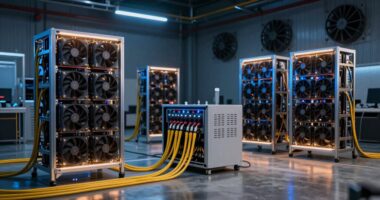

Mining pools are groups that merge individual computing power to increase your chances of successfully mining cryptocurrency blocks. By pooling resources, you all tackle mining tasks together, sharing the rewards based on your contributions. Pool operators manage the entire process, from assigning tasks to distributing earnings. Different payout structures train how you get paid, depending on the pool's system. While mining pools offer steady rewards and lower income fluctuations, they also come with risks like centralization and fees. If you're curious about how to maximize your mining potential, there's plenty more to explore.
Key Takeaways
- Mining pools combine resources from multiple miners to increase the likelihood of successfully mining blocks and receiving rewards.
- Operators manage the pool, distribute mining tasks, and ensure fair reward payouts based on each member's contributions.
- Members submit shares to prove their participation, with total shares affecting individual rewards under various payout structures like PPS or PPLNS.
- While mining pools offer consistent rewards and reduced income variability, they also pose risks of centralization and fees that can limit profits.
- Security is crucial, as risks like 51% attacks and malware can threaten pool operations, necessitating regular monitoring and updates for protection.
Mining Pool Fundamentals

When you join a mining pool, you become part of a collective effort where miners like you contribute their computational resources, or hash power, to increase the chances of successfully mining blocks.
Each miner submits shares, proving their participation and reflecting their contribution. Pool operators manage the infrastructure, distributing tasks and tracking shares to ensure everyone gets paid fairly based on their hash power. Mining pools act as coordinators for their members, enhancing efficiency and preventing overlap in work assignments.
The combined hash power of all miners boosts the pool's overall efficiency, while difficulty adjustments keep competition equitable.
Payout structures vary, with options like PPS or PPLNS, catering to different mining strategies.
Ultimately, participating in a pool helps you maximize your mining rewards through collaboration.
Mining Pool Overview

Joining a mining pool opens up a range of operational dynamics that enhance your mining experience. In a pool, operators manage network operations, assign mining duties, and handle reward distribution. Mining pools have emerged to allow collaboration and profit sharing among miners, enhancing the chances of obtaining valid blocks by combining resources.
You'll contribute your hash power to collaborative mining jobs, increasing your chances of earning block rewards. The pool charges fees for its services, which cover maintenance and reward systems.
There are various types of pools, including cloud mining pools, local facilities, and hybrid setups, each offering unique benefits. Payment structures vary too, with options like Pay-Per-Share and Proportional payouts.
Pool Member Contributions Explained

In a mining pool, each member plays a crucial role by contributing their unique computational power and resources. You provide processing power, allowing the pool to tackle complex puzzles more efficiently. The pool assigns you nonces to guess, ensuring that everyone has a fair shot at contributing to the solution. Your work is tracked, and the total shares you submit directly impact your rewards. Various payout schemes, like pay per share (PPS) or pay per last N shares (PPLNS), dictate how rewards are distributed. By pooling resources, you not only increase your chances of successfully mining a block but also enjoy consistent rewards, reduced risk, and lower barriers to entry, making mining accessible to everyone. Additionally, joining a pool enhances mining efficiency by combining the resources of multiple miners.
Pros and Cons

While mining pools offer numerous advantages, they also come with their own set of drawbacks that every miner should consider.
Joining a pool increases your chances of successfully mining blocks, providing more consistent rewards and reduced income variability. However, this centralization can lead to significant risks, like 51% attacks and security breaches. This risk is heightened as large mining pools can control significant hash rates, influencing transaction validations.
You'll also have to adhere to pool rules, limiting your operational control. Financially, pools charge fees that can eat into your profits, and rewards are split among all members, reducing your individual gains.
Additionally, large operations contribute to increased energy use and environmental concerns, making it essential to weigh these factors before committing to a mining pool.
Pool Types and Structures

Understanding the different types of mining pools is crucial for optimizing your mining strategy.
First, Pay-Per-Share (PPS) pools guarantee you payment for every share you submit, offering predictable rewards, though you might earn less if the pool doesn't find a block soon.
Proportional pools distribute rewards based on your computational power, providing variable payouts that encourage consistent participation.
Pay-Per-Last-N-Shares (PPLNS) pools reward your last N shares, fostering loyalty but also presenting less predictable payouts.
Lastly, hybrid pools combine various payout methods, giving you flexibility and helping manage risk. With the current block reward standing at 3.125 BTC, understanding these structures becomes even more important for maximizing your earnings.
Each pool type has its pros and cons, so consider your preferences and risk tolerance when choosing the right structure for your mining efforts.
Security Vulnerabilities in Pools

As you dive into the world of mining pools, it's important to recognize the various security vulnerabilities that can jeopardize your efforts.
Centralization risks, like concentrated hash power, can lead to transaction censorship or even a 51% attack, undermining the blockchain's security and fairness. Trust in your pool operator is crucial; opaque income distribution and mismanagement can leave you underpaid and frustrated.
Malware poses another threat, with cryptojacking programs stealing your resources or disrupting operations. Additionally, DDoS attacks can cripple your mining activities, especially if your security setup is weak. To combat these threats, regular updates and monitoring are essential for protecting your mining operations.
To safeguard your investments, opt for reputable pools, maintain strong physical and data security, and regularly update software to fend off these risks. Additionally, staying informed about stock market trends today can provide valuable insights that help you make informed decisions regarding your investments. Consider diversifying your portfolio to mitigate potential losses and explore emerging sectors that are gaining traction. Engaging in continuous education about market movements and investment strategies will further enhance your ability to protect and grow your assets effectively.
Emergence of Decentralized Pools

Decentralized mining pools have emerged as a solution to the issues posed by centralized systems, offering a more equitable and secure approach to cryptocurrency mining.
These pools operate without a central authority, utilizing a peer-to-peer structure that ensures fairness and prevents cheating. You gain control over transaction selection, which enhances the decentralization of the mining process. This structure allows participants to share computational power, increasing their chances of earning rewards compared to traditional methods of solo mining.
With low-variance payouts, these pools provide consistent rewards while incurring lower transaction fees. Protocols like SMARTPOOL have been implemented on networks like Ethereum, demonstrating scalability and efficiency.
However, you should be aware of challenges such as complexity in setup and potential risks associated with smart contracts.
Optimize Hardware for Efficiency
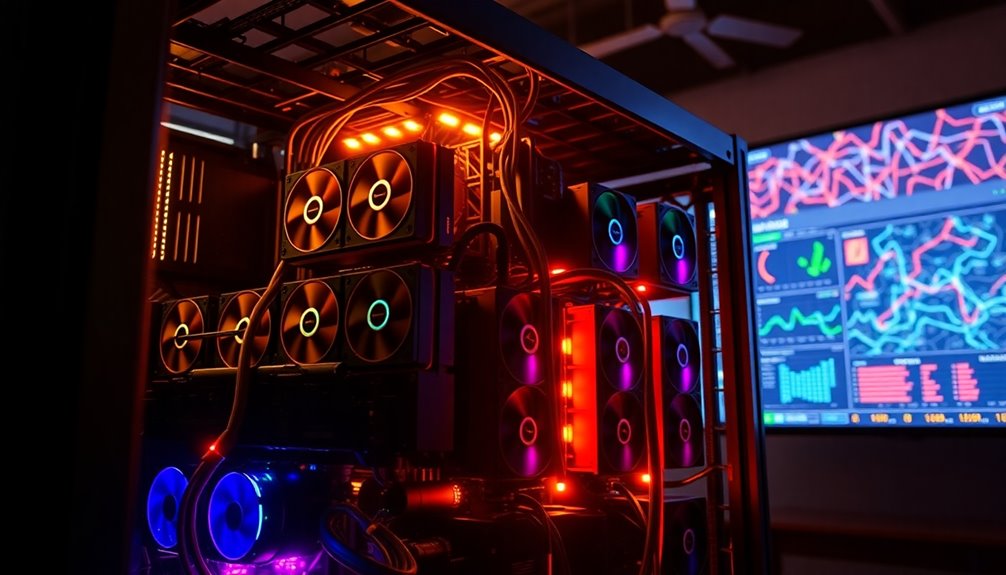
To maximize your mining efficiency, optimizing hardware is crucial. Invest in advanced ASIC chips, like the Bitaxe Ultra, which boasts a hash rate of 500-550 GH/s and an efficiency of 0.025 J/GH. This model consumes less than 15W while ensuring durability for long-term use. The emergence of ASICs providing unprecedented efficiency has revolutionized the mining landscape, making specialized hardware essential for profitability.
Implementing effective cooling systems will prevent overheating and maintain performance. Consider energy optimization techniques, such as utilizing renewable energy sources and mining in cooler climates to cut costs. Smart power management and negotiating better rates with power companies can further enhance efficiency.
Lastly, leverage advanced mining software and monitoring tools to track performance and power metrics, ensuring you make data-driven adjustments for optimal results.
Frequently Asked Questions
How Do I Choose the Right Mining Pool?
Choosing the right mining pool involves researching user reviews and checking the pool's reputation.
You should evaluate the fee structure to align with your profitability goals and understand the payout methods available.
Look for pools with reliable uptime and strategic server locations to enhance efficiency.
Additionally, assess the user interface for ease of navigation and ensure responsive customer support is available to assist you when needed.
What Are the Fees Associated With Mining Pools?
When you're exploring mining pools, you'll encounter various fees that can impact your earnings.
Commission fees generally range from 1% to 3% of your mining profits, while some pools may also impose maintenance fees, although that's less common.
Different payout models, like PPS or PPLNS, can also affect your overall costs.
Always compare pool-specific fees to ensure you're maximizing your profitability and making an informed choice.
Can I Switch Pools After Joining One?
Imagine you're a sailor, navigating the vast ocean of cryptocurrency. Yes, you can switch ships mid-journey!
To do this, just update your ship's coordinates in the navigation system. It's simple; you won't need to overhaul your entire vessel.
Just be mindful of the tides—timing your switch can help you avoid losing treasure during payouts.
Choose your next ship wisely, ensuring it's sturdy and trustworthy for the journey ahead.
Happy sailing!
How Often Are Payouts Made in Mining Pools?
Payout frequency in mining pools varies based on the payout structure you choose.
If you're in a Pay-Per-Share (PPS) pool, you'll receive fixed payments for each valid share submitted, providing stable income.
In a Pay-Per-Last-N-Shares (PPLNS) pool, payouts happen after the pool finds a block, leading to variable income.
Other structures, like FPPS, include transaction fees, ensuring more predictable earnings.
Always check the specifics of your chosen pool for details.
What Happens if a Pool Goes Offline?
If a pool goes offline, you might face disruptions that affect your mining efforts.
Server downtime can cut your connection, while equipment damage can halt operations.
If the cooling system fails, overheating may ruin your hardware.
Personnel issues, like a lack of technical support, can delay fixes, and regulatory compliance failures can lead to legal troubles.
Network disruptions, like ISP outages or DDoS attacks, can leave you disconnected, impacting your earnings significantly.
Conclusion
In the world of mining pools, think of yourself as a bee in a bustling hive. By joining forces, you can gather nectar more efficiently than flying solo. While there are sweet rewards, don't forget to watch out for potential predators lurking nearby. As you explore decentralized options, remember that teamwork can lead to a bountiful harvest, but staying informed and secure is key to thriving in this ever-changing landscape. Keep buzzing, and happy mining!