
To keep your mining rigs cool and manage heat effectively, guarantee they’re in well-ventilated, spacious areas with proper airflow. Use high-quality fans, exhaust systems, or even air conditioning to prevent overheating and improve efficiency. Regularly clean dust filters and monitor temperatures to avoid hotspots. Minimizing energy use involves maintaining ideal temperatures, which also extends hardware lifespan. Staying proactive with these strategies helps maximize output and save costs—continue to explore how to enhance your rig’s cooling for long-term success.
Key Takeaways
- Position mining rigs in well-ventilated, spacious areas to facilitate proper airflow and heat dissipation.
- Use high-quality fans, exhaust systems, and air conditioning to enhance cooling efficiency.
- Regularly clean filters and monitor temperature sensors to prevent overheating and optimize performance.
- Manage cables and airflow pathways to reduce hotspots and improve ventilation effectiveness.
- Maintain optimal ambient temperatures and humidity levels to decrease energy consumption and extend hardware lifespan.
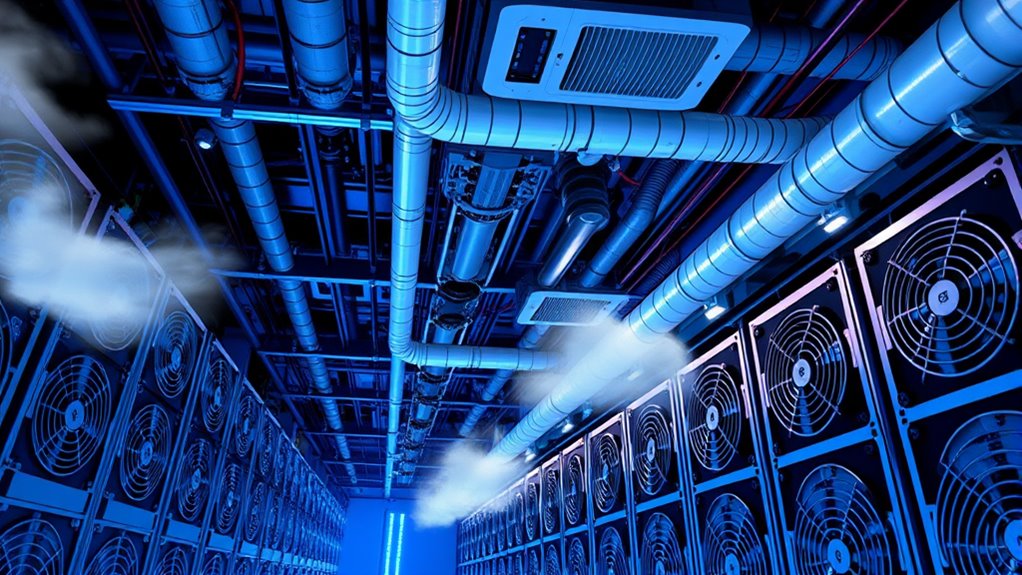
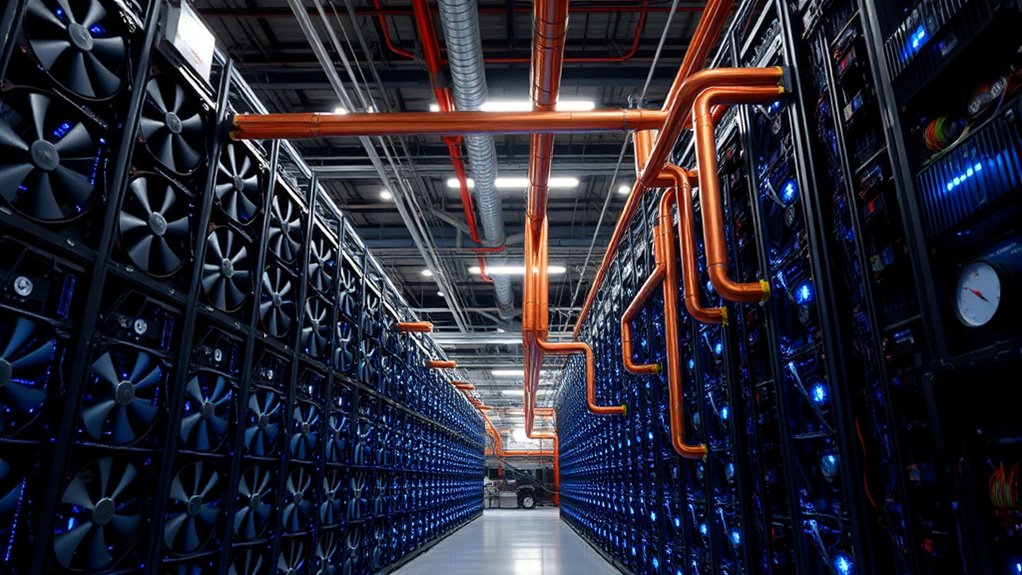
Effective cooling is vital for maintaining the performance and longevity of your mining rigs. When your equipment runs at high workloads, heat builds up rapidly, which can lead to hardware failures, reduced efficiency, and increased energy costs. To prevent these issues, you need to develop solid ventilation strategies that effectively manage airflow and keep temperatures in check. Proper ventilation helps dissipate heat from your mining hardware and ensures that cool air circulates through the system constantly. This means positioning your rigs in well-ventilated spaces, avoiding cramped or poorly ventilated areas, and using fans or exhaust systems to promote air exchange. Incorporating reliable cooling hardware is indispensable in this process. High-quality fans, air conditioning units, and heat sinks are all essential components that work together to remove excess heat. For example, strategically placing fans to create a consistent flow of air across your mining rigs can markedly lower operating temperatures. You should also consider using specialized cooling hardware, such as liquid cooling systems, if your setup generates substantial heat. These systems offer more efficient heat transfer compared to traditional air cooling, helping you keep temperatures stable even during intensive mining sessions. When selecting cooling hardware, pay attention to the specifications and compatibility with your rigs, guaranteeing optimal performance. Proper cable management and airflow pathways enhance the efficiency of your ventilation strategies, reducing hotspots and uneven temperature distribution. Regular maintenance of your cooling hardware, including cleaning dust filters and checking fan operation, prevents blockages that reduce airflow. Additionally, monitoring temperature sensors can give you real-time data to adjust your ventilation strategies promptly, avoiding overheating issues. Implementing proper maintenance practices can significantly prolong the lifespan of your cooling hardware and ensure consistent performance. The goal is to create a balanced environment where cool air enters, hot air exits, and your hardware remains within safe temperature ranges. Proper ventilation and cooling hardware integration also contribute to energy efficiency. Overheating causes your systems to work harder, which increases energy consumption and costs. By maintaining optimal operating temperatures, you reduce the strain on your power supply and extend the lifespan of your equipment. Fundamentally, combining effective ventilation strategies with robust cooling hardware not only preserves your mining rigs but also maximizes their output and efficiency. Keep in mind that the environment around your rigs matters too—placing them in a cool, dry, and well-ventilated room can make a noteworthy difference. Ultimately, investing in the right ventilation solutions and cooling hardware ensures your mining operation stays profitable, reliable, and sustainable over the long term.
Frequently Asked Questions
What Are the Environmental Impacts of Cooling Mining Rigs?
Cooling mining rigs can considerably impact the environment by increasing energy consumption, which raises your carbon footprint if powered by fossil fuels. However, using renewable energy sources like solar or wind reduces these effects, making your mining operations more sustainable. Efficient cooling systems not only lower energy use but also minimize environmental harm, helping you cut down on emissions and promote greener mining practices.
How Does Ambient Temperature Affect Rig Cooling Efficiency?
Ambient heat directly impacts your rig’s cooling efficiency; higher ambient temperatures reduce the effectiveness of your cooling systems, making it harder to keep components within safe limits. When the surrounding environment is warm, your rig’s fans and cooling mechanisms work harder, consuming more energy and risking overheating. To maintain ideal performance, you should consider cooling solutions that adapt to ambient heat, such as air conditioning or advanced ventilation, especially in hot climates.
Can Liquid Cooling Systems Be Safely Implemented in Mining Rigs?
Yes, you can safely implement liquid cooling systems in mining rigs if you carefully consider safety considerations. Guarantee you use high-quality, leak-proof components and proper installation techniques to prevent leaks and electrical hazards. Regular maintenance and monitoring are essential to detect issues early. By prioritizing safety considerations, liquid cooling can effectively manage heat, improve performance, and extend your mining rig’s lifespan.
What Are the Costs Associated With Advanced Cooling Solutions?
Imagine your mining rig dressed in a tuxedo made of liquid cooling, prancing around with sparkling efficiency. The cost analysis for these advanced cooling solutions can be steep, including hardware investments and maintenance. However, they markedly optimize efficiency, reducing energy bills and extending rig lifespan. While initial expenses seem high, the long-term savings and performance gains make the investment worthwhile, turning your mining operation into a sleek, cool machine.
How Often Should Cooling Systems Be Maintained or Replaced?
You should follow a regular maintenance schedule for your cooling systems, checking components like fans and filters monthly. Replace parts as needed based on manufacturer recommendations, typically every 1-3 years, depending on usage and wear. Stay vigilant for signs of inefficiency, such as increased noise or temperature spikes, which indicate it’s time for maintenance or replacement. Proper upkeep ensures ideal cooling, prolongs system life, and keeps your mining rig running efficiently.
Conclusion
To keep your mining rigs running smoothly, you’ll want to make sure they stay comfortably within their ideal temperature range. Think of it as giving your equipment a gentle hug, helping them operate at peak performance without overheating. By managing airflow and energy use wisely, you’re fundamentally guiding your rigs toward a more harmonious and efficient future. With a little care, your mining setup can work tirelessly, all while maintaining a cool and steady rhythm.