
Inside a mining farm, you’ll see rows of powerful servers and specialized hardware like ASICs and GPUs working nonstop to validate transactions and mine cryptocurrencies. These farms rely on advanced cooling systems, energy-efficient setups, and automation to keep everything running smoothly. Staying updated with the latest hardware and managing high energy costs are key to success. If you explore further, you’ll uncover how these farms balance technology and sustainability to stay competitive.
Key Takeaways
- Large-scale mining farms feature rows of high-performance servers, ASICs, or GPUs optimized for cryptographic calculations.
- Efficient cooling systems like water or immersion cooling maintain hardware performance and prevent overheating.
- Farms are powered by cheap, renewable energy sources to reduce costs and environmental impact.
- Continuous hardware upgrades and system monitoring ensure maximum profitability and operational efficiency.
- Automation tools manage remote operations, optimize energy use, and minimize downtime in demanding environments.

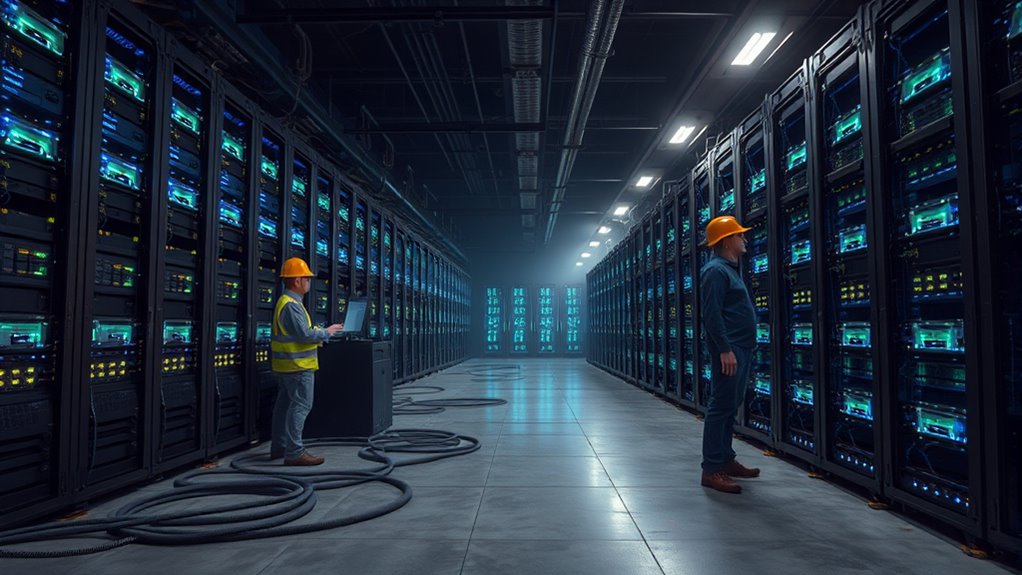
Mining farms are large-scale operations designed to maximize cryptocurrency production through specialized hardware and efficient infrastructure. When you step into one of these facilities, you quickly realize that the core of their operation hinges on powerful mining hardware. These machines, often custom-built ASICs or high-performance GPUs, are engineered specifically for the intensive calculations needed to validate transactions and mine new coins. You’ll see rows upon rows of blinking servers and hardware units, each working tirelessly to solve complex cryptographic puzzles. The quality and capacity of this hardware directly influence the farm’s output and profitability. Because mining is highly competitive, staying updated with the latest hardware advancements is essential; older models quickly become obsolete, reducing efficiency and profitability. Hardware efficiency is crucial for maintaining competitiveness in the mining industry.
Mining farms rely on powerful, specialized hardware to maximize cryptocurrency production and stay competitive in a rapidly evolving industry.
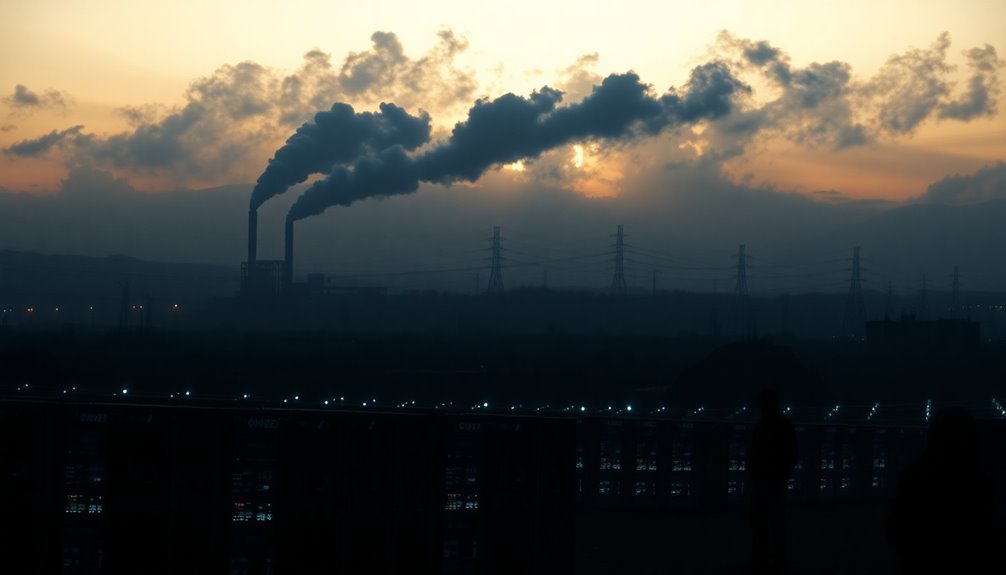
Energy consumption is another vital aspect you can’t overlook. Mining farms consume enormous amounts of electricity, often comparable to small cities. You’ll notice the infrastructure is designed to handle this high energy demand, with robust electrical systems and cooling solutions in place to prevent overheating. Managing energy consumption isn’t just about powering the hardware; it’s also about controlling operational costs. Many farms seek locations with access to cheap, renewable energy sources to keep expenses down and reduce environmental impact. Some operate in regions with abundant hydroelectric, geothermal, or wind power, which helps them maintain higher profit margins. You might also see elaborate cooling systems—large fans, water cooling, or even immersion cooling—used to draw heat away from the hardware, ensuring it runs at peak efficiency for longer periods.
The scale of energy consumption and hardware deployment means that maintenance and management are ongoing tasks. You’ll notice tech teams constantly monitoring system performance, temperature levels, and energy metrics to optimize output and prevent failures. They often implement automation tools for remote management, ensuring the farm runs smoothly around the clock. Power consumption isn’t just about energy bills; it also impacts the farm’s sustainability and reputation. The most efficient operations leverage innovative cooling methods and energy sources to reduce waste and environmental footprint, all while maximizing their mining output.
In essence, operating a mining farm involves balancing cutting-edge hardware with strategic energy management. You’re dealing with a delicate equation: more powerful hardware yields higher returns but requires more energy and maintenance. Success depends on your ability to optimize hardware performance, minimize downtime, and control energy costs—all within a carefully designed infrastructure that can handle the relentless demands of modern cryptocurrency mining.
Frequently Asked Questions
How Do Miners Ensure Equipment Safety in Harsh Environments?
You guarantee equipment safety in harsh environments by performing regular equipment maintenance and strictly following safety protocols. You inspect and clean machines frequently to prevent malfunctions caused by dust, moisture, or debris. Additionally, you train staff on safety procedures and use protective gear. By proactively maintaining equipment and adhering to safety protocols, you reduce risks, keep operations running smoothly, and protect everyone working in challenging conditions.
What Are the Latest Technological Advancements in Mining Farm Operations?
Sure, you’re on the cutting edge with AI-powered cooling systems and blockchain-integrated management, right? These days, mining farms boost scalability using modular setups that grow faster than crypto regulations change. You leverage real-time analytics to optimize operations, ensuring your farm’s future-proof. With smarter hardware and automation, you stay ahead of the game, proving that mining isn’t just about hashing, but also about staying adaptable in a rapidly evolving world.
How Do Farms Manage Energy Consumption Efficiently?
You manage energy consumption efficiently by integrating renewable energy sources like solar or wind, reducing reliance on fossil fuels. You optimize operations through smart grid integration, balancing load demands and minimizing wastage. Implementing energy-efficient hardware and cooling systems further cuts costs. By constantly monitoring energy use and adjusting operations in real-time, you guarantee your mining farm remains sustainable, cost-effective, and environmentally friendly.
What Cybersecurity Measures Protect Mining Farm Data?
Ever wonder how your mining farm keeps data safe? You implement strong cybersecurity protocols like firewalls, intrusion detection systems, and multi-factor authentication. Data encryption is essential, protecting sensitive information from hackers. Regular software updates and employee training also help prevent breaches. By proactively securing your network, you guarantee uninterrupted operations and safeguard valuable digital assets from cyber threats. Isn’t protecting your data worth the effort?
How Is Waste and Heat From Mining Farms Environmentally Managed?
You should focus on environmentally managing waste and heat by implementing efficient waste disposal methods and heat recycling systems. This minimizes environmental impact and reduces energy consumption. You can use cooling systems that repurpose heat for other processes or natural cooling techniques like water or air cooling. Proper waste disposal guarantees that harmful materials are safely handled, further reducing the environmental footprint of your mining farm.
Conclusion
Now that you’ve seen how industrial miners operate, it’s clear they’re driven by innovation and efficiency. Running a mining farm is no small feat, but with the right strategies, you can turn technology into profit. Remember, Rome wasn’t built in a day—patience and persistence are key. Keep learning, stay adaptable, and you’ll be well on your way to mastering the world of crypto mining. The right approach makes all the difference.