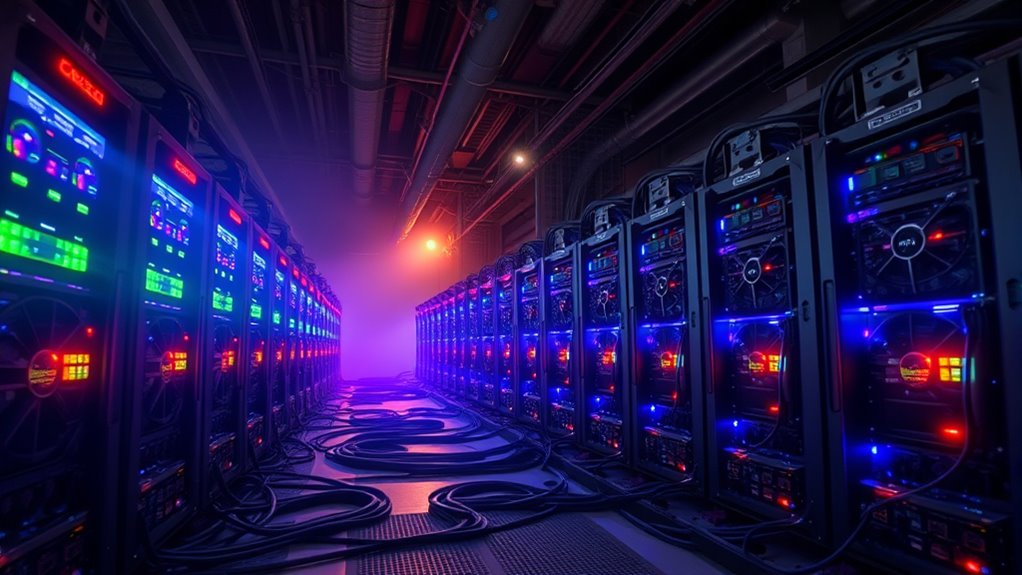

Many myths about cryptocurrency mining suggest it’s solely harmful to the environment, but that’s not entirely true. Advances in technology and a shift toward renewable energy sources are making mining more sustainable. Governments are also implementing regulations that encourage greener practices. Industry efforts focus on reducing energy consumption and adopting eco-friendly solutions. If you look closer, you’ll see that mining is evolving quickly and embracing responsible growth—stick with us to uncover the full picture.
Key Takeaways
- Many mining operations now utilize renewable energy, significantly reducing environmental impact.
- Advances in mining technology have decreased energy consumption and increased efficiency.
- Proof of stake and other eco-friendly consensus mechanisms lower the carbon footprint of cryptocurrencies.
- Governments are implementing regulations encouraging greener mining practices, not banning the industry altogether.
- The industry is actively investing in sustainable solutions, showing a commitment to responsible growth and environmental responsibility.

Cryptocurrency mining often gets a bad reputation, but many of the commonly held beliefs are misconceptions. One of the biggest concerns revolves around its environmental impact. People assume that mining consumes enormous amounts of energy, leading to significant carbon footprints. While it’s true that some mining operations rely on electricity generated from fossil fuels, that doesn’t tell the whole story. Advances in technology and shifts toward renewable energy sources are gradually reducing the environmental footprint of mining activities. Large-scale farms are increasingly locating in regions with abundant hydroelectric power or wind energy, making their operations more sustainable. Additionally, some cryptocurrencies are exploring more energy-efficient consensus mechanisms, such as proof of stake, which drastically cut down on electricity consumption compared to traditional proof of work systems. Understanding this nuance helps you see that the environmental impact isn’t fixed; it’s evolving as the industry adapts and innovates. Furthermore, a growing number of mining facilities are actively investing in green technologies for sustainable growth.
Another misconception you might have is that regulatory challenges make cryptocurrency mining impossible or highly restricted everywhere. While governments around the world are indeed implementing new rules to control mining activities, these regulations aren’t universally prohibitive. Instead, they often aim to strike a balance between fostering innovation and addressing concerns like energy use, financial security, and illegal activities. For instance, some countries have imposed bans or high taxes on mining operations that rely on non-renewable energy or pose risks to the financial system. Others are creating clear frameworks to encourage environmentally friendly and compliant mining practices. These regulatory challenges can be viewed less as obstacles and more as opportunities for the industry to evolve responsibly. Many miners are already adjusting their strategies to meet new standards, such as relocating to regions with cleaner energy sources or adopting more sustainable technologies. This proactive approach demonstrates that regulation doesn’t necessarily hinder progress; it can guide the industry toward more responsible and sustainable practices.
In essence, the environmental impact and regulatory landscape of cryptocurrency mining are more complex than popular myths suggest. While there are genuine concerns about energy consumption, the industry is actively working toward greener solutions. Similarly, regulations are not intended to shut down mining but to guarantee it develops in a way that’s sustainable and secure. As you continue to learn about cryptocurrency mining, keep in mind that it’s a dynamic field—one that’s rapidly adapting to address its challenges while opening new opportunities. The misconceptions often overshadow the ongoing efforts to make mining more efficient, responsible, and integrated with global sustainability goals.
Frequently Asked Questions
Is Cryptocurrency Mining Environmentally Sustainable Long-Term?
Cryptocurrency mining can be environmentally sustainable long-term if you prioritize renewable energy sources, which considerably reduce your carbon footprint. By using solar, wind, or hydropower, you make mining greener and more sustainable. Although traditional mining often relies on fossil fuels, shifting to renewable energy helps minimize environmental impact. So, with the right energy choices, you can guarantee your mining activities remain eco-friendly and sustainable over time.
Can Anyone Easily Start Mining at Home?
Starting to mine at home isn’t as easy as it sounds. While anyone can set up hardware, you’ll need a proper hardware setup and an initial investment in mining rigs or GPUs. The process involves significant effort, technical knowledge, and ongoing electricity costs. Unlike other hobbies, mining requires upfront planning and resources. So, it’s not an instant, effortless venture, but with dedication, you can begin your mining journey.
Do Mining Activities Always Require Expensive Hardware?
No, mining activities don’t always require expensive hardware. While high-performance equipment can boost your chances of earning rewards, it’s not always necessary. You can start with basic hardware, but keep in mind that hardware cost and equipment necessity vary depending on your mining goals. For small-scale or beginner mining, less costly setups may suffice. However, for competitive mining, investing in more advanced, costly hardware becomes essential.
How Does Mining Impact Local Electricity Grids?
Mining impacts your local electricity grid by increasing electricity consumption, which can strain resources if not managed properly. Large-scale mining operations draw significant power, potentially affecting grid stability and causing fluctuations in supply. This increased demand may lead to higher energy costs for residents and businesses. To minimize these effects, it’s essential for miners to use sustainable energy sources and work with local utilities to guarantee the grid remains stable while supporting mining activities.
Will Mining Become Obsolete With Future Technology?
You might wonder if mining will become obsolete with future technology. Currently, over 75% of Bitcoin’s mining power relies on renewable energy, showing ongoing innovation. While technological obsolescence could challenge current methods, new innovations often lower barriers, making mining more efficient and sustainable. So, rather than becoming obsolete, mining is likely to evolve with advancements, overcoming current innovation barriers and adapting to future tech trends.
Conclusion
Now that you know the truth behind these common myths, you can approach cryptocurrency mining with a clearer perspective. Remember, understanding the facts helps you make smarter decisions and avoid unnecessary fears or misconceptions. Don’t let myths cloud your judgment—are you ready to see the real potential of crypto mining beyond the hype? By staying informed, you’ll be better equipped to navigate this exciting world confidently.