🔍 Read the full analysis: 2026'S Most Powerful Desktop Processors For AI Applications on ThorstenMeyerAI.com

Get hardware and tech essentials delivered free with Prime
- Fast, free delivery on millions of items
- Prime Video, Amazon Music and more included
- Member-only deals all year
TL;DR
In 2026, leading desktop processors from AMD and Intel are emerging as top choices for AI applications. This report highlights confirmed models, their capabilities, and what remains uncertain about future developments.
AMD and Intel have unveiled their most powerful desktop processors for 2026, positioning these CPUs as key tools for AI applications. These models are designed to meet the rising demand for high-performance computing in AI research, development, and deployment, making them significant for professionals across tech, research, and enterprise sectors. For a detailed overview, see the original analysis of top processors.
AMD’s Ryzen 9 9950X3D and Intel’s Core i9-14900K are the flagship processors confirmed for 2026, both boasting multi-core architectures optimized for AI workloads. The AMD Ryzen 9 9950X3D features 16 cores with 3D V-Cache technology, offering exceptional multi-threaded performance, especially in AI training and data processing tasks. This highlights the importance of choosing the right processor for AI workloads. Meanwhile, Intel’s Core i9-14900K provides a balanced combination of high clock speeds and core count, with a focus on single-thread performance crucial for certain AI inference operations.
These processors are built on advanced architectures—AMD’s Zen 5 and Intel’s Raptor Lake Refresh—supporting DDR5 RAM and PCIe 5.0, which are essential for high-bandwidth AI data handling. Both chipsets are expected to support upcoming software and hardware standards, contributing to their future-proofing. For more insights, refer to the comprehensive guide on desktop processors. The availability of these CPUs has been confirmed by AMD and Intel, with early benchmarks indicating significant performance improvements over previous generations in AI-specific tasks.
The 9 picks
- 1
 AMD Ryzen 9 9950X3D 16-Core ProcessorView on Amazon →
 - 2
 AMD Ryzen 7 9800X3D 8-Core, 16-Thread Desktop ProcessorView on Amazon →
 - 3
 Intel Core i7-14700K Desktop Processor with 20 Cores and Integrated GraphicsView on Amazon →
 - 4
 AMD Ryzen 7 5800X3D 8-core, 16-Thread Desktop Processor with AMD 3D V-Cache T…View on Amazon →
 - 5
 AMD Ryzen 7 7800X3D 8-Core, 16-Thread Desktop ProcessorView on Amazon →
 - 6
 Intel Core i5-14400F Desktop Processor (14th Gen), 10 cores, up to 4.7 GHzView on Amazon →
 - 7
 AMD Ryzen 5 9600X 6-Core, 12-Thread Unlocked Desktop ProcessorView on Amazon →
 - 8
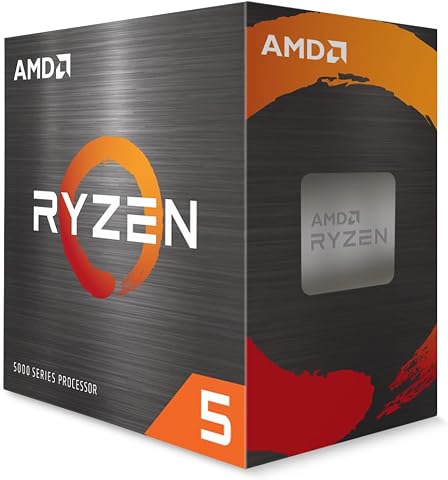 AMD Ryzen 5 5600 6-Core 12-Thread Unlocked Desktop Processor with Wraith Stea…View on Amazon →
 - 9AMD Ryzen 5 5500 6-Core, 12-Thread Unlocked Desktop Processor with Wraith Ste…View on Amazon →
Impact of New CPUs on AI Workloads and Industry
The introduction of these high-end processors marks a major step forward for AI development on desktop platforms. Their enhanced multi-core capabilities and support for cutting-edge memory and I/O standards will enable faster training, inference, and data analysis, benefiting AI researchers, developers, and enterprises. These CPUs could influence hardware choices for AI-focused workstations and data centers, potentially shifting the competitive landscape among CPU manufacturers.
Furthermore, the adoption of these processors may accelerate AI innovation by reducing bottlenecks in computation, leading to more advanced models and applications. However, the actual impact depends on software optimization and ecosystem support, which are still evolving.
Development Timeline and Industry Positioning
Over the past few years, both AMD and Intel have heavily invested in architectures optimized for AI workloads. AMD’s Zen 4-based processors introduced significant performance gains, and the upcoming Zen 5 architecture is expected to push these boundaries further. Similarly, Intel’s Raptor Lake and subsequent refreshes have focused on high clock speeds and core counts suitable for AI tasks.
Early 2026 marks the culmination of these efforts, with AMD and Intel announcing their flagship models designed explicitly for AI. Prior models like AMD’s Ryzen 7000 series and Intel’s 13th Gen processors laid the groundwork, but the new flagship CPUs aim to dominate high-end desktop AI processing. The industry is also witnessing a trend toward integrating AI accelerators and specialized hardware, but these CPUs remain central for general-purpose AI workloads on desktops.
Remaining Questions About Software Ecosystem and Long-Term Support
While these processors have been confirmed and initial benchmarks are promising, it is still unclear how well current AI software frameworks will optimize for these new architectures. Compatibility with upcoming AI tools, libraries, and hardware accelerators remains to be tested extensively. Additionally, the long-term support lifecycle and potential future upgrades for these CPUs are not yet fully detailed by AMD and Intel.
Upcoming Benchmarks and Ecosystem Optimization Efforts
In the coming months, independent testing labs and enterprise users will evaluate these CPUs in real-world AI workloads. Software developers are expected to optimize frameworks like TensorFlow and PyTorch for these architectures, which will influence overall performance gains. AMD and Intel are also expected to release BIOS updates and ecosystem enhancements to maximize these CPUs’ capabilities. Market availability and pricing will further shape adoption trends in the second half of 2026.
Key Questions
Are these processors suitable for AI training or inference?
Both the AMD Ryzen 9 9950X3D and Intel Core i9-14900K are designed to excel in AI training and inference tasks, thanks to their high core counts, fast memory support, and architecture optimizations. However, actual performance depends on software compatibility and workload specifics.
Will these CPUs support future AI hardware accelerators?
While these processors support PCIe 5.0 and DDR5, which are essential for high-bandwidth AI hardware, their compatibility with future accelerators depends on motherboard support and software integration. Both AMD and Intel are likely to release platform updates to enhance support.
How do these CPUs compare to previous generations for AI tasks?
Initial benchmarks suggest these 2026 flagship CPUs deliver significantly higher performance in AI workloads compared to their 2024 and 2025 predecessors, mainly due to increased core counts, cache improvements, and architectural enhancements.
Are these CPUs cost-effective for AI professionals?
As high-end models, they come with premium prices. For AI professionals requiring maximum performance, they offer good value considering their capabilities. For casual or budget users, mid-range options may suffice.
Source: ThorstenMeyerAI.com
Columbus Day / Indigenous Peoples' Day Picks
long weekend sales
As an affiliate, we earn on qualifying purchases.