
Bitmain is still a leader in crypto mining hardware, but fierce competition is changing the game. Companies like MicroBT and Canaan now offer more energy-efficient ASICs that boost profitability and lower costs. Emerging US and Chinese firms focus on innovation and sustainability, challenging Bitmain’s dominance. If you want to understand how these rivals are reshaping the market and what that means for your investments, there’s more to uncover ahead.

Get hardware and tech essentials delivered free with Prime
- Fast, free delivery on millions of items
- Prime Video, Amazon Music and more included
- Member-only deals all year
Key Takeaways
- Bitmain remains a dominant player but faces increasing competition from companies like MicroBT and Canaan.
- Competitors focus heavily on developing more efficient ASICs, challenging Bitmain’s market share.
- MicroBT’s WhatsMiner series is recognized for superior energy efficiency, gaining market traction.
- Bitmain is accelerating R&D to produce newer, more efficient models to maintain its leadership.
- The overall market share is shifting as emerging players prioritize sustainability and lower operational costs.
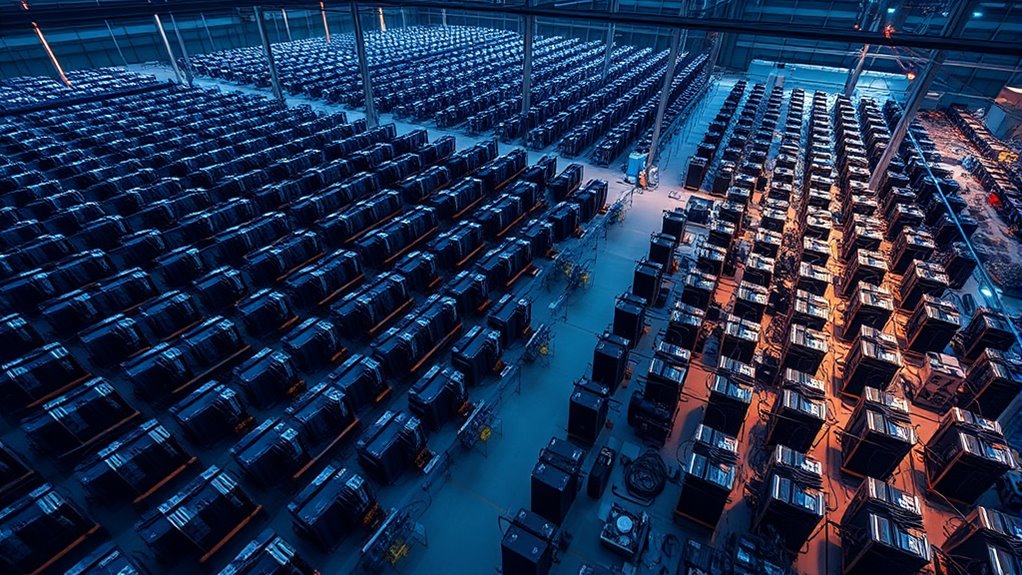
Bitmain, the dominant player in the cryptocurrency mining industry, faces increasing competition from several emerging and established companies. As the market evolves, so do the strategies of these competitors who aim to chip away at Bitmain’s dominance. Central to this competition is ASIC efficiency, a vital factor that determines how effectively mining hardware performs relative to power consumption and computational output. Competitors are investing heavily to develop ASICs that deliver higher efficiency, enabling miners to maximize profitability and reduce operational costs. This focus on ASIC efficiency directly impacts market share analysis, as miners tend to favor hardware that offers the best performance-to-cost ratio. In addition, the importance of energy efficiency has become a key consideration for miners seeking sustainable operations and cost savings.
Competition intensifies as ASIC efficiency becomes key to market dominance and profitability.
In the race for market share, companies like MicroBT and Canaan have gained ground by offering ASIC miners with improved efficiency. MicroBT’s WhatsMiner series, for example, is known for its superior energy efficiency, which appeals to miners looking to optimize their operations. Meanwhile, Canaan’s AvalonMiner lineup continues to be a competitive alternative, often priced more competitively and offering decent efficiency levels. These companies understand that in a highly competitive industry, ASIC efficiency isn’t just about raw power but also about how well the hardware balances performance with energy consumption, ultimately influencing market share distribution.
Bitmain’s own Antminer series remains a formidable force, but it’s no longer unchallenged. As competitors release new models that push the boundaries of ASIC efficiency, Bitmain must continuously innovate to maintain its leading position. Market share analysis reveals that while Bitmain still commands a significant portion of the global mining hardware market, its dominance is increasingly challenged by these newcomers. The competition’s focus on improving ASIC efficiency is forcing Bitmain to accelerate its R&D efforts, leading to newer, more efficient models that can better compete on both performance and power consumption.
Furthermore, emerging players from regions like the United States and China are entering the fray, offering hardware that often emphasizes sustainability and lower operational costs. These companies are leveraging advancements in ASIC efficiency to carve out their own market niches. As a result, the overall market share landscape is shifting, with Bitmain’s once-unassailable position now facing more nuanced and aggressive competition. To stay ahead, Bitmain must not only innovate in ASIC efficiency but also adapt to the changing dynamics of market share analysis, which increasingly favors hardware that offers not just raw power but also energy savings and cost-effectiveness.
Frequently Asked Questions
How Does Bitmain’s Pricing Compare to Its Competitors?
You’ll find that Bitmain’s pricing strategies generally emphasize cost competitiveness, making their mining hardware more affordable than many competitors. They often offer competitive prices to attract miners, balancing quality and affordability. Compared to other brands, Bitmain tends to keep prices lower or on par, which helps you maximize profitability. Their focus on cost efficiency guarantees you get reliable mining equipment without overspending, giving you an edge in the competitive crypto mining market.
What Are the Environmental Impacts of Mining Hardware?
Imagine the environment as a delicate balance; crypto mining hardware tips the scales. Your mining operations can substantially impact the planet, from high energy consumption to e-waste. Using renewable energy sources reduces carbon footprints, while proper e-waste management ensures hazardous materials are handled responsibly. By prioritizing these practices, you help minimize environmental harm, turning your mining efforts into a more sustainable and eco-friendly pursuit.
How Do Customer Support Services Differ Among Companies?
You’ll notice customer support varies among companies; some excel with responsive customer service, offering quick resolutions, while others lag in technical support. When choosing a provider, you should look for accessible, knowledgeable technical support teams and clear communication channels. Good customer service guarantees your mining hardware runs smoothly, minimizing downtime. Prioritizing companies with strong support can save you time and frustration, helping you maintain efficient mining operations.
Which Company Has the Fastest Product Innovation Cycle?
You’ll find that Bitmain has the fastest product innovation cycle, driven by rapid technology advancements and frequent product release frequency. They consistently push updates to stay ahead in the crypto mining hardware race. Their focus on cutting-edge technology guarantees you get the latest features quickly, giving you a competitive edge. This cycle allows you to benefit from improved efficiency and performance, keeping you at the forefront of the evolving crypto mining industry.
What Are the Long-Term Sustainability Plans of These Manufacturers?
You should know that over 60% of mining farms are now shifting to renewable energy sources. These manufacturers are prioritizing long-term sustainability by investing in renewable energy and embracing corporate responsibility. They’re developing more energy-efficient hardware and exploring greener operations to reduce carbon footprints. This proactive approach guarantees their competitiveness, aligns with global climate goals, and demonstrates a commitment to responsible innovation that benefits both the environment and the industry’s future.
Conclusion
As you follow the fierce competition, it’s clear that Bitmain remains a dominant force, much like a seasoned captain steering through turbulent waters. However, competitors are closing in fast with innovative designs and better efficiencies. If you’re invested or considering entering the market, stay alert—this race is far from over. Just like a thrilling race, the leader can change in a heartbeat, so keep your eyes on the prize and watch how the contenders evolve.
Halloween Picks
halloween
As an affiliate, we earn on qualifying purchases.