
AMD hardware plays a key role in modern AI workflows by providing powerful, efficient tools that help you process data faster and train models more quickly. Its GPUs are optimized for large-scale parallel computations, making data-heavy tasks smoother. Features like ROCm enhance compute capabilities, ensuring scalability and flexibility for various projects. By integrating AMD hardware, you can streamline your AI development and stay ahead in innovation—keep exploring to discover how it can elevate your workflow even further.

Get hardware and tech essentials delivered free with Prime
- Fast, free delivery on millions of items
- Prime Video, Amazon Music and more included
- Member-only deals all year
Key Takeaways
- AMD GPUs enable rapid AI model training and inference through large-scale parallel processing.
- ROCm platform enhances AMD hardware’s compute capabilities, supporting diverse AI frameworks.
- Hardware accelerates data preprocessing tasks like cleaning, normalization, and feature extraction.
- Flexible AMD solutions scale with project needs, optimizing workflow efficiency and reducing time-to-market.
- AMD hardware’s compatibility and performance ensure seamless integration into modern AI development pipelines.
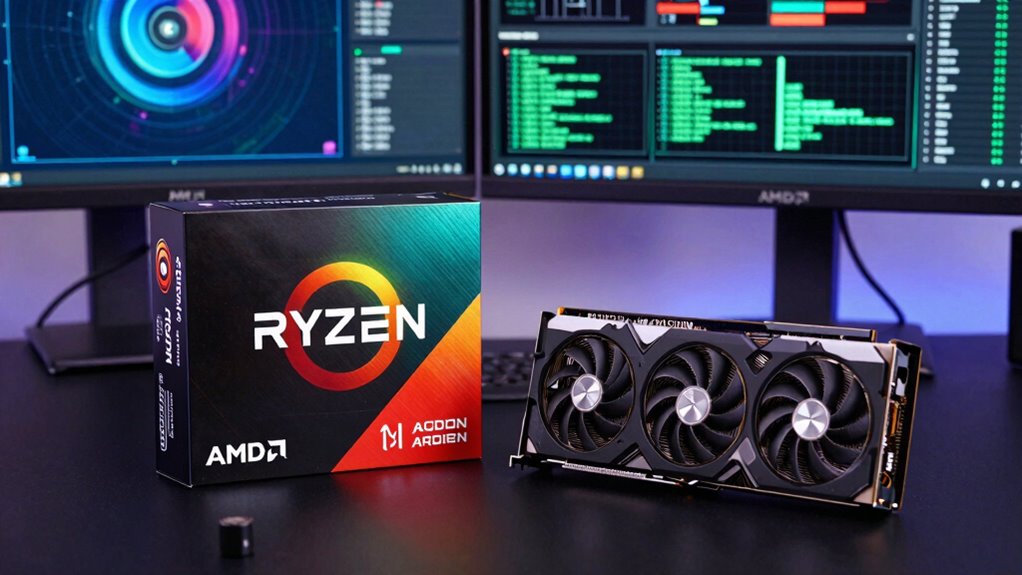
As artificial intelligence continues to advance, leveraging the right hardware becomes essential for efficient workflows. When working with AI models, especially in data-intensive tasks, your choice of hardware can markedly influence speed and accuracy. AMD hardware offers compelling options that fit seamlessly into modern AI workflows, particularly when it comes to GPU acceleration and data preprocessing. With AMD’s powerful GPUs, you can accelerate training and inference processes, reducing the time it takes to move from data to insights. Their GPUs are designed to handle large-scale parallel computations, making them ideal for deep learning workloads that require massive matrix operations and high throughput.
GPU acceleration is a game-changer for AI tasks, and AMD’s graphics cards enable you to process vast datasets quickly, without bottlenecks. You’ll find that AMD GPUs are optimized to work with popular AI frameworks, allowing you to leverage their full potential with minimal configuration. This means you can train complex models faster, experiment more freely, and iterate without waiting days for results. AMD’s hardware also supports features like ROCm (Radeon Open Compute), an open-source platform that enhances GPU compute capabilities, making it easier to deploy AI models efficiently. By integrating AMD GPUs into your workflow, you gain a flexible, scalable solution that keeps pace with the growing demands of AI development.
AMD GPUs optimize AI frameworks, enabling faster training, experimentation, and deployment with minimal configuration and scalable performance.
Data preprocessing is another critical step where AMD hardware can make a difference. Before training your models, you need to clean, normalize, and organize data—tasks that can be resource-intensive. AMD’s hardware accelerates these processes, enabling you to preprocess large datasets more quickly. With high-performance CPUs and GPUs, you can handle data augmentation, feature extraction, and transformation tasks more efficiently. This acceleration not only saves time but also helps maintain data quality, ensuring your models train on accurate, well-prepared datasets. Additionally, AMD’s support for open standards and compatibility with common data processing tools means you can build streamlined pipelines that maximize hardware utilization. For example, parallel processing capabilities are integral to optimizing complex workflows, especially when combined with open-source platforms. Moreover, leveraging AMD hardware can help reduce computational bottlenecks, ensuring a smoother and more scalable workflow.
In modern AI workflows, hardware choice influences every stage—from data preprocessing to model deployment. AMD offers a versatile ecosystem that adapts to your needs, whether you’re working on a small project or deploying large-scale models. Their hardware provides the computational power necessary to accelerate GPU tasks and optimize data handling, making it an integral part of your AI toolkit. When you choose AMD hardware, you’re investing in a future-proof solution that boosts efficiency, reduces time-to-market, and enables you to stay ahead in the rapidly evolving AI landscape.
As an affiliate, we earn on qualifying purchases.
Frequently Asked Questions
How Does AMD Hardware Compare to NVIDIA for AI Workloads?
You’ll find AMD hardware offers solid performance for AI workloads, especially with good hardware compatibility and increasing software optimization. While NVIDIA still leads in AI-specific tools and libraries, AMD’s GPUs are catching up, providing cost-effective alternatives. You’ll notice that AMD’s open ecosystem allows easier integration into diverse workflows, but for the latest AI features and optimized software support, NVIDIA remains slightly ahead. Still, AMD’s hardware is becoming a competitive choice.
What Specific AMD GPUS Are Best for AI Research?
You’ll love AMD’s Radeon RX 7900 XTX and RX 7800 XT for AI research—who knew AMD could be so compatible? These GPUs offer impressive GPU compatibility and excel in software optimization, making AI workflows smoother. While they might not have Nvidia’s dominant market share, their innovative architecture supports many AI frameworks. So, if you’re seeking powerful, versatile hardware, AMD’s latest GPUs might just surprise you with their performance and flexibility.
Are AMD CPUS Suitable for AI Development Environments?
Yes, AMD CPUs are suitable for AI development environments. They offer robust hardware integration, enabling smooth handling of complex data processing tasks, and provide strong software compatibility with popular AI frameworks like TensorFlow and PyTorch. With multi-core performance and efficient energy use, AMD CPUs support intensive workloads, making them a reliable choice for AI research and development. Your setup benefits from AMD’s balance of power, efficiency, and compatibility.
How Does Amd’s ROCM Platform Support AI Applications?
Think of AMD’s ROCm platform like a bridge connecting your AI ideas to powerful hardware. It supports AI applications through seamless hardware integration and broad software compatibility, making it easier for you to develop and deploy AI models. ROCm enables GPU acceleration, optimized for AI workloads, ensuring your hardware and software work together efficiently. This platform empowers you to harness AMD GPUs’ full potential in your AI projects, boosting performance and flexibility.
What Are Amd’s Future Plans for AI Hardware Advancements?
AMD plans to expand its AI hardware with advanced AI chipsets optimized for machine learning, aiming to boost performance and efficiency. You can expect them to prioritize integrating AI-specific features into their CPUs and GPUs, enhancing AI workload processing. Their future innovations will likely focus on reducing latency and power consumption, making AMD hardware more competitive for AI applications and helping you accelerate machine learning tasks across diverse workloads.
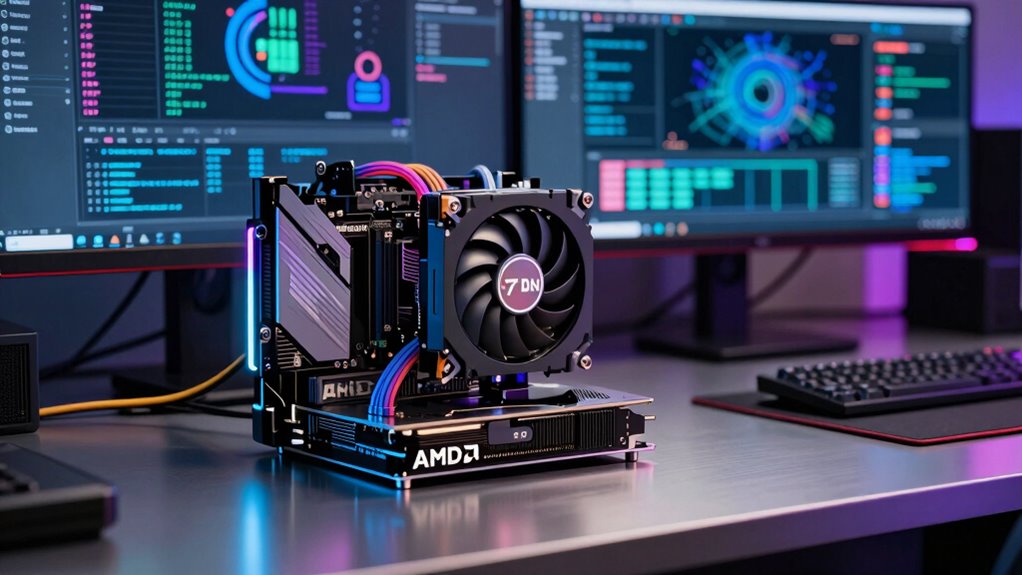
AMD ROCm compatible graphics card
As an affiliate, we earn on qualifying purchases.
As an affiliate, we earn on qualifying purchases.
Conclusion
So, as you enthusiastically juggle AI tasks on AMD hardware, remember—you’re not just riding the wave of modern tech, you’re practically steering it. In this brave new AI world, AMD’s prowess might just turn your workflow from a chaotic scramble into a symphony of computational mastery. Or, at the very least, it’ll make you look good trying. Either way, you’re embracing the future—one GPU at a time. Cheers to being both curious and computationally competent!
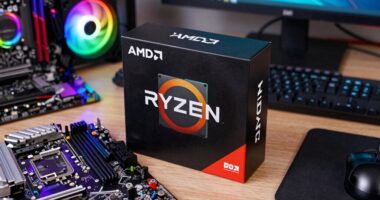
high performance AMD CPU for data preprocessing
As an affiliate, we earn on qualifying purchases.
As an affiliate, we earn on qualifying purchases.
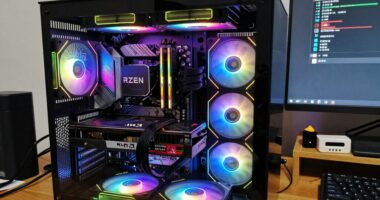
AI workstation with AMD hardware
As an affiliate, we earn on qualifying purchases.
As an affiliate, we earn on qualifying purchases.
Fall Picks
fall essentials
As an affiliate, we earn on qualifying purchases.