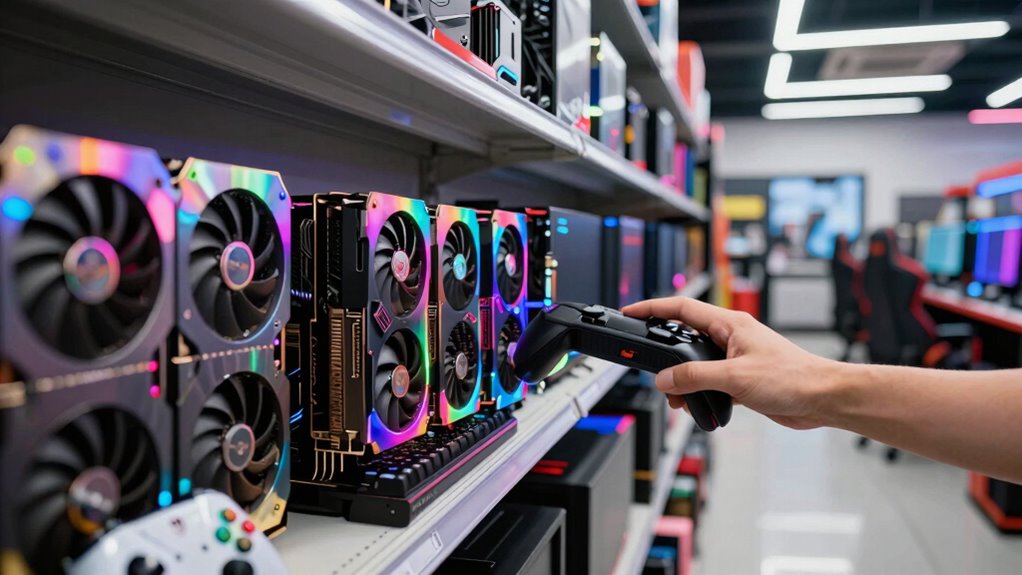

Every year, buying gaming hardware gets tougher because new models and features are released constantly, making older ones seem less appealing or outdated. Supply chain issues and high demand lead to shortages and inflated prices, while technological advances create pressure to upgrade sooner. Market fluctuations and global disruptions add unpredictability, making timing and affordability hard to pin down. Stay with us to discover how to navigate these challenges and make smarter choices.
Key Takeaways
- Rapid release of new models and features quickly renders previous hardware outdated and less appealing.
- Supply chain disruptions and high demand cause shortages, delays, and fluctuating prices.
- Technological advancements create pressure to upgrade sooner, complicating timing and decision-making.
- Compatibility issues and evolving specifications make upgrading or building systems more complex.
- External factors like geopolitical tensions and logistics problems increase uncertainty and difficulty in purchasing.

As gaming hardware continues to evolve at a rapid pace, choosing the right components has become more complicated than ever. You’re faced with a constant influx of new models, features, and specifications, making it hard to keep up with what’s truly worth investing in. One of the biggest hurdles you encounter is supply chain disruptions. These interruptions can delay shipments, inflate prices, or even make certain parts completely unavailable. When new GPUs or CPUs are released, high demand often outpaces supply, leading to shortages. As a result, you might find yourself waiting months just to get your hands on the latest graphics card, or settling for less-than-ideal alternatives. The unpredictability of these disruptions forces you to adapt quickly, often at premium prices, which complicates the decision-making process. Additionally, staying informed about market trends helps you anticipate shortages and better time your purchases. Technological advancements are another factor that fuels the complexity. Every year, manufacturers introduce groundbreaking features—ray tracing, faster refresh rates, AI-enhanced graphics—that promise a better gaming experience. While these innovations are exciting, they also create a moving target. You’re constantly debating whether to buy now or wait for the next big upgrade. Sometimes, new hardware renders previous models obsolete or less appealing, pressuring you to buy sooner rather than later. But with each advancement, prices tend to fluctuate, and compatibility issues can arise, especially if you’re trying to upgrade an existing system. This rapid pace of innovation makes it hard to determine what’s a worthwhile investment versus what’s just marketing hype. Moreover, the global logistics landscape, influenced by geopolitical factors and transportation networks, affects your ability to purchase gaming hardware smoothly. Shipping delays, customs hold-ups, and transportation costs all contribute to higher prices and longer wait times. When supply chain disruptions hit, you might find that popular components are sold out everywhere, forcing you to consider alternatives that may not match your performance expectations. These delays are sometimes exacerbated by unpredictable geopolitical tensions, which can suddenly disrupt supply routes. Staying adaptable and updating purchasing strategies becomes essential in such an environment. Being aware of market fluctuations can help you plan your upgrades more effectively and avoid impulsive decisions. This situation often leads to compromises, whether it’s accepting a lower performance part or paying a premium for a scarce item. All these factors combined mean you need to be more strategic than ever. Staying informed about upcoming releases, understanding market trends, and being patient when shortages occur are essential. You also have to weigh the benefits of new technological features against current needs and budget restrictions. With supply chain issues and rapid technological progress, the process of building or upgrading your gaming rig becomes a game of careful timing, research, and resilience. It’s no longer just about choosing the best components but steering through an increasingly unpredictable landscape that demands adaptability and savvy.
As an affiliate, we earn on qualifying purchases.
Frequently Asked Questions
How Do I Choose the Best Gaming Hardware for My Budget?
To choose the best gaming hardware for your budget, start by setting a clear price range. Research gaming accessories that enhance your play, like controllers or headsets, and compare performance benchmarks of CPUs, GPUs, and RAM to guarantee smooth gameplay. Read reviews and watch benchmarks to see how hardware performs in real-world gaming. Prioritize components that match your gaming style and future-proof your setup without overspending.
What Are the Future Trends in Gaming Hardware Technology?
Imagine stepping into a virtual reality game that feels incredibly immersive, thanks to advancements in VR headsets and haptic feedback. Future gaming hardware trends include more powerful VR devices and enhanced cloud gaming platforms, allowing you to play high-quality games without expensive upgrades. Expect faster processors, better graphics, and seamless streaming, making gaming more accessible and realistic. These innovations will transform your gaming experience into something more immersive and convenient.
How Often Should I Upgrade My Gaming Hardware?
You should consider upgrading your gaming hardware every 3 to 5 years to maintain ideal gaming performance and hardware longevity. If you notice lag, lower frame rates, or your system struggles with new titles, it’s time to upgrade. Staying updated with the latest components guarantees smoother gameplay and extends your hardware’s lifespan. Regular upgrades also help you keep pace with advancements, making your gaming experience more enjoyable and future-proof.
Are Pre-Built Gaming PCS Better Than Custom Builds?
Pre-built gaming PCs are like fast food—convenient but lacking the personal touch. They often sacrifice gaming aesthetics and overclocking risks for quick setup, leaving you with a machine that’s neither unique nor optimized. Custom builds, though more challenging, let you choose every component, ensuring better performance and style. So, if you crave a gaming rig that’s truly yours, go custom; pre-builts are just a prefab fantasy.
How Do I Ensure Compatibility Between Different Gaming Components?
To guarantee compatibility between gaming components, start by checking peripheral compatibility to make sure your devices work seamlessly with your system. Pay attention to power supply considerations, ensuring your PSU can handle the wattage needed for all components. Research the motherboard’s support for your CPU, RAM, and GPU, and confirm that your case has enough space. Double-check connections and ports to avoid bottlenecks or upgrade issues later.
As an affiliate, we earn on qualifying purchases.
Conclusion
As technology evolves, your choices multiply, your options diversify, and your challenges intensify. Every year, you face more brands, more specs, and more prices, making the decision-making process feel overwhelming. But remember, staying informed, setting priorities, and being patient can help you navigate this complex landscape. Embrace the journey of finding the right hardware, knowing that with each challenge comes the opportunity to upgrade, improve, and enjoy your gaming experience even more.
As an affiliate, we earn on qualifying purchases.
As an affiliate, we earn on qualifying purchases.