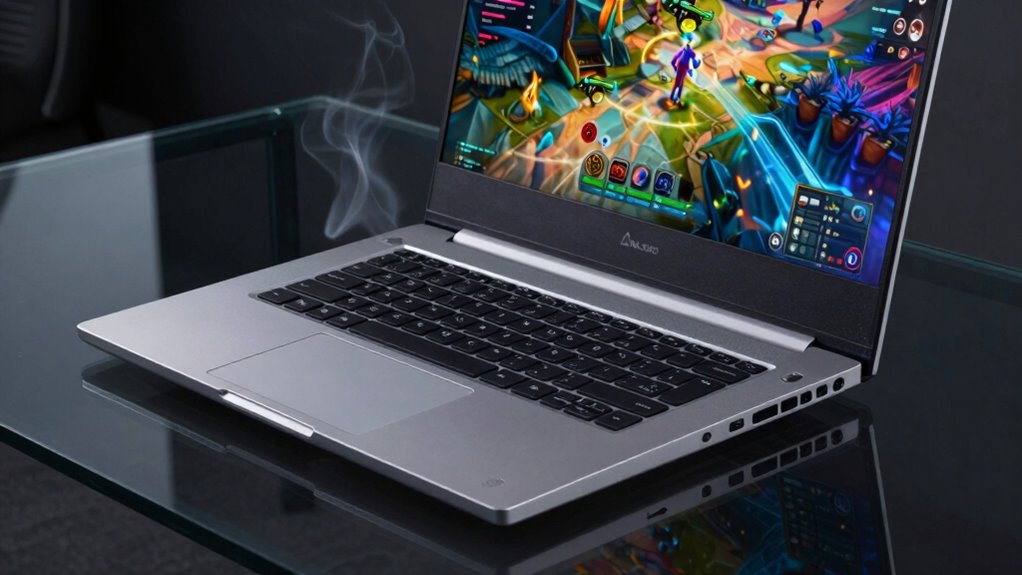
Thin gaming laptops look great for portability, but their compact design often leads to overheating during intense gaming. You might notice your laptop feels unusually hot, slows down, or fans run louder. Long-term, this can cause damage and reduce performance. Luckily, there are ways to prevent and manage heat, like using cooling pads or adjusting settings. If you want to keep your system cool and perform well, discovering more tips will help you stay ahead.
Key Takeaways
- Thin design limits airflow, increasing the risk of overheating during intensive gaming sessions.
- Overheating can cause performance throttling, lag, and potential long-term component damage.
- Effective cooling solutions like vapor chambers and external pads are crucial for maintaining optimal temperatures.
- Regular maintenance, such as cleaning vents and updating software, helps prevent heat buildup.
- Choosing models with advanced cooling technology and proper airflow design reduces overheating risks.
Why Do Thin Gaming Laptops Overheat?
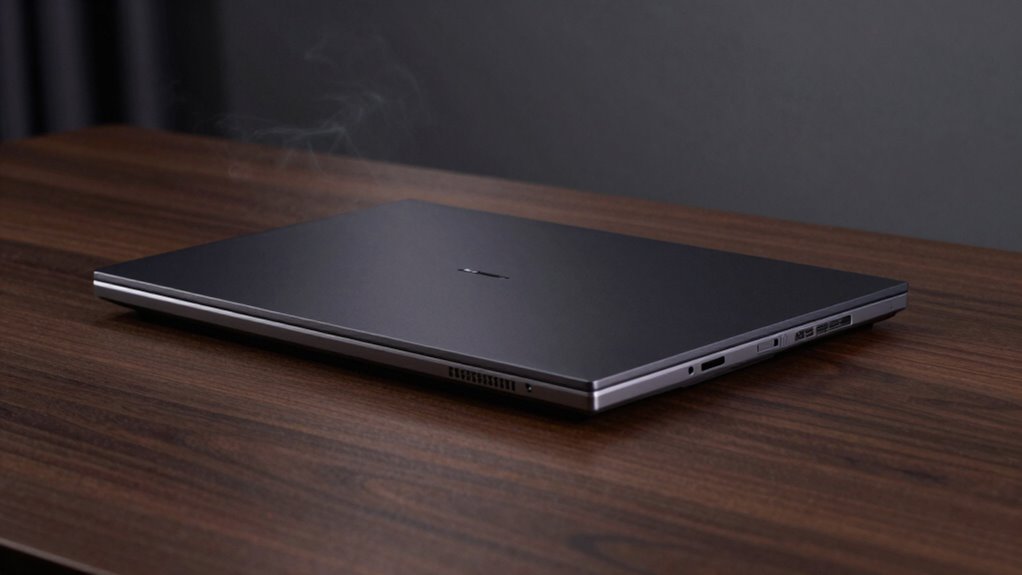
Thin gaming laptops tend to overheat because their compact design leaves less space for effective cooling components. Without larger cooling systems, heat builds up quickly during intensive gaming sessions, leading to performance drops. As a result, you might notice your device throttling or shutting down unexpectedly. To compensate, some gamers add cooling pads or invest in gaming accessories that improve airflow, but these solutions only go so far. Effective home soundproofing can help create a quieter environment, but it won’t directly impact internal laptop heat. Overheating also affects battery longevity, causing the battery to drain faster and potentially shortening its lifespan. You may find yourself constantly managing temperature levels, which can disrupt your gaming flow. Ultimately, the limited internal space in slim laptops makes it harder to keep temperatures low, forcing you to balance performance, cooling, and battery health carefully. Laptop cooling challenges are a common concern for users of thin gaming laptops. Additionally, understanding the internal design constraints helps explain why these devices struggle with heat management. Recognizing these design limitations can guide users in choosing models that better balance performance and thermals.
Signs Your Slim Gaming Laptop Is Overheating
If your laptop feels unusually hot even when you’re not gaming, it could be a sign of overheating. You might also notice your system slowing down or freezing during demanding tasks. These clues indicate that your slim gaming laptop is struggling with heat buildup. Proper gear care can help prevent overheating and extend your device’s lifespan. Regularly checking for dust buildup and ensuring proper ventilation are key steps to avoid overheating issues. Additionally, using cooling pads designed for laptops can provide extra heat dissipation to keep temperatures in check.
Unusual Laptop Temperatures
Even though slim gaming laptops are designed to be portable, you might notice unusual temperatures that signal trouble. If your device starts feeling unusually hot, it could affect your battery lifespan and overall performance. Keep an eye out for these signs:
- The laptop feels excessively warm even when idle.
- The screen brightness seems to decrease unexpectedly to manage heat.
- Fans run louder than usual, trying to cool down internal components.
- You notice a quick drain on your battery, hinting at thermal stress.
- Regularly cleaning ventilation areas and ensuring proper airflow can help mitigate overheating issues. Additionally, understanding thermal management principles can assist in preventing damage. Properly managing heat dissipation is crucial for maintaining optimal performance and preventing long-term harm. Recognizing AI-powered cooling systems can also offer innovative solutions for overheating prevention. Being aware of temperature monitoring tools can help you keep track of your laptop’s thermal health and respond proactively.
These temperature spikes can cause long-term damage if ignored. Overheating may also lead to throttling, reducing gaming performance. Addressing these signs promptly can prevent damage and extend your laptop’s lifespan.
Performance Drops Noticeable
When your gaming laptop starts to slow down unexpectedly, overheating might be the culprit. You’ll notice performance drops, such as laggy gameplay or stuttering, which are signs your system is throttling to cool down. Overheating affects battery life, causing it to drain faster because the system works harder to keep components cool. Plus, the sleek aesthetic design of thin laptops often leaves little room for effective cooling, making performance issues more apparent. As temperatures rise, your laptop’s internal components struggle to operate at full capacity, leading to reduced frame rates and longer load times. If you experience these signs, it’s a clear indicator your slim gaming laptop is overheating, and you need to address it before long-term damage occurs. Proper ventilation and cooling solutions can help mitigate these issues, especially since recycled materials in gardening and eco-friendly gear are increasingly used in making sustainable cooling accessories.
Top Cooling Tips for Thin Gaming Laptops
Keeping your thin gaming laptop cool is essential to maintaining performance and extending its lifespan. To do this effectively, consider these top cooling tips:
Keeping your gaming laptop cool boosts performance and prolongs its lifespan.
- Use gaming accessories like cooling pads or external fans to improve airflow.
- Keep your laptop on a hard, flat surface instead of soft surfaces that block vents.
- Regularly update your software, including drivers and BIOS, to optimize thermal management. Being aware of thermal thresholds can prevent overheating before it occurs.
- Monitor temperatures with software tools and close unnecessary applications that cause extra heat.
- Ensure your housekeeping practices include regular cleaning of vents and fans to prevent dust buildup that can impede airflow. Additionally, understanding thermal management protocols can help you better optimize your laptop’s cooling performance. Properly managing dust buildup is crucial for maintaining optimal airflow and cooling efficiency. Knowing how to recognize signs of thermal throttling can help you take action before performance drops significantly.
Implementing these tips helps prevent overheating, keeps your system running smoothly, and makes the most of your thin gaming laptop’s power. Staying proactive with cooling guarantees you enjoy gaming sessions without performance dips or hardware damage.
How to Choose a Thin Gaming Laptop That Keeps Cool
When choosing a thin gaming laptop, look for models with effective cooling systems that prevent overheating during intense play. Pay attention to the airflow design, ensuring vents are strategically placed to maximize heat dissipation. These features help keep your laptop cool and maintain ideal performance. Incorporating effective cooling solutions, such as improved airflow and ventilation, can further enhance the device’s ability to stay cool under pressure. Additionally, understanding the sound healing science can inspire innovative cooling solutions used in high-performance tech. Recognizing the importance of ethical consumer choices can also influence your decision to select brands committed to sustainable and responsible manufacturing practices. Being aware of early warning signs of overheating can help you take proactive steps to protect your device and extend its lifespan.
Effective Cooling Systems
Choosing a thin gaming laptop with an effective cooling system is essential to prevent overheating during intense gaming sessions. To keep temperatures in check, look for models with advanced cooling features like vapor chamber cooling or multiple heat pipes. You can also improve performance by:
- Hardware upgrades: Consider laptops with upgradeable RAM or SSDs, which can reduce overall stress on the system.
- Software optimization: Use gaming or system utilities to manage background processes and optimize performance.
- Built-in cooling technologies: Prioritize laptops with intelligent fan control or custom cooling profiles.
- External cooling solutions: Use cooling pads or stands to help dissipate heat further.
- Design considerations: Opt for slim laptops that incorporate advanced cooling technology to balance performance and portability.
Combining these strategies guarantees your thin gaming laptop stays cool, even under demanding loads.
Optimal Airflow Design
To guarantee your thin gaming laptop stays cool during intense sessions, paying close attention to its airflow design is essential. An effective airflow setup ensures proper thermal management, preventing overheating and throttling. Look for laptops with strategically placed vents and multiple airflow channels that promote airflow improvement. Consider models with intake and exhaust vents positioned to maximize airflow across critical components like the CPU and GPU. A well-designed airflow system minimizes hot spots and maintains consistent temperatures during heavy gaming. Additionally, check for features like dust filters and curved vent designs that enhance airflow efficiency. By prioritizing efficient airflow design, you ensure your laptop remains cool, even during demanding gameplay, and prolong its lifespan.
Which Thin Gaming Laptops Handle Heat Better?
While many thin gaming laptops boast impressive specs and sleek designs, their ability to handle heat varies considerably. Some models excel at managing heat, keeping gaming graphics smooth and maintaining battery longevity. Here’s what to look for:
- Efficient cooling systems—look for laptops with vapor chamber cooling or multiple heat pipes.
- Powerful fans—larger or dual fans help disperse heat faster.
- Optimized airflow design—models with better airflow prevent overheating during intense gaming.
- Thermal management features—software that adjusts performance to avoid thermal throttling and extend battery life.
Choosing a laptop with these features means better heat handling, less performance throttling, and longer gaming sessions without overheating concerns.
Prevention Tips: How to Stop Overheating During Gaming
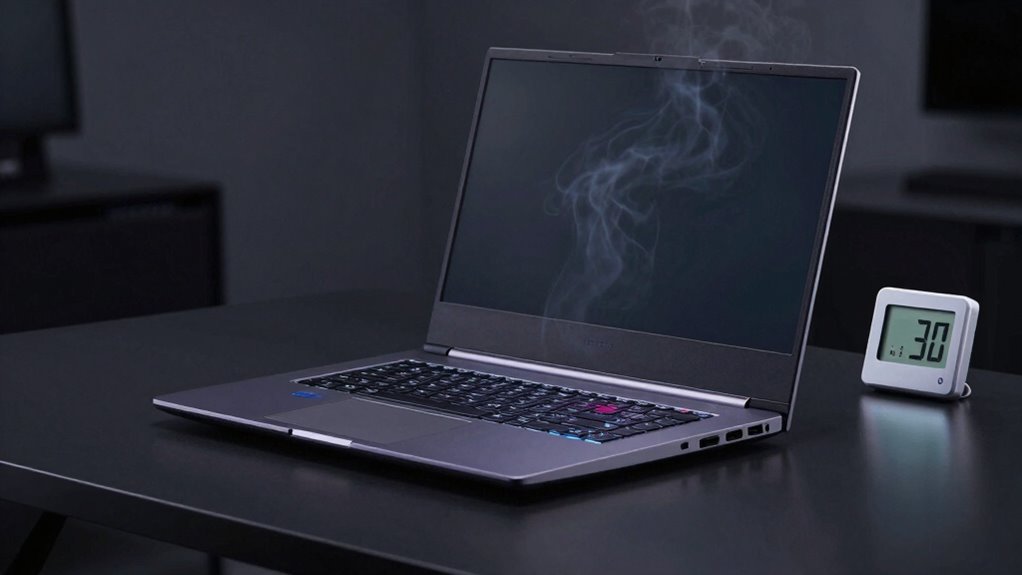
Overheating during gaming can considerably reduce your laptop’s performance and lifespan, but you can take simple steps to prevent it. First, confirm your software is up to date; manufacturers often release updates that improve thermal management. Use gaming accessories like cooling pads or external fans to help dissipate heat more effectively. Keep your laptop’s vents clean and unobstructed, avoiding blocking airflow. Adjust in-game settings to lower graphics and frame rates, reducing the load on your system. Regularly check for and install software updates, which can optimize hardware performance and temperature control. Finally, avoid gaming on soft surfaces like beds or couches, as these can block vents and trap heat. These tips help keep temperatures down and extend your laptop’s gaming life.
Troubleshooting Overheating Problems in Slim Gaming Laptops
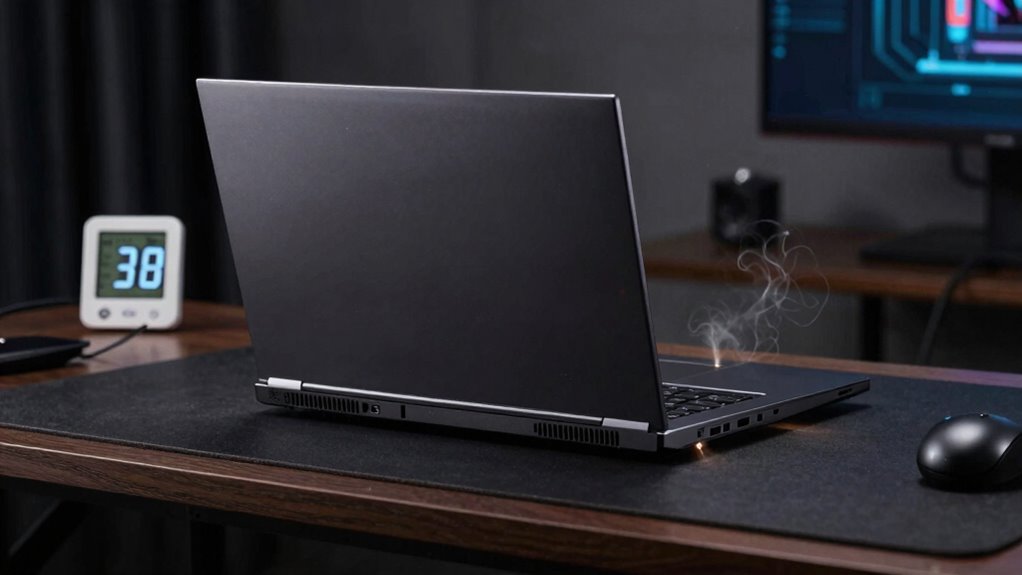
Slim gaming laptops are designed to be portable and sleek, but their compact size can sometimes cause overheating issues. To troubleshoot, start by cleaning out dust and debris from vents and fans—clogged airflow worsens heat. Next, make certain your software is up-to-date; manufacturers often release updates that optimize performance and fix overheating bugs. Consider adjusting your gaming accessories’ settings, like lowering graphics quality, which reduces strain on the system. Also, use a cooling pad to improve airflow. Finally, monitor your laptop’s temperature with software tools; if it remains high despite these steps, it might be time to seek professional help or upgrade to a model with better cooling. These steps help manage heat and keep your gaming experience smooth.
Frequently Asked Questions
Are There Specific Brands Known for Better Cooling in Slim Gaming Laptops?
You’ll find that brands like ASUS ROG, MSI, and Alienware are known for better cooling in slim gaming laptops. They focus on thermal design innovations to manage heat effectively, even in compact cases. Their brand reputation for quality and performance means you’re more likely to get a laptop that stays cool during intense gaming sessions. So, if cooling is a priority, these brands are solid choices to contemplate.
How Does Ambient Temperature Affect a Thin Gaming Laptop’s Overheating Risk?
Ambient heat considerably impacts your thin gaming laptop’s overheating risk. When the surrounding temperature is high, thermal management becomes harder, causing the device to trap more heat. You might notice increased fan noise or lag during intense gaming sessions. To prevent overheating, keep your environment cool, use cooling pads, and make sure there is good airflow around your laptop. Managing ambient heat helps your slim gaming laptop perform at its best and prolongs its lifespan.
Can Software Solutions Effectively Reduce Overheating in Slim Gaming Laptops?
Did you know software solutions can cut overheating incidents by up to 30%? They improve thermal management by adjusting fan control, keeping your slim gaming laptop cooler during intense sessions. By optimizing fan speeds and managing processes, you can reduce heat buildup without sacrificing performance. So yes, software solutions are effective, making thermal management more efficient and helping you enjoy gaming without worrying about overheating issues.
Do External Cooling Pads Significantly Improve a Thin Gaming Laptop’s Performance?
External cooling pads can markedly improve your thin gaming laptop’s performance by reducing heat, which helps prevent thermal throttling. This, in turn, can lead to better hardware efficiency and potentially extend your battery life. While cooling pads don’t replace hardware upgrades, they offer an affordable way to manage heat better, ensuring your laptop runs smoothly during intense gaming sessions without overheating concerns.
Is Overclocking More Likely to Cause Overheating in Thin Gaming Laptops?
Overclocking hazards increase the risk of overheating in thin gaming laptops because their limited thermal management can’t handle the extra heat. Pushing the CPU or GPU beyond recommended speeds boosts power consumption and heat output, which these laptops struggle to dissipate. As a result, overclocking makes overheating more likely, risking thermal throttling or hardware damage. Always consider your laptop’s thermal management capabilities before attempting overclocking.
Conclusion
While thin gaming laptops are tempting for their portability, they often struggle with heat. The common belief that smaller size always leads to overheating isn’t entirely true—you just need to choose models with better cooling designs and follow proper maintenance tips. Think of it like a car: a sleek exterior looks great, but without a good cooling system, it’s prone to overheating. With the right choices, you can enjoy powerful gaming without the heat hassle.