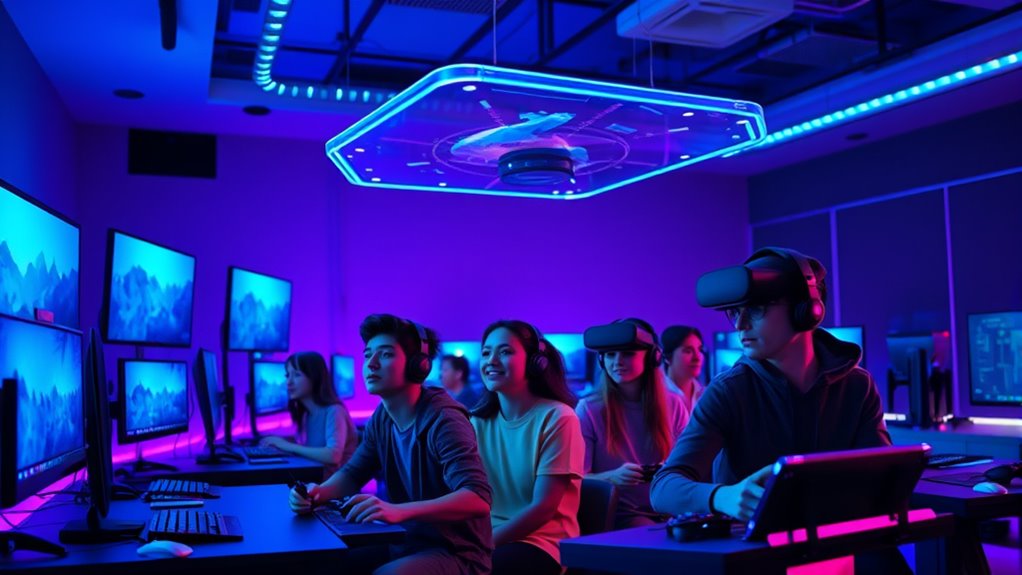

Few realize that gaming has subtly shaped your skills for a world with less traditional work. Through immersive virtual economies and strategic challenges, you’ve developed critical thinking, adaptability, and digital literacy—traits essential when automation and AI replace many jobs. But how exactly do these virtual experiences translate into real-world resilience? Exploring this connection reveals surprising ways gaming prepares you for a future where work looks very different.
Key Takeaways
- Virtual economies in gaming teach resource management and trading skills applicable to real-world financial systems.
- Gamified learning fosters problem-solving, strategic thinking, and adaptability vital in a post-labor economy.
- Gaming enhances digital literacy, preparing individuals for emerging financial technologies like cryptocurrencies.
- Virtual markets help develop critical thinking and resource allocation skills essential for navigating complex economic landscapes.
- Gaming promotes innovative mindsets and resilience, equipping society to thrive amid societal and economic transformations.
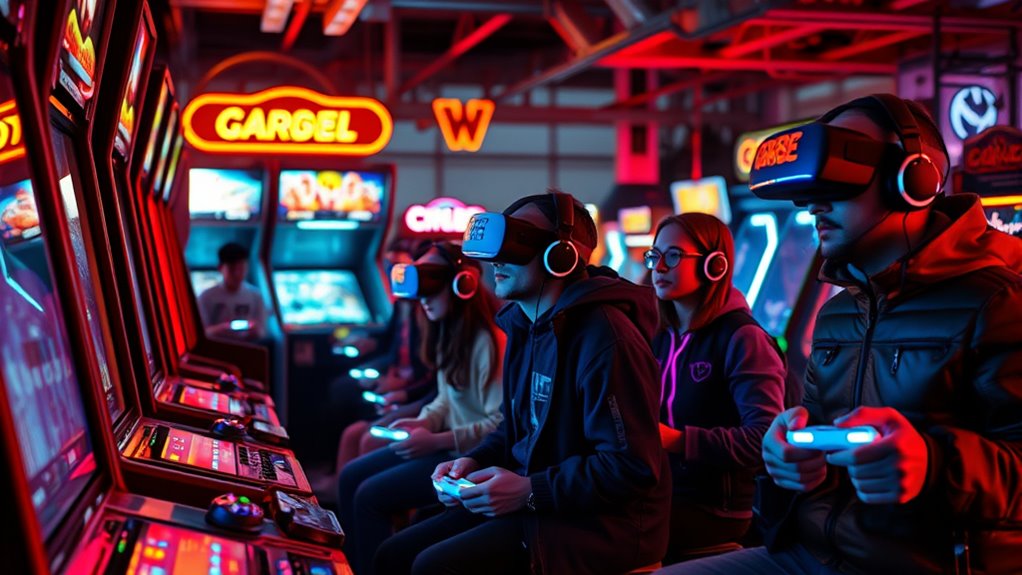
As automation and artificial intelligence continue to reshape the economy, gaming is emerging as more than just entertainment—it’s becoming a central part of the post-labor world. You might not realize it, but the skills and concepts you develop through gaming are laying the groundwork for how society will function when traditional jobs become less dominant. Virtual economies, for example, are transforming how people perceive value, wealth, and trade. In many games, you can buy, sell, and trade assets—virtual items, currencies, and services—mirroring real-world economic systems. This experience isn’t just fun; it teaches you about supply and demand, currency management, and resource allocation in ways that are often more engaging than traditional education. As you navigate these virtual markets, you’re gaining insights into complex economic principles without even realizing it.
Gaming’s virtual economies teach real-world skills like trading, resource management, and economic principles, shaping future societal understanding.
Furthermore, gaming has pioneered gamified education, which is reshaping how you learn new skills. Instead of passive absorption, you participate actively in problem-solving, strategic thinking, and collaboration—all within immersive game environments. This approach makes learning more intuitive and effective, preparing you for a world where continuous skill acquisition is essential. Gamified education leverages game design elements like rewards, challenges, and feedback to motivate you, making complex concepts easier to grasp. As a result, you’re not just memorizing facts but developing adaptable skills that will be indispensable in a post-labor economy. These experiences foster innovation, resilience, and adaptability—traits that are increasingly valued as automation takes over routine tasks.
In the post-labor world, your ability to understand and operate within virtual economies will become indispensable. These digital markets are already influencing mainstream financial systems, with cryptocurrencies and blockchain technology gaining prominence. Your familiarity with virtual economies through gaming gives you a head start in comprehending these emerging financial landscapes. Similarly, gamified education prepares you for lifelong learning, allowing you to stay relevant as industries evolve rapidly. The skills you acquire from gaming—critical thinking, strategic planning, and digital literacy—are directly transferable to new forms of work, entrepreneurship, and social organization. Developing digital literacy through gaming also enhances your capacity to adapt to new technological innovations that will shape the post-labor economy.
Ultimately, gaming has prepared you not just for entertainment but for the societal shifts ahead. It has fostered a new way of thinking about value, learning, and interaction—skills that will be imperative in shaping the post-labor world. As these virtual and gamified systems become more integrated into everyday life, you’ll find yourself better equipped to navigate and thrive in a future where traditional employment is just one part of a broader, more dynamic economic landscape.
Conclusion
Just like a seasoned sailor learns to navigate shifting tides, gaming has equipped you to steer through a post-labor world. The skills you’ve gained—critical thinking, adaptability, resource management—are your compass in this new landscape. As automation and technology reshape society, your gaming-honed abilities will help you chart a course through uncharted waters. Embrace these skills, and you’ll find yourself sailing smoothly toward a future where innovation becomes your guiding star.