When buying a GPU for VR or AAA games, wattage is more important than you might think. Higher wattage indicates better power delivery, supporting stable performance, especially during demanding sessions. It helps prevent overheating, thermal throttling, and crashes, ensuring smooth gameplay. Balanced wattage with efficient cooling keeps your system stable and prolongs hardware life. To get the most out of your gaming experience, understanding GPU power needs is essential—keep exploring to learn more.
Key Takeaways
- Higher GPU wattage ensures stable performance during demanding VR and AAA gaming sessions.
- Adequate wattage supports better cooling, preventing thermal throttling and hardware damage.
- Overpowered GPUs with high wattage require robust power supplies and cooling solutions.
- Matching GPU wattage with system capacity enhances stability and longevity during intense gaming.
- Efficient, high-wattage GPUs improve overclocking potential and overall gaming experience.
Why GPU Wattage Matters for Gaming and VR Performance
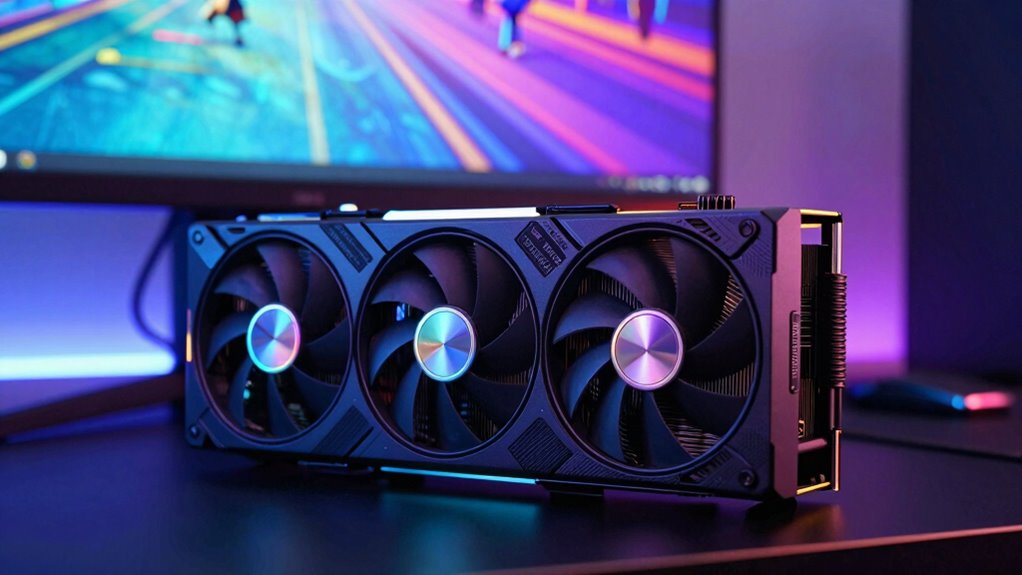
While many gamers focus on GPU model numbers or VRAM, understanding wattage is essential for peak performance. Higher wattage often means better power delivery, which supports stable, high-quality gameplay, especially in demanding VR or AAA titles. Proper GPU cooling becomes critical at higher wattages, preventing thermal throttling and maintaining efficiency. When your GPU runs efficiently, it uses power more effectively, reducing heat and noise while maximizing performance. This balance ensures your system stays stable during intense gaming sessions. Recognizing the importance of digital safety can also help protect your hardware investments from overheating and other issues. Additionally, power supply compatibility plays a vital role in ensuring your GPU receives adequate and stable power, further safeguarding performance and longevity. Ignoring wattage can lead to overheating and reduced lifespan of components. So, don’t just look at raw specs; consider wattage and how your cooling setup will keep your GPU running at its best for the most immersive gaming and VR experience. Proper hardware maintenance and monitoring can also extend the life of your components and optimize your overall gaming setup. Paying attention to power efficiency can help you achieve better thermal management and energy savings over time. Moreover, ensuring your system has appropriate power management settings can further enhance stability and longevity.
How GPU Power Consumption Affects Stability and Overclocking
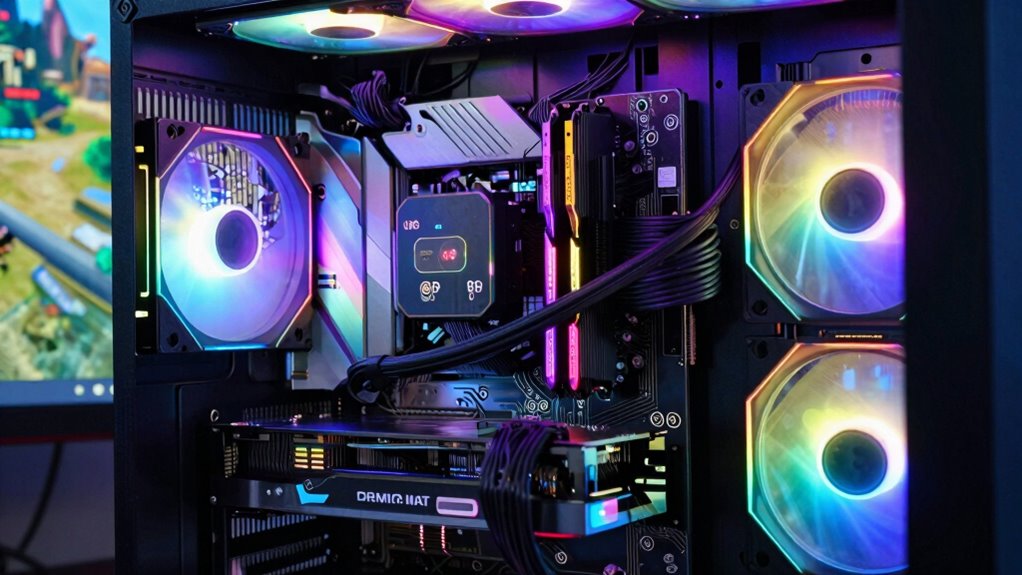
Higher GPU power consumption directly impacts system stability and your ability to overclock effectively. When a GPU consumes more wattage, it pushes your system’s power supply and cooling solutions harder, increasing the risk of instability or crashes. Energy efficiency becomes essential here, as a more efficient GPU generates less heat and consumes less power, making overclocking safer and more manageable. Power scaling also plays a role; as you push your GPU beyond stock speeds, power demands increase exponentially, which can lead to thermal throttling or system crashes if your setup isn’t robust enough. By choosing a GPU with ideal wattage and Energy efficiency, you gain better control over overclocking margins and reduce the chances of stability issues during intense gaming or VR sessions. Additionally, understanding the cookie categories and research topics related to GPU performance can help you make more informed decisions about your hardware choices.
Furthermore, paying attention to GPU wattage specifications can help prevent overloading your system’s power supply, ensuring consistent performance.
How to Check Your GPU’s Wattage and Monitor Usage

To accurately assess your GPU’s wattage and usage, start by using specialized software tools that monitor real-time power consumption, like HWMonitor or GPU-Z. These tools give you immediate insights into how much power your GPU draws during gaming or VR sessions. Keep an eye on GPU cooling, as higher wattage can lead to increased heat, impacting performance. Additionally, monitoring your system stability during heavy loads can help prevent potential overheating or crashes. Also, ensure your power supply can handle peak demands without strain. Be mindful of portable oil radiators that can help maintain a safe environment while gaming in cooler conditions. Proper filter sizing/flow is essential to prevent unnecessary strain on your system and maintain optimal performance. Here’s a quick overview:
| Parameter | Monitoring Focus |
|---|---|
| GPU wattage | Real-time power consumption |
| Power supply | Peak load capacity |
| GPU cooling | Temperature and heat dissipation |
| Usage spikes | Sudden increases in power draw |
This approach helps you optimize your setup for smooth gaming and safe operation.
Tips to Manage GPU Wattage for Better Gaming Performance

To improve your gaming performance, start by optimizing your power settings to balance wattage and performance. Keep an eye on your GPU’s temperature levels to prevent overheating and maintain efficiency. These adjustments can help you get the most out of your GPU without risking damage or unnecessary power consumption. Additionally, understanding drone insights can provide valuable tips on managing energy use in high-performance devices. Monitoring GPU wattage and adjusting settings accordingly can further enhance performance while reducing energy strain. Being aware of vehicle protection options can also inspire ways to safeguard your gaming setup from environmental factors. Paying attention to wall art trends can even create a more immersive gaming environment while reducing glare and distraction. Recognizing the importance of energy management in high-performance tech can help you make more informed decisions for your setup.
Optimize Power Settings
Managing your GPU’s power settings can considerably improve gaming performance and efficiency. Start by adjusting your power plan to prioritize maximum performance in your GPU’s control panel. This guarantees your GPU operates at its full potential without unnecessary power saving limitations. Keep in mind that optimizing these settings enhances energy efficiency, reducing power waste during demanding games. Additionally, check hardware compatibility to prevent conflicts that can cause performance drops or stability issues. Use manufacturer-recommended drivers and software updates to guarantee smooth operation. Disable unnecessary background processes that might throttle your GPU’s wattage or cause fluctuations. By fine-tuning power settings, you can better align your GPU’s wattage with your gaming needs, resulting in smoother gameplay, lower power consumption, and improved overall system stability. Understanding consumer choices related to hardware can help you make more informed decisions about your gaming setup.
Monitor Temperature Levels
Monitoring your GPU’s temperature levels is crucial because excessive heat can cause thermal throttling, which reduces performance to protect the hardware. To keep temperatures in check, focus on monitor cooling and airflow efficiency. Confirm your case has good ventilation and consider adding case fans or upgrading existing ones. Proper airflow minimizes hot spots, helping your GPU stay cool under load. Regularly check your GPU’s temperature using monitoring software and adjust your setup as needed. Keep in mind, a well-ventilated system maintains stable wattage, boosting gaming performance. Using electric dirt bikes as an analogy, efficient cooling systems ensure your hardware operates at optimal wattage without overheating. Additionally, understanding how indoor air quality impacts your system’s environment can help maintain optimal operating conditions. Maintaining good ventilation is essential for keeping your system cool and preventing overheating issues. Use the table below to understand key temperature ranges:
| Temperature Range | Action |
|---|---|
| Below 70°C | Suitable, no action needed |
| 70°C – 85°C | Monitor cooling, improve airflow |
| Above 85°C | Enhance cooling immediately |
Common Myths About GPU Power and Gaming Impact

Many believe that more GPU power always means better gaming, but that’s not always true. Some think VR games need less power, which isn’t accurate either. Understanding these myths helps you make smarter choices for your setup. Additionally, work-life harmony can influence how much time you dedicate to gaming or other digital activities.
Myth: More Power Always Better
A common misconception is that having the most powerful GPU automatically guarantees better gaming performance. In reality, more power doesn’t always mean better results. High-wattage GPUs often prioritize raw performance over power efficiency and energy conservation. While they can handle demanding games at high settings, they may also consume more energy and generate excess heat, which can lead to increased noise and higher operating costs. Instead, focus on a GPU that balances power with efficiency. This guarantees you get smooth gameplay without wasting energy or stressing your system’s thermal limits. Proper cooling and maintenance can also influence overall performance and longevity. Remember, the best choice isn’t necessarily the one with the highest wattage but the one that delivers ideal performance while conserving energy and keeping your system running efficiently. Additionally, understanding airless paint sprayers can help you make more informed choices about technology use and sustainability.
Misconception: VR Requires Less
Contrary to popular belief, virtual reality (VR) gaming actually demands more GPU power than standard titles. Many assume VR requires less because it’s more immersive and focused on a different hardware setup. However, VR specific hardware, such as headsets and controllers, adds extra rendering demands that can’t be ignored. The need for smooth, high frame rates to prevent motion sickness means your GPU must work harder. Additionally, VR gaming often involves a wider field of view and higher resolutions, making it more GPU-intensive than traditional gaming. Even a simple gaming peripheral like a VR headset doubles as a powerful display, increasing the load on your GPU. Interestingly, the shipwreck preservation techniques used in maintaining VR hardware demonstrate how crucial proper hardware management is for optimal performance. So, don’t underestimate the GPU wattage needed to deliver a seamless VR experience.
Choosing the Right GPU Based on Wattage and Power Needs

When choosing a GPU, understanding its wattage and power requirements is crucial because these factors directly impact your system’s stability and performance. Higher wattage GPUs often demand better GPU cooling to prevent overheating, especially during intense gaming sessions. Pay attention to power efficiency, as a more efficient GPU consumes less energy and generates less heat, easing cooling demands. Selecting a GPU with appropriate wattage ensures your power supply can handle the load without risking crashes or damage. Balance performance needs with wattage to avoid overloading your system. If you plan to upgrade or overclock, consider a GPU that provides headroom for extra power. Ultimately, matching wattage and power needs guarantees smoother gameplay, reliable operation, and a longer lifespan for your gaming setup.
Frequently Asked Questions
How Does GPU Wattage Influence Future Game Compatibility?
GPU wattage directly impacts future game compatibility by ensuring your graphics card can handle upcoming, more demanding titles. Higher wattage often indicates better graphics card durability and a more efficient cooling system, preventing overheating during intense gaming sessions. This means your GPU stays reliable longer, maintaining performance as game requirements evolve. Investing in a higher wattage GPU helps future-proof your setup, ensuring smoother gameplay and longevity for your gaming rig.
Can Higher Wattage GPUS Run Cooler or Quieter?
Higher wattage GPUs generally run hotter, which means they often require better GPU cooling solutions to keep temperatures in check. This can lead to increased noise levels if the cooling fans spin faster to dissipate heat. So, while they might perform better, expect potentially louder operation and more careful attention to GPU cooling to maintain a quiet, cool system during intense gaming sessions.
Is Wattage More Important Than VRAM for Gaming?
You can’t judge a book by its cover, and the same goes for GPU specs. Wattage is more vital than VRAM for gaming, especially for VR headset compatibility and AAA game optimization. Higher wattage guarantees your GPU can handle demanding graphics smoothly, reducing lag and improving performance. More VRAM helps with textures, but wattage directly impacts overall power and stability, making it a smarter choice for intense gaming sessions.
Do Power Supplies Need Upgrading for High-Wattage GPUS?
Yes, your power supply needs upgrading for high-wattage GPUs. Make certain your power supply has enough capacity for your GPU’s wattage and offers compatible power connectors. Upgrading also supports GPU overclocking, which can boost performance but increases power consumption. Without proper power supply compatibility, your system might become unstable or fail to boot. Always check your PSU’s wattage rating and connector types before installing a high-wattage GPU.
How Does GPU Wattage Affect Overall System Energy Consumption?
GPU wattage directly impacts your system’s overall energy consumption, especially during demanding tasks like gaming or VR. Higher wattage GPUs consume more power, affecting power efficiency and increasing heat output. Good thermal management becomes essential to prevent overheating and maintain performance. Keeping your system well-cooled ensures efficient operation and can help reduce energy waste, ultimately helping you save on electricity costs and prolonging your hardware’s lifespan.
Conclusion
In the grand dance of gaming, paying attention to GPU wattage isn’t just a quiet whisper—it’s the subtle rhythm guiding your experience. By understanding and managing power needs, you guarantee smoother, more stable gameplay, whether you’re deep into VR worlds or chasing AAA titles. Embrace this knowledge as a gentle compass, steering you toward performance that feels effortless and reliable. After all, sometimes the most unassuming details hold the key to revealing your best gaming moments.