
TL;DR

Get hardware and tech essentials delivered free with Prime
- Fast, free delivery on millions of items
- Prime Video, Amazon Music and more included
- Member-only deals all year
In 2026, a new AI architecture has been announced, promising unprecedented processing power and versatility. This development could transform industries and everyday life, though full implications remain to be seen.
Researchers and technology companies announced in March 2026 the development of a new AI architecture designed to significantly improve processing speed and versatility. This breakthrough has the potential to reshape multiple industries, from healthcare to autonomous transportation, and influences ongoing AI debates about capabilities and safety.
The new AI architecture, called HyperNet 2.0, was unveiled by a consortium of leading AI research institutes and tech firms. For a detailed overview, see the original analysis. It claims to deliver up to 10 times faster processing speeds than previous models, with enhanced adaptability for diverse tasks, including complex reasoning and real-time decision-making. As detailed in the original analysis, this represents a significant leap forward in AI capabilities.
According to a joint statement from the developers, HyperNet 2.0 leverages advanced neural network design and quantum-inspired algorithms, aiming to overcome limitations of earlier AI systems. The architecture is already being tested in pilot projects across sectors such as medical diagnostics, climate modeling, and autonomous vehicles.
The 10 picks
- 1
 Logitech MX Mechanical Wireless Illuminated Performance Keyboard with Tactile…View on Amazon →
 - 2
 Keychron K4 Ultra 8K Wireless Mechanical Keyboard 96% with Numpad, RGB, Hot-S…View on Amazon →
 - 3
 Cherry KC 200 MX Wired Mechanical Office Keyboard with Aluminum Surface and S…View on Amazon →
 - 4
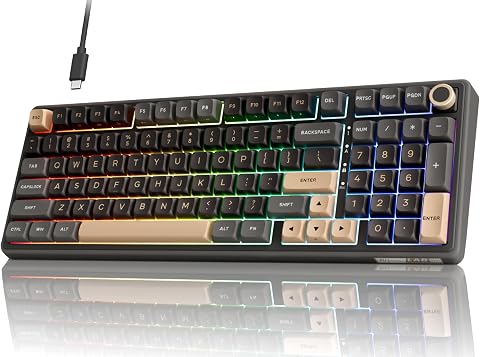 RK Royal Kludge R98 Pro Wired Mechanical Gaming Keyboard with RGB Backlight,…View on Amazon →
 - 5
 AULA F75 Pro Wireless Mechanical Keyboard, 75% Hot Swappable RGB Backlit Gami…View on Amazon →
 - 6
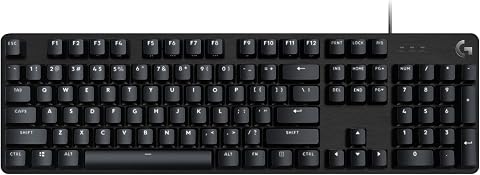 Logitech G413 SE Full-Size Mechanical Gaming KeyboardView on Amazon →
 - 7
 Logitech G213 Prodigy Gaming Keyboard – Wired RGB Backlit, Mech-Dome Keys, Me…View on Amazon →
 - 8
 Redragon K668 RGB Gaming Keyboard, 108 Keys Wired Mechanical Keyboard with Ho…View on Amazon →
 - 9
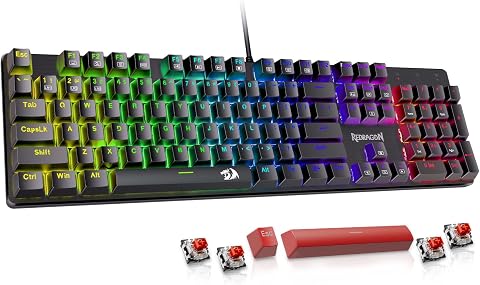 Redragon Mechanical Gaming Keyboard Wired with 11 Backlit Modes and Hot-Swapp…View on Amazon →
 - 10
 MageGee Portable 60% Mechanical Gaming Keyboard, MK-Box LED Backlit Compact 6…View on Amazon →
Potential Industry and Societal Impact of HyperNet 2.0
This development marks a major leap in AI technology that could accelerate automation, improve decision-making accuracy, and enable new applications previously thought impossible. It raises questions about AI safety, ethical use, and the future of human-AI collaboration, making it a pivotal moment for policymakers and industry leaders alike.
Previous AI Advances Leading to 2026 Breakthroughs
Prior to 2026, AI research focused on increasing model size and training data, with notable milestones including GPT-4 and early quantum-inspired algorithms. The push for faster, more adaptable AI systems has driven academia and industry to explore neural network innovations and hardware acceleration.
The announcement of HyperNet 2.0 builds on these trends, representing a convergence of hardware and software breakthroughs aimed at overcoming existing bottlenecks. It follows years of incremental improvements, leading to this significant leap in AI capability.
“HyperNet 2.0 represents a paradigm shift, enabling AI to process complex tasks in real time with unprecedented speed and flexibility.”
— Dr. Emily Carter, Lead Researcher at AI Innovations Lab
Unresolved Questions About HyperNet 2.0’s Practical Deployment
It is not yet clear how quickly HyperNet 2.0 will be adopted across industries or what the real-world limitations might be. Questions remain about its safety, scalability, and how it will handle ethical challenges related to AI autonomy and decision-making.
Next Steps for HyperNet 2.0 Development and Integration
Researchers plan to expand pilot projects and collaborate with industry partners to test HyperNet 2.0 in diverse settings. Regulatory bodies and safety organizations are expected to evaluate the architecture’s implications, while further research aims to address remaining technical and ethical challenges.
Key Questions
What makes HyperNet 2.0 different from previous AI models?
HyperNet 2.0 offers up to 10 times faster processing speeds and greater adaptability for complex tasks, leveraging new neural network designs and quantum-inspired algorithms.
When will HyperNet 2.0 be available for commercial use?
It is still in pilot testing, with broader commercial deployment expected within the next 1-2 years, depending on regulatory approvals and further development.
What industries will benefit most from HyperNet 2.0?
Healthcare, autonomous transportation, climate modeling, and any sector requiring real-time complex decision-making are likely to see the most immediate benefits.
Are there safety concerns with this new AI architecture?
Yes, experts acknowledge potential risks related to AI autonomy and decision-making, which will need careful regulation and oversight as deployment progresses.
How might HyperNet 2.0 influence AI ethics debates?
The increased power and versatility of HyperNet 2.0 intensify discussions around AI safety, transparency, and control, prompting calls for stronger ethical frameworks.
Source: ThorstenMeyerAI.com
Fall Picks
fall essentials
As an affiliate, we earn on qualifying purchases.