
TL;DR

Get hardware and tech essentials delivered free with Prime
- Fast, free delivery on millions of items
- Prime Video, Amazon Music and more included
- Member-only deals all year
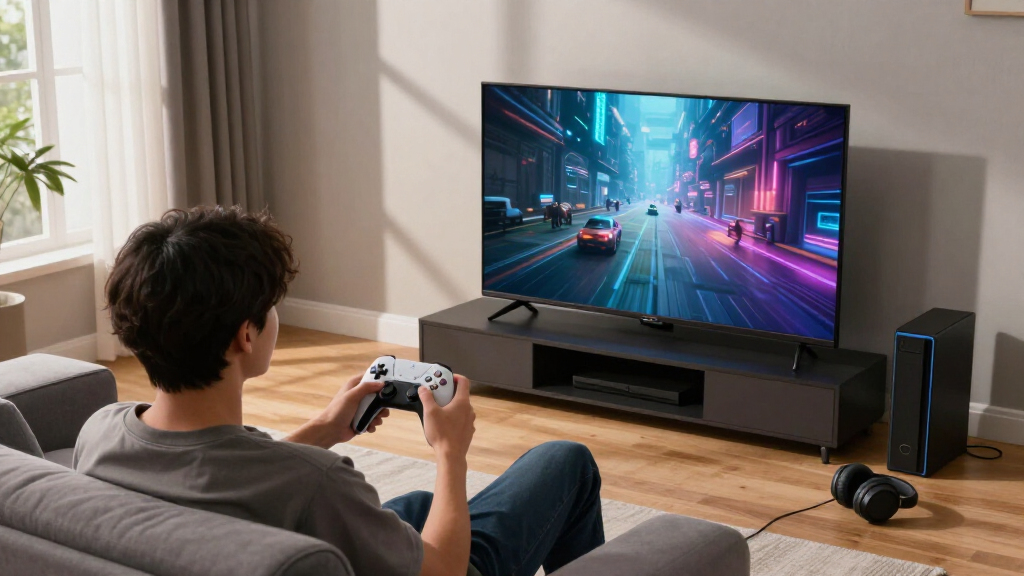
In 2026, nine AI technologies are revolutionizing gaming, enhancing realism, personalization, and interactivity. This report highlights confirmed innovations and ongoing developments shaping the industry.
AI-driven technologies are fundamentally transforming the gaming industry in 2026, with nine key innovations confirmed to be impacting gameplay, development, and player experience. These advancements are reshaping how games are created and played, making them more realistic, personalized, and immersive.
Industry experts and developers are increasingly adopting AI to enhance game realism, with technologies like advanced NPCs, procedural content generation, and real-time adaptive difficulty becoming standard. Companies such as Ubisoft, Electronic Arts, and independent studios are integrating these AI tools into their development pipelines. For example, AI-powered NPCs now exhibit more natural behaviors, improving immersion for players.
Confirmed innovations include the use of machine learning for personalized game experiences, enabling titles to adapt dynamically to individual player styles. Additionally, AI is facilitating procedural generation of vast game worlds, reducing development time and increasing content diversity. Several companies have announced new AI-driven tools for automating testing and quality assurance, streamlining production workflows. Learn more in the original analysis.
While these developments are well-documented and in active deployment, some claims about the full scope of AI’s capabilities in gaming remain speculative, particularly regarding fully autonomous game design and AI-created narratives, which are still in experimental phases.
The 9 picks
- 1
 Logitech G502 Lightspeed Wireless Gaming Mouse – BlackView on Amazon →
 - 2
 GravaStar Mercury M2 Wireless Gaming Mouse with 26,000 DPI, PAW3395DM Sensor,…View on Amazon →
 - 3
 Razer Basilisk V3 X HyperSpeed Wireless Gaming Mouse, BlackView on Amazon →
 - 4
 Logitech G305 Lightspeed Wireless Gaming Mouse – BlackView on Amazon →
 - 5
 Logitech G305 Lightspeed Wireless Gaming Mouse – BlueView on Amazon →
 - 6
 AOC GM401 Wireless RGB Gaming Mouse, 12000 DPI, Rapid-Fire Shortcut, 70HrsView on Amazon →
 - 7
 Logitech G305 Lightspeed Wireless Gaming Mouse – WhiteView on Amazon →
 - 8
 Redragon M810 PRO Wireless RGB Gaming Mouse 10000 DPIView on Amazon →
 - 9
 T-DAGGER Wireless Gaming Mouse – USB Cordless PC Accessories with LED Backlit…View on Amazon →
Why AI Innovations in Gaming Matter in 2026
The integration of these nine AI technologies significantly impacts both players and developers. For players, AI enhances immersion, personalization, and gameplay variety, leading to more engaging experiences. For developers, AI reduces production costs, accelerates content creation, and enables more complex, adaptive game environments. These changes are also influencing industry standards and competitive dynamics, making AI a central element of future game development.
AI’s Rapid Adoption and Industry Shift in 2026
Over the past few years, AI has transitioned from experimental features to core components of modern game development. Major studios have invested heavily in AI research, aiming to create more realistic NPCs and dynamic worlds. In 2026, this shift is evident as AI tools become integral to production pipelines, with several companies launching new AI-powered engines and middleware.
Previous years saw incremental improvements, but 2026 marks a milestone with the widespread deployment of AI for procedural content, adaptive difficulty, and player modeling. These advances follow broader trends in AI democratization and cloud computing, making sophisticated tools accessible to smaller studios as well.
Unconfirmed and Emerging AI Gaming Technologies
While nine key AI innovations are confirmed, some claims about fully autonomous game design, AI-generated narratives, and AI-driven esports coaching remain in early testing phases. The full impact and scalability of these emerging technologies are still uncertain, and their adoption may vary across studios and platforms.
Future Developments and Industry Adoption of AI in Gaming
Moving forward, expect broader adoption of AI tools in game development, with more sophisticated NPC behaviors, personalized experiences, and procedural content becoming standard. Industry conferences and developer showcases in 2026 will likely feature new AI-powered engines and tools, with ongoing research into AI’s potential to automate complex creative tasks. Monitoring how these technologies mature and influence player engagement will be key in the coming years.
Key Questions
What are the most impactful AI technologies in gaming today?
Confirmed impactful AI technologies include advanced NPC behaviors, procedural content generation, personalized player experiences, and AI-assisted testing and quality assurance.
Are AI-driven games more common in 2026?
Yes, AI integration has become widespread, with many new titles incorporating AI features for enhanced realism and adaptability.
Will AI replace human game developers?
While AI automates certain tasks, human creativity and oversight remain essential in game design. AI serves as a tool to augment, not replace, developers.
What are the risks of increased AI use in gaming?
Potential risks include over-reliance on AI, ethical concerns around AI-generated content, and the need for robust safeguards against bias and misuse.
Source: ThorstenMeyerAI.com
Columbus Day / Indigenous Peoples' Day Picks
long weekend sales
As an affiliate, we earn on qualifying purchases.