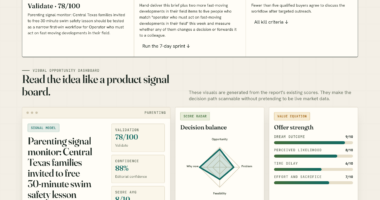
📊 Full opportunity report: Must-Have AI Tech For College Freshmen In 2026 on ThorstenMeyerAI.com — validation score, market gap, and execution plan.

Get hardware and tech essentials delivered free — and shop member deals
- Fast, free delivery on millions of items
- Access to Prime Big Deal Days deals on October 6–7
- Prime Video, Amazon Music and more included
TL;DR
AI technology is set to transform the college experience for freshmen in 2026. Several confirmed AI tools, including personalized learning assistants and organizational apps, are expected to become essential. This development impacts student success and campus integration, though some specifics remain under development.
Artificial intelligence tools are increasingly becoming essential for college freshmen in 2026, with several confirmed products and platforms designed to enhance learning, organization, and campus engagement. These AI innovations are expected to significantly influence student success and campus integration, making them a must-have for new students preparing for the upcoming academic year.
Several AI-powered tools are already confirmed as vital for incoming college students in 2026. These include personalized learning assistants that adapt to individual study habits, AI-driven organizational apps that help manage coursework and schedules, and virtual campus guides that facilitate orientation and social integration. Tech companies and educational platforms are actively developing and launching these tools, aiming to improve the student experience amid increasing digital reliance.
For instance, AI-enabled tutoring platforms now offer tailored feedback and adaptive learning pathways, which are confirmed to be widely adopted in college prep and orientation programs. Similarly, AI-based scheduling apps utilize machine learning to optimize study times and extracurricular activities, confirmed by early pilot programs at several universities. These innovations are designed to reduce stress and improve academic performance, according to industry sources.
While many of these tools are confirmed to be in use or in advanced stages of development, some features remain under testing or are yet to be widely adopted. For example, fully integrated campus AI assistants that coordinate with university systems are still in pilot phases, and their effectiveness is under evaluation. Nonetheless, the trend toward AI integration in student life is clear and accelerating.
Must-Have AI Tech for College Freshmen in 2026
AI is moving from optional study aid to everyday campus infrastructure. The most useful tools help freshmen learn personally, organize realistically, navigate confidently, and connect without surrendering judgment or privacy.
Adaptive explanations, practice pathways, and feedback shaped around individual needs.
Coursework, deadlines, study blocks, and campus commitments brought into one rhythm.
Virtual guides and integrated assistants are promising, but many remain in pilot phases.
Three capabilities that matter most
The strongest freshman tools address recurring pressure points rather than novelty. Look for systems that support learning, reduce planning friction, and make an unfamiliar campus easier to understand.
Personalized learning assistants
Adaptive tutors can clarify difficult concepts, generate targeted practice, and adjust explanations to a student’s progress.
- Course-aware explanations
- Adaptive practice pathways
- Fast formative feedback
AI planning and scheduling apps
Smart organizers can translate syllabi and commitments into realistic study plans while helping students identify overloaded weeks.
- Deadline consolidation
- Suggested focus blocks
- Workload conflict alerts
Virtual campus guides
Campus assistants may help students find services, understand procedures, locate events, and discover support communities.
- Orientation guidance
- Service discovery
- Social integration support
From assignment to improvement
AI works best as part of a repeatable learning process. The student remains responsible for the goal, source material, final judgment, and submitted work.
Capture
Collect the syllabus, assignment requirements, deadlines, and approved course resources.
Plan
Convert the workload into smaller sessions with checkpoints and realistic recovery time.
Practice
Use adaptive questions and explanations to identify gaps before an exam or submission.
Verify
Check facts, citations, calculations, and course-policy compliance before relying on output.
AI tools are set to become integral to student success strategies by 2026, especially in personalized learning and campus navigation.
Anonymous researcher · outlook statementWhat is useful now—and what is still emerging
Availability can vary by institution. Categories with broad standalone utility are more dependable than tools requiring deep integration with university systems.
| AI capability | Primary value | 2026 signal | Freshman priority | Key caution |
|---|---|---|---|---|
| Learning assistant | Explanation, practice, feedback | Ready | High | Verify accuracy and follow academic-integrity rules. |
| AI organizer | Scheduling and workload coordination | Ready | High | Review automated priorities instead of accepting them blindly. |
| Virtual campus guide | Navigation and service discovery | Growing | Medium | Confirm official procedures with university sources. |
| Integrated campus assistant | Cross-system student support | Pilot | Varies | Access, privacy, and institutional coverage remain uneven. |
The strongest signals for 2026
These qualitative indicators summarize the direction described in the source material. They show relative maturity, not measured market share or guaranteed availability.
What freshmen should watch next
Adoption is accelerating, but the long-term effects on learning, privacy, access, and campus life are not yet settled.
Will every college integrate these tools?
No common timeline is established. Institutional budgets, policies, infrastructure, and risk tolerance will produce uneven adoption.
Will AI automatically improve grades?
No. Benefits depend on thoughtful use, reliable information, good study habits, and alignment with course expectations.
What remains the biggest concern?
Student-data privacy, security, accessibility, academic integrity, and user acceptance remain central questions.
How should students prepare?
Learn the available tools, configure privacy settings, understand campus rules, and practice checking AI-generated claims.
The practical takeaway
Start with a learning assistant and an organizational tool. Add campus-specific AI only when it is officially supported, genuinely useful, and transparent about student data.
Why AI Tech Will Define the 2026 College Experience
The integration of AI tools into college life in 2026 is expected to revolutionize how students learn, organize, and connect. These technologies promise to make campus living more efficient, personalized, and accessible, potentially improving academic outcomes and reducing stress. For students, this means a more tailored and supportive environment, while universities may see increased engagement and retention. The confirmed adoption of these tools indicates a shift toward smarter, more responsive campus ecosystems, making AI a core component of the college experience.
AI-powered personalized learning assistant for students
As an affiliate, we earn on qualifying purchases.
As an affiliate, we earn on qualifying purchases.
Emerging Trends in AI for Higher Education
Over the past few years, AI development has accelerated across multiple sectors, with higher education emerging as a key area for innovation. Several tech companies and educational institutions have begun piloting AI applications aimed at improving student success and campus management. Notably, AI-powered tutoring and organizational apps have moved from experimental phases to confirmed, widespread use for incoming students in 2026.
Historically, college freshmen have relied on traditional tools like planners, note-taking apps, and campus guides. The shift toward AI-driven solutions reflects a broader trend of digital transformation in higher education, driven by advancements in machine learning and natural language processing. These developments are expected to continue, with more sophisticated tools emerging in the next few years.
While some AI applications are confirmed and in use, others are still in development or early testing stages. The landscape is evolving rapidly, with industry experts predicting a significant increase in AI adoption on campuses nationwide and beyond, shaping the student experience for years to come.
“AI tools are set to become integral to student success strategies by 2026, especially in personalized learning and campus navigation.”
— an anonymous researcher
AI organizational app for college students
As an affiliate, we earn on qualifying purchases.
As an affiliate, we earn on qualifying purchases.
What Aspects of AI Adoption Remain Unclear?
While many AI tools for college freshmen are confirmed or in advanced development, some features and integrations are still in pilot phases or early testing. The full impact of these technologies on academic performance and campus life remains to be seen, and questions about data privacy, accessibility, and user acceptance are still unresolved. Additionally, the timeline for widespread adoption across all institutions is uncertain, with some colleges adopting more slowly than others.
virtual campus guide app for freshmen
As an affiliate, we earn on qualifying purchases.
As an affiliate, we earn on qualifying purchases.
Next Steps for AI Integration in College Life
In the coming months, more AI products tailored for college freshmen are expected to enter pilot programs and initial deployment phases. Universities and tech companies will likely release updates and new features, with broader adoption anticipated ahead of the 2026 academic year. Stakeholders will monitor the effectiveness of these tools, and further research will clarify their long-term impact on student success and campus management.
adaptive tutoring platform for students
As an affiliate, we earn on qualifying purchases.
As an affiliate, we earn on qualifying purchases.
Key Questions
Which AI tools are confirmed for college freshmen in 2026?
Confirmed tools include personalized learning assistants, organizational apps, and virtual campus guides that are already in use or in advanced testing phases at several institutions.
How will AI improve the college experience for freshmen?
AI will help personalize learning, streamline organization, facilitate campus navigation, and support social integration, reducing stress and enhancing academic success.
Are there concerns about data privacy with these AI tools?
Yes, data privacy and security are ongoing concerns, with institutions and developers working to ensure compliance and protect student information.
When will AI tools be fully integrated across all colleges?
The timeline remains uncertain; while adoption is accelerating, full integration across all institutions is expected to take several years, with early phases beginning before 2026.
What should students do to prepare for AI-driven campus life?
Students should stay informed about available AI tools, familiarize themselves with new apps, and be mindful of privacy settings and data security practices.
Source: ThorstenMeyerAI.com
Fall Picks
fall essentials
As an affiliate, we earn on qualifying purchases.