Web3 is transforming the digital world by shifting control from big tech firms to users. With decentralized identities, you regain ownership of your data and privacy, while token economies reward your contributions directly. This shift reduces reliance on centralized platforms and encourages community governance, empowering you to participate more actively. As power moves away from giant corporations, the future promises more open and user-centric digital spaces—if you stick around, you’ll discover how these changes could reshape your online experience.

Get hardware and tech essentials delivered free with Prime
- Fast, free delivery on millions of items
- Prime Video, Amazon Music and more included
- Member-only deals all year
Key Takeaways
- Web3 decentralizes control, reducing reliance on big tech companies and dismantling data monopolies.
- Users gain ownership of digital identities, enhancing privacy and security beyond centralized platforms.
- Token economies incentivize user participation, transforming users into stakeholders and reducing ad-based revenue dependence.
- Power shifts from big tech to communities through decentralized governance and open ecosystems.
- Future digital landscapes will feature portable, user-controlled identities, challenging traditional business models and tech dominance.
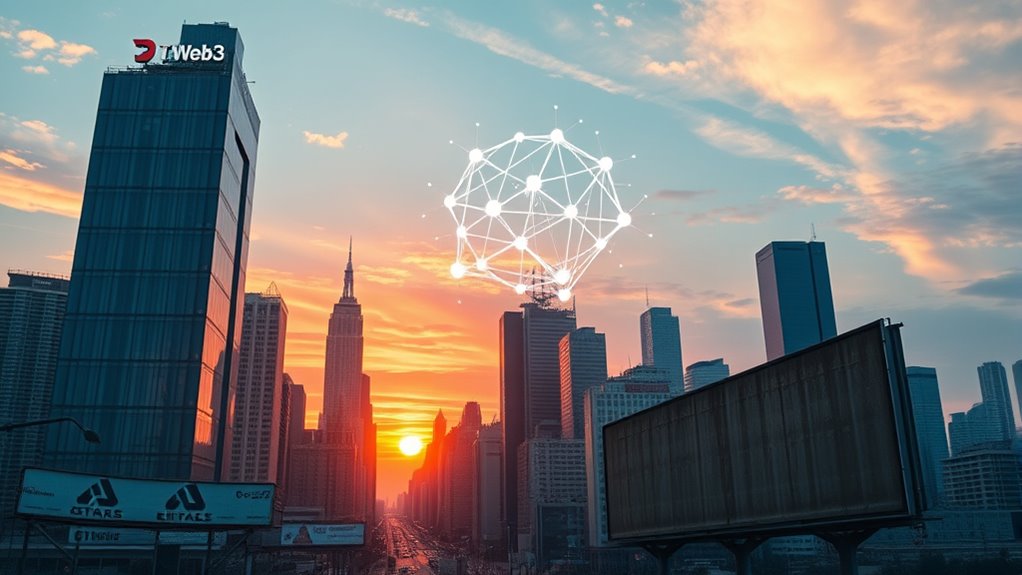
Web3 is poised to transform how big tech companies operate by decentralizing control and empowering users. Instead of a few corporations holding all the data and dictating platform rules, Web3 encourages a more distributed approach, giving users ownership over their digital identities and data. Decentralized identity systems enable you to control your personal information without relying on centralized authorities. With decentralized identity, you can verify who you are across platforms without exposing sensitive details, reducing the risk of data breaches and privacy violations. This shift not only enhances security but also puts you in charge of your online presence, breaking the traditional data monopolies that big tech firms enjoy.
Alongside decentralized identities, token economies are revolutionizing how value is created and shared online. In Web3, tokens serve as digital assets that can represent anything from ownership rights to access privileges. Instead of relying solely on traditional advertising revenues, platforms are incentivizing participation through tokens, which align interests between users and developers. For example, you might earn tokens for contributing content or curating communities, turning users into active stakeholders rather than passive consumers. This model fosters more transparent and fair ecosystems, where your contributions are directly rewarded, and your influence isn’t limited by a platform’s opaque algorithms or policies.
By integrating decentralized identity and token economies, Web3 aims to dismantle the centralized power structures that have dominated the tech industry for decades. Big tech companies have long held control over user data, monetizing it while offering limited options for user agency. With decentralized identity, you regain control over your personal information, choosing what to share and with whom. Token economies further shift the power dynamics, transforming users into participants who can earn and trade value within the ecosystem. This decentralization reduces reliance on ad-driven revenue models and minimizes censorship, as no single entity wields complete control over the network. Instead, the community governs itself through protocols, smart contracts, and shared incentives.
This shift challenges the very foundation of the “big tech” dominance we’re accustomed to. It’s about creating systems where your identity is portable and secure, and your contributions are recognized and rewarded directly. As Web3 continues to evolve, expect these innovations to undermine the traditional business models that have fueled big tech’s growth, paving the way for more open, user-centric digital spaces. The era of centralized control is giving way to a future where you’re not just a data point but a participant shaping the digital landscape. Moreover, advancements in projector technology contribute to a more immersive digital experience, paralleling the transformative shifts occurring in digital identity and economies.
As an affiliate, we earn on qualifying purchases.
Frequently Asked Questions
How Will Web3 Impact Traditional Social Media Platforms?
Web3 will transform traditional social media by enabling decentralized identity, giving you more control over your data and online presence. Token economies will encourage user engagement through rewards, making interactions more meaningful and financially beneficial. You’ll see platforms shifting towards decentralized models, reducing reliance on Big Tech. This change empowers you to participate actively, preserve privacy, and benefit from your contributions, creating a more equitable and user-centric social media landscape.
Can Big Tech Adapt to Web3’s Decentralized Model?
You might think big tech can’t adapt, but with over 60% of users showing openness to blockchain tech, they’re starting to. They’re exploring token sovereignty and DAO governance to regain control and foster user trust. Big tech can adapt by integrating decentralized models, allowing users to have more say and ownership. While challenging, embracing Web3 principles could redefine their future, making them more transparent and community-driven.
What Are the Privacy Implications of Web3 Technologies?
Web3 technologies enhance your privacy by emphasizing data sovereignty, giving you control over your personal information. They rely on robust encryption standards to secure transactions and interactions, reducing risks of breaches. However, you must stay vigilant because decentralized platforms can still expose vulnerabilities. Ultimately, Web3 offers better privacy safeguards, but you should actively manage your data and understand the encryption protocols to protect yourself fully.
Will Web3 Eliminate the Need for Centralized Servers?
Web3 aims to reduce reliance on centralized servers by leveraging distributed storage and network decentralization. While it won’t eliminate centralized servers entirely, it shifts control away from single entities, making data more resilient and private. You can expect a future where decentralized networks handle more of your data, increasing transparency and security. However, some centralized systems will likely persist, especially for efficiency and scalability.
How Accessible Is Web3 for Everyday Users?
Web3 is becoming more accessible for everyday users, but there’s still room for improvement. User onboarding can be challenging, often requiring technical knowledge or wallet setup, which impacts user experience. Developers are working on simplifying processes, making interfaces more intuitive. As these efforts continue, you’ll find it easier to engage with Web3 applications, gradually reducing barriers and making decentralized technology more approachable for everyone.
As an affiliate, we earn on qualifying purchases.
Conclusion
As you step into this new era, remember that Web3 isn’t just a fleeting trend—it’s a revolution whispering that the big tech dream might finally be crumbling. Will you embrace the decentralization or cling to the old guard? The choice is yours, but one thing’s certain: the future belongs to those daring enough to challenge the status quo. Don’t just watch history unfold—be part of the story that reshapes it.
digital identity verification device
As an affiliate, we earn on qualifying purchases.
As an affiliate, we earn on qualifying purchases.
blockchain-based identity management
As an affiliate, we earn on qualifying purchases.
As an affiliate, we earn on qualifying purchases.
Halloween Picks
halloween
As an affiliate, we earn on qualifying purchases.