
Understanding blockchain addresses is crucial for managing your cryptocurrency transactions. These unique alphanumeric strings represent your wallet or smart contract on the blockchain. Each address has a specific purpose, whether it's for receiving funds or executing smart contracts. Generated from a private key, a public address allows you to receive payments while keeping your private key confidential for security. There are various types of addresses, each with distinct functions. With knowledge of how blockchain addresses work, you can better protect your digital assets and navigate this technology. There's even more to explore about their uses and security features.

Get hardware and tech essentials delivered free with Prime
- Fast, free delivery on millions of items
- Prime Video, Amazon Music and more included
- Member-only deals all year
Key Takeaways
- Blockchain addresses are unique alphanumeric strings used for identifying wallets and facilitating transactions on the blockchain.
- They consist of public keys, which are visible, and private keys, which must remain confidential for security.
- Different address types serve specific functions, such as Legacy, SegWit, and Bech32, affecting transaction efficiency and costs.
- Security is paramount; safeguarding private keys prevents unauthorized access and financial loss through phishing or spoofing attacks.
- Understanding blockchain addresses is crucial for navigating decentralized transactions while maintaining anonymity and ownership proof.
Address Types Explained
When you dive into the world of Bitcoin, understanding the different types of addresses is crucial for making efficient transactions.
You'll encounter Legacy addresses, which start with a "1" and are the original format, suitable for basic transactions.
Next, SegWit addresses begin with a "3" and support faster, cheaper transactions by utilizing Segregated Witness functionality.
Then there are Bech32 addresses, starting with "bc1," which offer enhanced error detection and are easier to transcribe.
Lastly, Script Hash addresses allow for complex spending conditions, starting with a different character. Each address type serves unique purposes, so knowing their formats and characteristics will help you navigate Bitcoin transactions more effectively. Additionally, understanding how blockchain addresses facilitate the sending and receiving of cryptocurrencies can enhance your transaction efficiency.
Overview of Blockchain Addresses
Blockchain addresses play a vital role in the world of cryptocurrency, as they serve as unique identifiers for wallets and smart contracts. These addresses are alphanumeric strings that act as destinations for transactions or allow you to interact with smart contracts. They ensure security and transparency in every transaction. In a decentralized peer-to-peer network, blockchain addresses help facilitate direct transactions without the need for intermediaries. Remember, while the blockchain address is public, your private key must remain secret to protect your assets. The term "blockchain address" includes both wallet and contract addresses, highlighting their importance in the ecosystem. By sharing your blockchain address publicly, you can receive payments or prove ownership of your digital wallet. This unique identification system is fundamental for facilitating secure and transparent interactions within the blockchain network.
Address Generation Process
The process of generating a blockchain address involves several critical steps that ensure both security and functionality.
First, you create a private key, a randomly generated string of 256 bits, which must remain secret to protect your digital wallet. From this private key, you derive a public key using a one-way cryptographic function like ECDSA, specifically on the secp256k1 elliptic curve.
Next, you hash the public key with algorithms like SHA-256 and RIPEMD-160 to produce a unique blockchain address, sometimes adding a checksum for validation. This process employs cryptographic hashing algorithms to ensure the integrity of the generated address.
Finally, you encode the address in Base58 or Bech32 format to enhance readability.
This entire process guarantees that your blockchain address is secure and easy to use for transactions.
Pros and Cons of Usage
While exploring the pros and cons of using blockchain addresses, you'll find that they offer a unique blend of security, efficiency, transparency, and control.
On the plus side, blockchain addresses ensure immutability and end-to-end encryption, making transactions nearly tamper-proof. They also eliminate intermediaries, speeding up processes and reducing costs. Additionally, this technology enhances security and transparency for all participants in the network.
However, scalability issues can arise, as fixed block sizes limit transaction capacity, leading to potential congestion during high volume periods. Additionally, while the decentralized control enhances security, it may feel daunting for some users unfamiliar with managing private keys.
Ultimately, understanding these factors will help you navigate the complexities of blockchain addresses more effectively.
Address Types Versus Traditional Accounts

Understanding the differences between address types and traditional accounts can help you make informed decisions in your financial transactions.
Blockchain addresses vary in format and functionality. Public key addresses are typically 26-35 characters long, while Bech32 addresses can reach up to 62 characters, improving efficiency and error detection. Traditional bank accounts usually have a fixed format, making them straightforward for daily use. Blockchain addresses provide pseudonymity and enhanced security, which distinguishes them from traditional banking systems.
Address compatibility varies too; public key addresses are widely supported, while script hash addresses may lack universal wallet support.
Although vanity addresses offer personalization, they function like standard addresses. Ultimately, choosing the right address type depends on your specific needs, whether it's basic transactions or more complex conditions.
Security Vulnerabilities in Addresses
As blockchain technology evolves, so do the security vulnerabilities associated with its addresses. One major threat is address spoofing, where attackers create fake addresses to trick you into sending funds to their malicious wallets. To prevent this, always verify addresses using trusted tools and educate yourself on how to spot suspicious ones.
Another risk is private key exposure, which allows unauthorized access to your wallet. Secure your keys with hardware solutions and consider using multi-signature wallets for added protection. Additionally, be wary of smart contract vulnerabilities that can lead to financial losses. Regular audits and following best development practices can help.
Lastly, protect against routing attacks with strong encryption and comprehensive security monitoring. Keep your blockchain experience safe! Moreover, understanding the various types of blockchain, such as private blockchains, can help in identifying specific vulnerabilities associated with addresses.
Decentralized Identity Solutions Emerging
Decentralized identity solutions leverage Decentralized Identifiers (DIDs) and Verifiable Credentials (VCs) to give you control over your digital identity. You can receive credentials from trusted issuers and store them in secure digital wallets. When you need to verify your identity, you present these credentials to verifiers, who authenticate them using blockchain technology. This process employs cryptographic proofs, ensuring that your information remains secure and private. The self-sovereign model allows you to manage your digital identity without relying on intermediary authorities.
Use Strong Password Managers
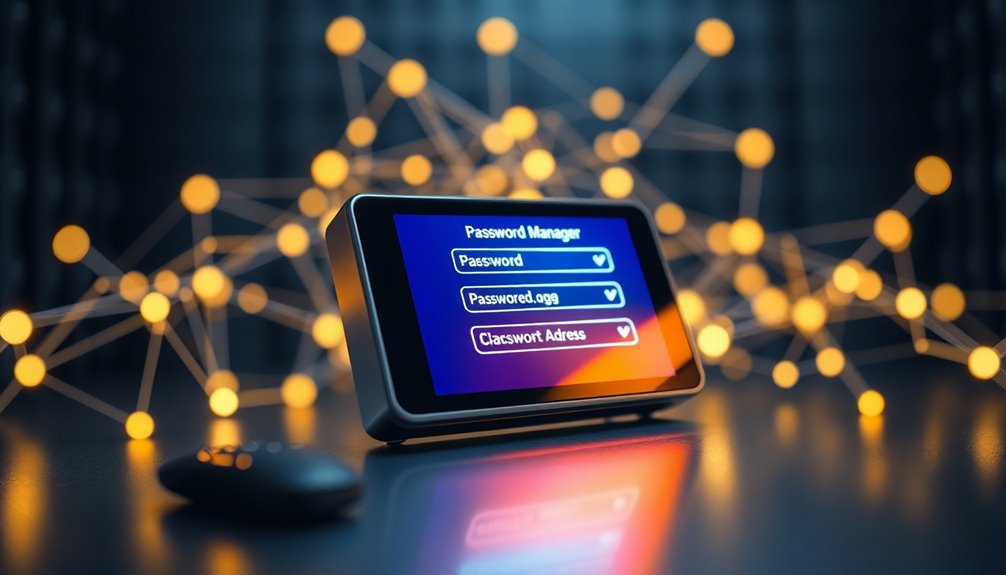
In today's digital landscape, strong password managers are essential tools for safeguarding your online accounts. They encrypt your credentials in a secure vault, protecting sensitive information from unauthorized access. With features like unique password generation and two-factor authentication, they enhance your security significantly. You only need to remember one master password, simplifying your login process with auto-fill and cross-device access. Additionally, these tools automatically generate strong, random passwords for accounts, further increasing your protection against breaches.
Password managers also help organize your accounts, allowing you to group passwords and set user permissions easily. They boost productivity by reducing time spent on password recovery and ensuring compliance with security policies.
Frequently Asked Questions
Can I Change My Blockchain Address After It's Generated?
You can't change a blockchain address once it's generated, but you can create new ones. Each address is unique and tied to your account.
If you want to enhance your privacy, it's best to use a fresh address for each transaction. This keeps your financial activities more secure and harder to trace.
Just remember to document each new address you create to keep track of your funds effectively.
Are Blockchain Addresses Unique to Each User?
So, you think everyone's got their own secret clubhouse with a unique address? Well, you're spot on!
Blockchain addresses are indeed unique, sort of like fingerprints—only without the messy ink. When you create an address, it's generated through a fancy algorithm, ensuring no two are alike.
How Long Do Blockchain Addresses Remain Valid?
Blockchain addresses remain valid indefinitely once created. You can use them for as long as you need, as they don't have an expiration date.
There's no automatic invalidation, so as long as you manage your private key securely, your wallet address stays functional.
Your choice of address format doesn't impact its validity, but be mindful of compatibility issues when using different formats, especially with exchanges and transactions.
Can I Use the Same Address for Multiple Transactions?
You can technically use the same address for multiple transactions, but it's not advisable.
Doing so compromises your privacy and security, as it makes it easier for others to track your transaction history. Each time you reuse that address, you increase the risk of linking it to your identity and consolidating your funds, making you a target for theft.
It's best to generate a new address for each transaction to protect yourself.
What Happens if I Lose Access to My Blockchain Address?
Losing access to your blockchain address can lead to a devastating dilemma. If you can't recover it, you risk permanent loss of your cryptocurrency.
Fortunately, you've got options! You can restore access using your seed phrase or private key. Wallet support services can guide you through recovery.
Conclusion
In understanding blockchain addresses, you’ve unlocked a vital piece of the crypto puzzle. Just remember, “a chain is only as strong as its weakest link. ” By recognizing the types of addresses, their generation, and associated security risks, you can navigate this digital landscape more confidently. The rise of decentralized identity solutions offers exciting possibilities for enhanced security. So, stay informed, use strong password managers, and keep your assets safe in this ever-evolving world of blockchain. Moreover, staying updated on current events is crucial, as trends and regulations can significantly influence the market landscape. For instance, trump’s impact on cryptocurrency this week has stirred discussions around potential shifts in policy that could affect both investors and developers alike. By keeping an eye on these developments, you can make more informed decisions and better protect your investments in the fast-paced world of blockchain.
Fall Picks
fall essentials
As an affiliate, we earn on qualifying purchases.