
The future of NFTs is bright as they bridge virtual and physical worlds, transforming ownership and licensing. You’ll see NFTs expanding beyond digital art into real estate, luxury goods, and collectibles, offering secure, blockchain-based proof of authenticity. This technology enables seamless transfer, customization, and monetization of assets, empowering creators and consumers alike. If you keep exploring, you’ll uncover how NFTs will continue to open new opportunities across industries and reshape how you own and control assets.
Key Takeaways
- NFTs will increasingly facilitate seamless ownership transfer and licensing of both digital and physical assets, integrating virtual and real-world economies.
- The metaverse will leverage NFTs for immersive, verifiable digital identities, virtual property, and exclusive access to experiences.
- Digital ownership and security will be enhanced through blockchain-based rights management, ensuring authenticity for real-world assets.
- NFT licensing will enable new revenue models, such as royalties and customized permissions, across diverse industries like art, real estate, and luxury goods.
- Future NFT ecosystems will prioritize interoperability, security, and user control, bridging virtual worlds with tangible assets and experiences.
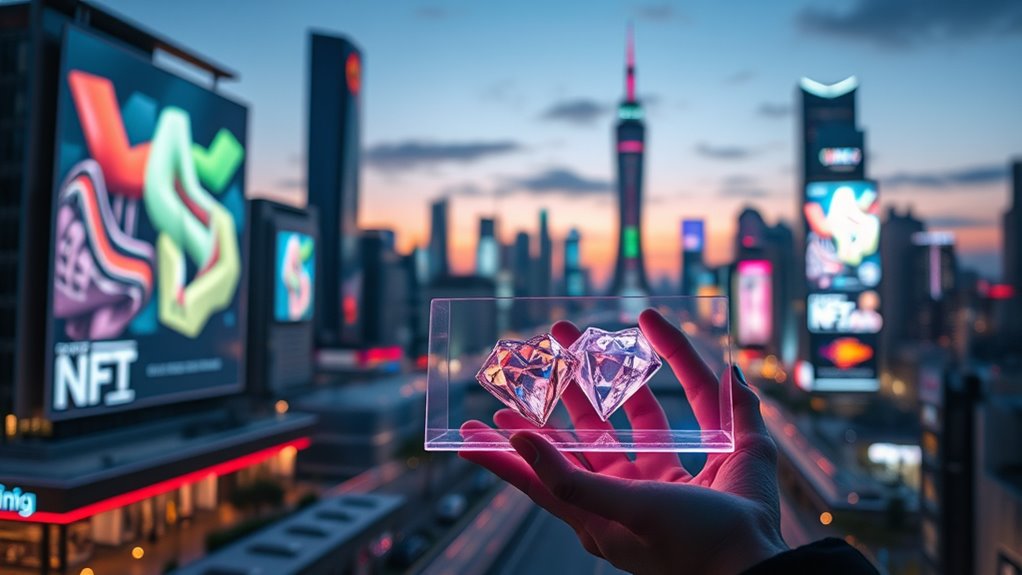
Non-fungible tokens (NFTs) are rapidly evolving beyond their initial use as digital collectibles, promising to transform industries from art to real estate. As you explore the potential of NFTs, you’ll notice how NFT licensing becomes a key element in establishing clear rights and permissions. Unlike traditional licensing, which can be complex and slow, NFT licensing offers a streamlined way to prove ownership and control over digital assets. When you buy an NFT, you’re not just purchasing a digital image or video—you’re acquiring a token that grants you specific rights tied to that asset. This concept of digital ownership is revolutionizing how creators and consumers interact, enabling you to verify authenticity instantly and confidently.
With NFTs, digital ownership becomes more than just a concept; it’s a tangible reality. You can now possess a verifiable, blockchain-based proof of ownership for digital items, which reduces the risk of forgery and unauthorized use. This shift empowers you, as a collector or investor, to have more control over your assets, knowing that your ownership is recorded securely and transparently on the blockchain. As the technology advances, NFT licensing agreements are becoming more sophisticated, allowing for customized rights such as resale royalties or limited usage rights. This flexibility means you could benefit financially from secondary sales or restrict how your digital asset is used, depending on your preferences.
In industries like music, gaming, and fashion, NFT licensing is opening new revenue streams. Artists and creators can license their work directly to fans or brands, cutting out intermediaries and ensuring they retain more control over their intellectual property. For you, this means easier access to exclusive content and more direct support for artists you admire. Additionally, understanding the concept of digital ownership is essential as it underpins the security and authenticity that NFTs provide. Digital ownership through NFTs extends into real-world assets like luxury goods, real estate, and collectibles. You might soon be able to buy a virtual deed to a property, or own a digital certificate of authenticity for physical art, all secured on the blockchain.
The future of NFTs promises an integrated ecosystem where digital ownership is seamless, secure, and highly customizable. You will have the ability to license, transfer, or showcase your assets effortlessly, knowing that your rights are clearly defined and protected. As this technology matures, NFT licensing will become even more integral to everyday transactions, blurring the lines between the digital and physical worlds. Whether you’re a creator, investor, or consumer, embracing this shift will give you new opportunities to leverage your assets and harness the full potential of blockchain-based ownership.
Frequently Asked Questions
How Will NFTS Impact Traditional Art Markets Long-Term?
NFTs will reshape traditional art markets by enhancing digital ownership and making art more accessible through democratization. As you adopt NFTs, you’ll find that artists gain new ways to sell directly to collectors, reducing middlemen. This shift encourages a more inclusive environment, enabling more people to participate in art investing and ownership. Long-term, NFTs could lead to a more transparent, diverse, and innovative art scene that benefits creators and collectors alike.
What Legal Challenges Could NFTS Face Globally?
You’ll face a legal minefield, where regulation acts like a tightrope walker over a sea of uncertainty. Legal regulation varies worldwide, making cross-border transactions tricky. Intellectual property rights become a tangled web—protecting creators while preventing theft. You’ll need to navigate these challenges carefully, ensuring NFTs respect laws and IP rights. Without clear rules, your digital assets risk becoming prey in a chaotic legal jungle.
Can NFTS Genuinely Guarantee Authenticity and Provenance?
Yes, NFTs can genuinely guarantee authenticity and provenance through blockchain verification, which records every transaction securely. Digital signatures ensure that the creator’s identity is verified, making it difficult to forge or tamper with the asset. When you mint or buy an NFT, you’re relying on these technologies to confirm that the digital asset is original and has a clear ownership history, providing you with confidence in its legitimacy.
How Will Environmental Concerns Affect NFT Adoption?
Imagine you’re in the year 3024, and environmental concerns still matter. Your NFT choices now impact the carbon footprint, motivating artists and platforms to adopt eco-friendly initiatives. As awareness grows, you’ll likely see increased demand for sustainable NFTs, encouraging blockchain innovations that reduce energy use. This shift could make NFT adoption more mainstream, aligning digital asset ownership with your values of environmental responsibility and fostering a greener future for all.
Will NFTS Replace Physical Collectibles Entirely?
No, NFTs won’t replace physical collectibles entirely. You’ll still value tangible items for their sentimental and physical presence, but NFTs enhance digital ownership and virtual commerce. They offer unique, verifiable assets you can buy, sell, or trade online, making digital collectibles more accessible and secure. While NFTs revolutionize how you engage with collectibles digitally, physical items will continue to hold special significance and tangible appeal.
Conclusion
As you step into this revolutionary world, NFTs are no longer just digital collectibles—they’ll reshape reality itself. From powering the metaverse to transforming real-world assets, their potential is mind-blowing enough to alter the fabric of how you live, work, and play. If you think this is just a trend, think again—NFTs are the unstoppable force that will redefine everything you know about ownership and value. Get ready, because the future is happening now, and it’s more incredible than you can imagine.