
Most people pick the wrong hardware wallet first because they overlook key security features and compatibility. They often choose based only on price or brand without considering backup options or device support for all their assets. This mistake can lead to asset loss or management issues down the line. To avoid this, focus on wallets with strong security, support for your cryptocurrencies, and ease of use. Keep exploring—more tips are ahead to help you make a smarter choice.
Key Takeaways
- Research security features and manufacturer reputation before purchasing, avoiding choices based solely on price or brand.
- Ensure the wallet supports all intended cryptocurrencies and is compatible with your operating system and devices.
- Prioritize ease of use, clear backup procedures, and recovery options to prevent asset loss.
- Avoid wallets lacking regular firmware updates or robust security standards, which can expose vulnerabilities.
- Balance cost with essential features like multi-factor authentication and future-proofing for long-term security.
Why Choosing the Right Hardware Wallet Matters for Your Crypto Security
Choosing the right hardware wallet is essential because it directly impacts the security of your cryptocurrencies. A secure wallet ensures your funds are protected against theft and hacking. It’s important to understand wallet recovery options, so you can regain access if your device is lost or damaged. Backup strategies are critical—regularly saving your recovery seed phrase ensures you won’t lose everything. Select a wallet that offers robust security features and straightforward backup procedures. A poorly chosen device may lack proper recovery options, risking your assets if something goes wrong. Utilizing landscaping in your backyard can also inspire new ways to create a secure and aesthetically pleasing environment, much like choosing the right crypto wallet. By prioritizing wallet recovery and backup strategies, you safeguard your investment. Remember, the right hardware wallet isn’t just about security; it’s about confidence in managing your crypto assets safely. Additionally, understanding cultural activities in various regions can help you stay informed about community events and local traditions.
Common Mistakes Beginners Make When Selecting a Hardware Wallet
Many beginners make the mistake of selecting a hardware wallet based solely on price or brand recognition without thoroughly researching its security features or compatibility. This oversight can lead to hardware concerns and misaligned user habits. You might overlook how well the device fits your daily routine or whether it’s vulnerable to certain attacks. Common mistakes include ignoring the importance of reputable manufacturers, neglecting to verify firmware updates, and choosing models that don’t support all your assets. Additionally, some overlook how easily the device integrates with your preferred software or how user-friendly it is. These factors directly impact your security and convenience, emphasizing the need to evaluate each hardware wallet carefully before buying. Making informed choices helps you avoid costly mistakes down the line. For example, understanding security features is crucial for ensuring your assets are protected from potential threats. Furthermore, considering hardware reliability can often inform proper maintenance and longevity of your hardware, as well as enhance your overall understanding of device durability. Paying attention to manufacturing standards can significantly improve your overall experience and security. Being aware of vulnerability assessments can also help identify potential weaknesses in a device’s design or software.
What Features Should You Look for in a Hardware Wallet?

When selecting a hardware wallet, it’s essential to look for key features that guarantee both security and usability. First, check the security protocols in place—look for devices with robust encryption, secure chip technology, and multi-factor authentication options. These features protect your assets from hacking and unauthorized access. Equally important is the user interface; a simple, intuitive design makes managing your cryptocurrencies easier and reduces the chance of user errors. Look for clear menus, easy setup, and straightforward backup procedures. A well-designed user interface helps you operate the wallet confidently, especially if you’re new to crypto. Combining strong security protocols with a user-friendly interface ensures your assets are safe while making your experience smoother and more accessible. Additionally, understanding ethical considerations in consumer technology can help you choose products that align with your values and promote responsible use. Considering the solar system design principles can also inspire more sustainable choices in your crypto hardware and overall technology use. Incorporating cybersecurity tactics can further strengthen your understanding of how to protect your assets in the digital landscape. Being aware of security best practices helps ensure comprehensive protection against evolving cyber threats, including adopting layered security approaches.
How to Check if a Hardware Wallet Is Compatible With Your Devices and Coins?
To guarantee your hardware wallet works with your devices and coins, start by checking device compatibility requirements, like USB or Bluetooth connectivity. Make certain it supports the specific cryptocurrencies you hold, as not all wallets support every coin. Also, verify that the wallet’s operating system compatibility matches your devices, whether it’s Windows, macOS, Linux, or mobile platforms. Additionally, understanding color accuracy in your hardware can enhance your overall user experience when managing digital assets.
Device Compatibility Requirements
Checking if a hardware wallet is compatible with your devices and coins is essential before making a purchase. You need to verify it fits your device setup and supports your intended cryptocurrencies. Start by confirming device compatibility—some wallets work only with specific operating systems like Windows, macOS, or Linux. Next, confirm software integration options—ensure the wallet’s software is compatible with your preferred apps and platforms. Also, check if it supports your device type, whether desktop, mobile, or hardware. Finally, review the following:
- Compatibility with your operating system
- Support for your smartphone or computer
- Integration with your preferred crypto management software
- Ability to handle the specific coins you own
This guarantees smooth setup and ongoing use without surprises.
Supported Cryptocurrency Types
Ensuring your hardware wallet supports the cryptocurrencies you own is essential to managing your assets effectively. Not all wallets are compatible with every type of cryptocurrency, so you need to verify supported coins before buying. Check the manufacturer’s website or product specifications for a list of compatible tokens to guarantee your preferred cryptocurrencies are covered. This is critical for reliable cryptocurrency storage and maintaining hardware security. Some wallets support only major coins like Bitcoin and Ethereum, while others handle a broader range, including altcoins. If you plan to diversify, choose a wallet that supports multiple coins. Confirming compatibility helps you avoid future hassle and secures your assets by ensuring your hardware wallet can manage all your cryptocurrencies seamlessly. Additionally, understanding supported cryptocurrency types can help you identify wallets that are compatible with your devices and coins. Being aware of hardware wallet compatibility can prevent potential issues and ensure seamless management of your digital assets.
Operating System Compatibility
Once you’ve confirmed that your hardware wallet supports your chosen cryptocurrencies, it’s equally important to verify its compatibility with your devices’ operating systems. Compatibility issues can hinder setup or ongoing use. Check if the wallet works with your OS—Windows, macOS, Linux, Android, or iOS—before buying. Keep in mind that software updates from the manufacturer often improve compatibility and security. A reputable brand with a strong reputation typically provides better support and regular updates. To assess compatibility:
- Confirm supported OS versions on the manufacturer’s website
- Ensure the wallet software is compatible with your device’s OS
- Check for recent software updates that enhance compatibility
- Read reviews about OS and device compatibility issues
This helps prevent surprises and ensures smooth operation across your devices.
Top Hardware Wallets Compared: Which One Is Right for You?

When choosing a hardware wallet, you need to compare security features, user experience, and how well it connects with your devices. Consider which wallet offers strong protection without sacrificing ease of use. Knowing these points helps you find the one that fits your needs best. Just as selecting the right performance parts can boost your car’s efficiency, choosing the right hardware wallet enhances your digital security. Additionally, understanding the resale value and reputation of the device can influence your long-term satisfaction and trust in your investment. A security zone can provide an added layer of protection for your digital assets, making it an important consideration when evaluating options. Using tools to detect passive voice can also improve the clarity and strength of your writing about these devices. Furthermore, reviewing the privacy policy of each wallet ensures your personal data remains protected in the long run.
Security Features Overview
Choosing the right hardware wallet means understanding their security features, which are essential for protecting your crypto assets. Top wallets employ advanced security measures like cryptographic encryption to safeguard your private keys and prevent unauthorized access. Biometric security adds another layer, using fingerprint or facial recognition to confirm identity. Key features to compare include:
- Secure element chips for isolated data storage
- Multi-factor authentication options
- Tamper-resistant design
- Regular firmware updates for enhanced protection
These features work together to guarantee your holdings stay safe from hacking attempts. A wallet with strong cryptographic encryption and biometric security provides peace of mind, especially if you’re managing significant assets. Understanding hardware wallet security features is crucial for making an informed choice. Prioritize these security elements to choose a device that truly defends your investments.
User Experience Factors
Selecting a hardware wallet isn’t just about security features; your overall user experience plays an essential role in ensuring smooth and stress-free management of your crypto assets. The user interface is critical—look for a device with an intuitive, easy-to-navigate screen and straightforward setup process. A cluttered or complicated interface can lead to mistakes or frustration, especially if you’re new to crypto. Additionally, consider customer support; responsive, knowledgeable support can be a lifesaver if you encounter issues or have questions. Reliable support channels, such as live chat or detailed online resources, make troubleshooting easier. Ultimately, choosing a device with a user-friendly interface and strong customer support helps you stay confident and in control of your crypto holdings, reducing the risk of errors and enhancing your overall experience.
Compatibility and Connectivity
Compatibility and connectivity are crucial factors to take into account because they determine how seamlessly your hardware wallet integrates with your devices and crypto ecosystem. Consider whether the wallet supports Bluetooth connectivity for wireless use, which can simplify transactions on mobile devices. USB compatibility is equally important, ensuring it connects easily with desktops or laptops via USB-C or USB-A ports. Some wallets also offer multi-platform support, allowing you to switch between devices effortlessly. Additionally, check if the wallet supports third-party apps or integrations you rely on. Portability and ease of connection can greatly influence your experience, especially if you often travel or switch between devices. Ultimately, selecting a wallet with the right connectivity options ensures a smoother, more secure crypto management process.
How Much Should You Spend on a Hardware Wallet? When to Consider Higher-End Models

Deciding how much to spend on a hardware wallet depends on your needs and the value of your crypto holdings. For small portfolios, budget-friendly options often suffice, but if you hold significant assets, investing in a higher-end model can be worthwhile. Cost considerations include not just price but also the security features and durability offered. Higher-end wallets often come with luxury features like advanced biometric authentication, premium build quality, or extra backup options, providing extra peace of mind. If your holdings make you anxious about security, spending more could be a smart move. However, guarantee the added features align with your actual needs, and avoid paying for unnecessary luxury features that won’t improve your security or usability.
How to Avoid Fake or Compromised Hardware Wallets
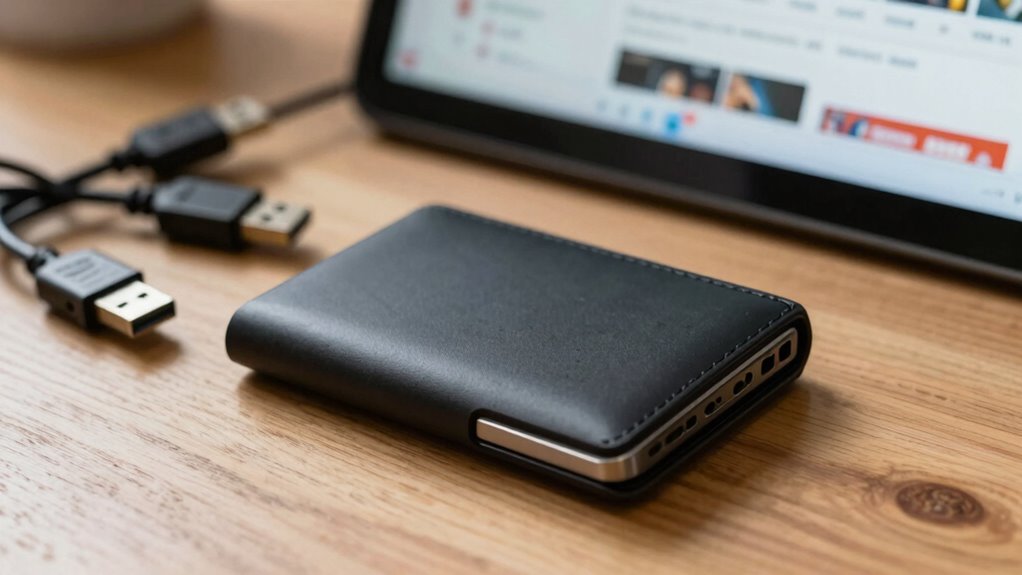
To avoid falling victim to fake or compromised hardware wallets, you need to be vigilant about where and how you purchase them. Always verify the seller’s credibility and avoid third-party marketplaces with questionable reputations. Be cautious of fake verification methods that counterfeit retailers might use to deceive buyers. It’s crucial to understand the supply chain—buy directly from the manufacturer or authorized resellers to reduce risks. Additionally, reviewing the affiliate disclosure and privacy policies of vendors can provide insights into their trustworthiness and transparency. To ensure authenticity, look out for:
- Official websites or authorized retail partners
- Secure payment methods
- Authentic packaging seals
- Clear, verifiable serial numbers
Staying alert about supply chain security helps prevent counterfeit devices from entering your hands. A compromised wallet can jeopardize your assets, so always verify before buying. Being aware of product authenticity measures can further safeguard your investments. Incorporating trusted sources into your purchasing process is essential for maintaining security.
Step-by-Step Guide to Picking the Perfect Hardware Wallet for Your Needs

Choosing the right hardware wallet can seem overwhelming with so many options on the market. To find your perfect fit, start by evaluating your needs: security level, ease of use, and supported assets. Pay close attention to hardware durability—look for sturdy construction and reliable components. Next, consider brand reputation; trusted brands often provide better security features and customer support. Visualize your options with this table:
| Feature | High Priority | Moderate Priority |
|---|---|---|
| Hardware durability | Metal casing, water resistance | Plastic casing, basic protection |
| Brand reputation | Well-known, positive reviews | New or less established brands |
| Ease of use | Simple setup, intuitive UI | Advanced features, customization |
| Supported assets | Wide range of cryptocurrencies | Limited asset support |
Use these criteria to narrow your choices and avoid costly mistakes.
Frequently Asked Questions
Can I Use a Hardware Wallet for Multiple Cryptocurrencies Simultaneously?
Using a hardware wallet is like juggling multiple balls at once—you can handle several cryptocurrencies, thanks to multi-cryptocurrency support. Most wallets now offer cross-platform compatibility, so you can manage various coins across different devices seamlessly. Yes, you can store multiple cryptocurrencies simultaneously. Just make certain the wallet you choose supports all the coins you’re interested in, and you’ll enjoy secure, easy access across platforms without hassle.
What Are the Signs of a Compromised or Fake Hardware Wallet?
You can spot a compromised or fake hardware wallet if you notice fraudulent packaging or tampered components. Fake wallets often come in packaging that looks suspicious or differs from official versions. Check for any physical damage, loose parts, or signs of tampering inside. Additionally, verify the device’s firmware matches official updates. If anything seems off, avoid using it to protect your cryptocurrencies.
Do Hardware Wallets Require Internet Access to Function?
Coincidences happen—your hardware wallet doesn’t need internet access to keep your assets safe. It’s designed for offline security, meaning you can manage your crypto without online vulnerabilities. As long as your device is compatible with your wallet, you can securely store and sign transactions offline. This setup minimizes risks and guarantees your private keys stay protected, even without an internet connection, giving you peace of mind.
How Often Should I Update My Hardware Wallet’s Firmware?
You should update your hardware wallet’s firmware regularly, ideally whenever new firmware or security patches become available. These updates fix vulnerabilities and enhance security, so staying current safeguards your assets. Check the manufacturer’s website or app notifications frequently, and don’t delay installing firmware updates. Keeping your device updated ensures you benefit from the latest security patches and features, reducing the risk of potential hacks or exploits.
Is It Safe to Buy Hardware Wallets Secondhand?
Buying hardware wallets secondhand isn’t entirely safe due to risks like secondhand scams and compromised devices. You should only purchase from trusted sources, and always verify the authenticity of the wallet. Look for clear authenticity verification processes, and consider resetting the device before use. If there’s any doubt about the wallet’s history or integrity, it’s safer to buy new to protect your crypto assets.
Conclusion
Choosing the correct hardware wallet can seem challenging, but with careful consideration and clear criteria, you can confidently combat costly compromises. By comparing features, checking compatibility, and scrutinizing security, you’ll sidestep scams and settle on a stellar safeguard. Stay savvy, select smart, and secure your coins with a wallet that works for you. Remember, the right device delivers peace of mind, protecting your portfolio with precision and perseverance.