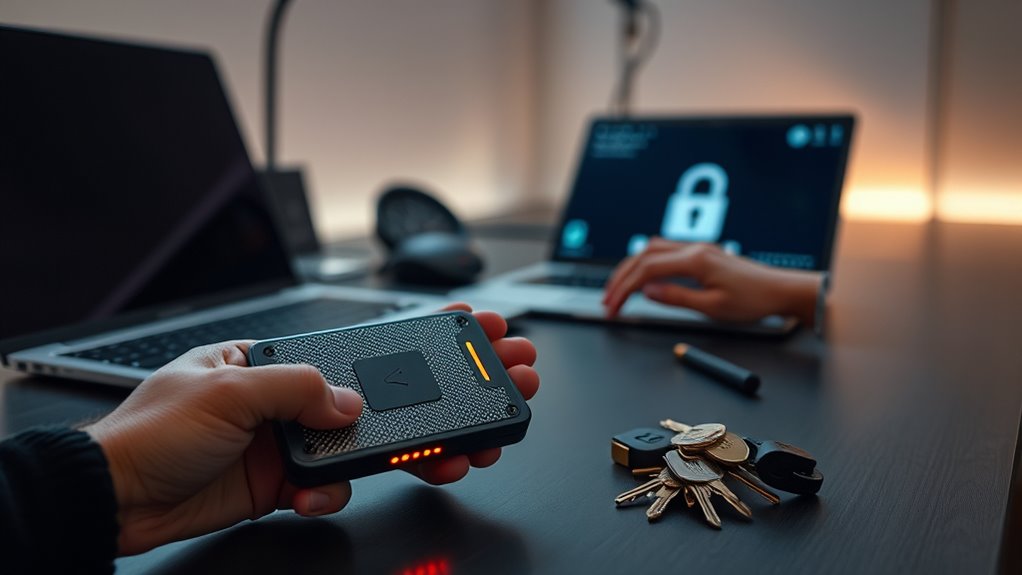

To keep your crypto wallet secure, use hardware wallets for high-value assets and enable multi-signature authentication to add extra layers of protection. Always generate a strong PIN and store your recovery seed phrase offline, making sure it’s private and secure. Keep your software and firmware up-to-date, and avoid using public Wi-Fi or unsecured networks when managing your assets. Staying informed about new threats helps you adapt your security practices effectively—continue to explore these essential tips to best protect your assets.
Key Takeaways
- Use hardware wallets to store private keys offline and protect assets from online threats.
- Keep recovery seed phrases private, secure, and never digital to prevent unauthorized access.
- Enable multi signature authentication for transactions to add multiple layers of security.
- Regularly update device firmware and security software to patch vulnerabilities.
- Avoid public Wi-Fi and unsecured networks when managing or transferring crypto assets.

Securing your crypto wallet is essential to protect your digital assets from theft and unauthorized access. One of the most effective ways to do this is by using hardware wallets. These physical devices store your private keys offline, making it nearly impossible for hackers to access your funds remotely. Unlike online wallets or exchanges, hardware wallets resist phishing attempts and malware attacks because your keys never leave the device. When you set up a hardware wallet, ensure you generate a strong PIN and keep your recovery seed phrase secure and private. This seed phrase acts as a backup, so never store it digitally or share it with anyone. If your hardware wallet is lost or damaged, the seed phrase allows you to restore your wallet on a new device, maintaining control over your assets. Using hardware wallets considerably reduces the risk of online breaches, especially if you’re managing large amounts of crypto.
In addition to hardware wallets, multi signature authentication adds another layer of security. This method requires multiple independent keys to authorize a transaction, making it much harder for hackers to compromise your wallet. Instead of relying on a single private key, you set up multiple keys stored in different locations or devices. To make a transfer, all or most of these keys need to be used, which prevents unauthorized access even if one key is compromised. Multi signature wallets are particularly valuable for businesses or groups sharing assets, but they also benefit individual users seeking extra protection. You should carefully choose who holds each key and where they’re stored, ensuring they are kept offline or in secure locations. Implementing multi signature authentication makes it substantially more difficult for attackers to hijack your funds, as they would need to breach multiple security points. Incorporating hardware wallets into your security setup is especially recommended for managing high-value assets.
Combining hardware wallets with multi signature authentication provides a robust defense against theft. Hardware wallets safeguard your private keys by keeping them offline, while multi signature setups ensure that even if one key is compromised, your assets remain protected. Always keep your devices updated with the latest firmware and security patches, and avoid using public Wi-Fi or unsecured networks when managing your crypto. Regularly review your security practices and stay informed about emerging threats to ensure your assets stay safe. Remember, the most secure crypto wallet is one you control with strong, layered protections. By implementing hardware wallets alongside multi signature authentication, you take notably significant steps toward safeguarding your digital wealth from potential breaches.
Frequently Asked Questions
How Often Should I Update My Crypto Wallet Security Measures?
You should update your crypto wallet security measures regularly, ideally every three to six months. Make certain to change your passwords periodically and use strong, unique ones. Conduct security audits to identify vulnerabilities and guarantee your software is up to date. Staying proactive helps protect your assets. Don’t forget to enable two-factor authentication and review your security setup after any suspicious activity or major wallet updates.
Are Hardware Wallets More Secure Than Software Wallets?
Imagine holding a vault in your hands—hardware wallets are more secure than software wallets because they offer superior hardware security, protecting your private keys from online threats. While software wallets are convenient, they’re more vulnerable to software vulnerabilities and hacking attempts. Choosing a hardware wallet minimizes risks, especially if you keep it offline, giving you peace of mind knowing your crypto assets are guarded against cyber threats.
What Are the Signs of a Compromised Crypto Wallet?
You’ll notice signs of a compromised crypto wallet if you see phishing attempts or unauthorized transactions. These could include unexpected account access, unfamiliar transfers, or alerts from your wallet provider. Keep an eye out for suspicious emails or links asking for your private keys. If anything seems off, act quickly by changing passwords, enabling two-factor authentication, and contacting support to prevent further damage.
Can Using Multiple Wallets Improve My Crypto Security?
Using multiple wallets can definitely improve your crypto security through multi wallet management and diversification strategies. By spreading your assets across different wallets, you reduce the risk of losing everything if one gets compromised. This approach helps isolate vulnerabilities and makes it harder for hackers to access all your funds at once. So, adopting a multi-wallet setup enhances your overall security and safeguards your investments more effectively.
How Do I Recover Funds if I Lose Access to My Wallet?
When you lose access to your wallet, it’s like a coin falling into the ocean—your backup strategies and seed phrases are your lifelines. You can recover your funds by securely restoring your wallet using your seed phrase, which acts as a master key. Always keep your seed phrase offline and private. Regularly update your backup strategies to guarantee you’re prepared, because sometimes, the smallest detail can save your assets.
Conclusion
Think of your crypto wallet as a treasure chest—you wouldn’t leave it unsecured or unattended. By following these best practices, you’re building a fortress around your digital assets, keeping hackers at bay. Stay vigilant, use strong passwords, and enable two-factor authentication. Remember, securing your wallet is like tending a garden; regular care and attention protect your valuable harvest. Keep your crypto safe, and it’ll serve you well for years to come.