

You should see blockchain as infrastructure because it supports secure, transparent systems essential to many industries beyond just cryptocurrencies. It enables digital identity management, supply chain tracking, and trusted data sharing, providing a stable foundation for digital ecosystems. Its decentralized nature reduces risks and boosts resilience, making it a critical part of the digital world. Keep exploring to discover how blockchain’s role as infrastructure shapes our technological future even further.

Get hardware and tech essentials delivered free with Prime
- Fast, free delivery on millions of items
- Prime Video, Amazon Music and more included
- Member-only deals all year
Key Takeaways
- Blockchain provides a secure, transparent foundation for critical digital functions beyond just cryptocurrencies.
- Its decentralized nature ensures resilience, reducing risks associated with central control and vulnerabilities.
- As infrastructure, blockchain underpins digital identity, supply chain, and data sharing, enabling scalable, trustworthy ecosystems.
- Recognizing blockchain as foundational infrastructure emphasizes its role in long-term stability and widespread technological adoption.
- Viewing blockchain as infrastructure helps differentiate it from hype, focusing on its practical, strategic value in digital transformation.
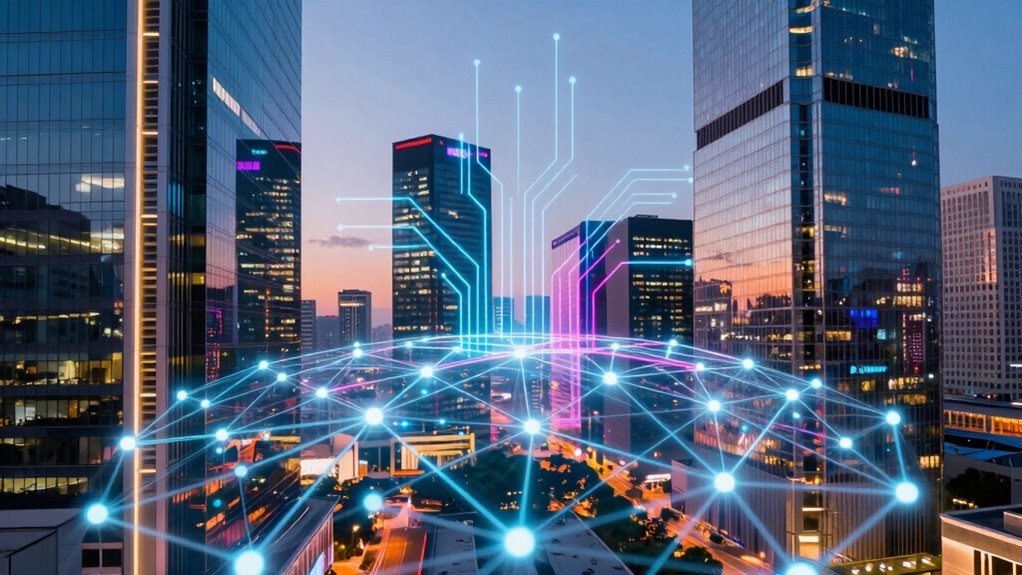
Have you ever wondered what it means for blockchain to be considered infrastructure? Think of infrastructure as the foundational systems that support everyday life—roads, electricity, water supply. When blockchain is viewed as infrastructure, it shifts from being a buzzword or fleeting trend to a fundamental layer that enables secure, transparent operations across various industries. This perspective emphasizes that blockchain isn’t just hype; it’s a technology that can underpin critical functions like digital identity management and supply chain transparency.
Blockchain as infrastructure underpins secure, transparent operations across industries, enabling critical functions like identity management and supply chain integrity.
In the domain of digital identity, blockchain provides a way to give individuals more control over their personal data. Instead of relying on centralized databases vulnerable to breaches, blockchain creates a decentralized ledger where your identity information is securely stored and easily verifiable. This approach reduces identity theft risks and enhances privacy because you hold the keys to your data. When blockchain is integrated into digital identity frameworks, it becomes an essential part of the digital framework—enabling trusted, tamper-proof identity verification that can be universally accessed and verified without intermediaries.
Similarly, in supply chains, blockchain offers a transparent, immutable record of every transaction or movement of goods. When you think of supply chain as infrastructure, blockchain becomes the backbone that ensures authenticity and accountability. It allows stakeholders—manufacturers, distributors, consumers—to trace products from origin to delivery with confidence. This traceability is crucial for industries like food, pharmaceuticals, and luxury goods, where authenticity and safety are critical. By embedding blockchain into supply chain operations, companies create a reliable foundation that minimizes fraud, reduces delays, and improves efficiency. It’s no longer just a disruptive technology but a foundational system that supports trust and integrity throughout complex networks.
Viewing blockchain as infrastructure also means recognizing its role in shaping the future of digital ecosystems. It’s not just about hype-driven applications; it’s about creating the underlying platforms that power secure transactions, data sharing, and identity verification. Infrastructure has a long-term, stabilizing effect, providing the consistency necessary for widespread adoption and innovation. As blockchain technology continues to develop, its decentralized nature ensures that power and control are distributed rather than centralized, promoting resilience and security. This distributed framework makes blockchain uniquely suited to enable a resilient digital infrastructure that can withstand various threats. Recognizing blockchain as digital infrastructure helps to understand its potential to support a wide range of critical systems beyond cryptocurrencies. This foundational role underscores its importance in building reliable, scalable, and secure digital environments. With the increasing integration of blockchain into emerging technologies, its significance as foundational infrastructure only grows stronger. When you see blockchain through this lens, it’s easier to appreciate its potential to support essential systems, from digital identity frameworks to global supply chains, rather than dismissing it as a passing trend. Ultimately, understanding blockchain as infrastructure helps you see its value as a reliable, secure, and scalable foundation for the digital world we’re building.
blockchain security hardware wallet
As an affiliate, we earn on qualifying purchases.
As an affiliate, we earn on qualifying purchases.
Frequently Asked Questions
How Does Blockchain Infrastructure Differ From Traditional IT Systems?
You see, blockchain infrastructure differs from traditional IT systems because it relies on decentralized networks rather than centralized servers. Smart contracts automate processes securely, reducing intermediaries and increasing transparency. This setup enhances resilience and trust because no single entity controls the network. Unlike traditional systems, blockchain offers a distributed ledger that’s tamper-proof, making it ideal for secure transactions and data sharing across multiple parties seamlessly.
What Are the Main Challenges in Adopting Blockchain as Infrastructure?
Like steering through uncharted waters, adopting blockchain as infrastructure faces tokenization challenges and regulatory hurdles. You may find it tough to standardize digital assets, risking fragmentation, while evolving laws create uncertainties. These obstacles test your resilience, requiring innovative solutions and patience. Embracing blockchain’s potential means guiding through these complexities, understanding that overcoming such hurdles will open transformative opportunities, much like explorers charting new territories for future generations.
How Scalable Is Blockchain Infrastructure for Enterprise Use?
Blockchain infrastructure offers significant scalability for enterprise use, especially when leveraging tokenization potential and decentralization benefits. You can process high transaction volumes efficiently, thanks to layer 2 solutions and consensus mechanisms. As you adopt blockchain, you’ll find it becomes more adaptable, supporting complex applications and large-scale operations. This scalability helps you innovate faster, reduce costs, and enhance security, making blockchain a practical foundation rather than just hype.
What Security Measures Are Essential for Blockchain Infrastructure?
You need robust security measures like decentralized consensus, which guarantees no single point of failure, and cryptographic security to protect data integrity and confidentiality. Implement multi-signature protocols and regular audits to enhance safety. Keep your infrastructure updated with the latest security patches, and restrict access through strong authentication. These essential measures help defend against attacks, maintain trust, and assure your blockchain infrastructure remains resilient and secure.
How Does Blockchain Infrastructure Impact Data Privacy Regulations?
Did you know over 70% of organizations face challenges aligning blockchain infrastructure with data privacy regulations? Blockchain impacts data privacy by enhancing data sovereignty and streamlining regulatory compliance. It allows you to control who accesses data and guarantees transparency without sacrificing privacy. This infrastructure helps organizations meet legal standards while maintaining data integrity, making it a crucial tool for steering through complex data privacy rules effectively.
digital identity management blockchain
As an affiliate, we earn on qualifying purchases.
As an affiliate, we earn on qualifying purchases.
Conclusion
Think of blockchain as the foundation of a skyscraper, not just its flashy exterior. When you see it as infrastructure, you understand it’s the sturdy base supporting innovation and trust. It’s not just hype riding the wave of trends; it’s the backbone of a new digital era. By recognizing blockchain this way, you can better appreciate its lasting value, like an anchor that keeps a ship steady amid turbulent waters.
blockchain supply chain tracking device
As an affiliate, we earn on qualifying purchases.
As an affiliate, we earn on qualifying purchases.
As an affiliate, we earn on qualifying purchases.
Halloween Picks
halloween
As an affiliate, we earn on qualifying purchases.