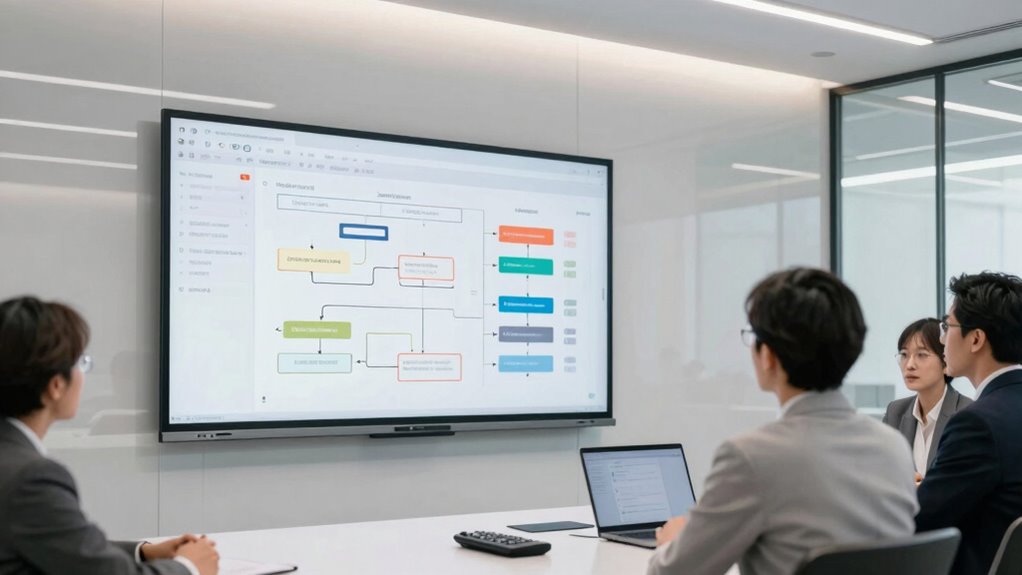

Smart whiteboards only work well when your workflow is clear because organized processes help you and your team focus on ideas rather than figuring out how to use the tool. Without a defined structure, features can become distractions, making collaboration less effective. When your workflow is established, the whiteboard supports seamless brainstorming, idea sharing, and project tracking. Keep going to discover how setting up a clear process can release the full potential of your digital workspace.

Get hardware and tech essentials delivered free with Prime
- Fast, free delivery on millions of items
- Prime Video, Amazon Music and more included
- Member-only deals all year
Key Takeaways
- Clear workflows ensure team members understand how to utilize whiteboard features effectively.
- Organized processes prevent feature misuse and help focus on collaboration rather than tool navigation.
- Well-defined workflows streamline idea capture, sharing, and tracking, maximizing productivity.
- Without clarity, digital tools risk becoming distractions rather than productivity aids.
- Established processes facilitate smooth transitions to digital collaboration, enhancing overall team efficiency.
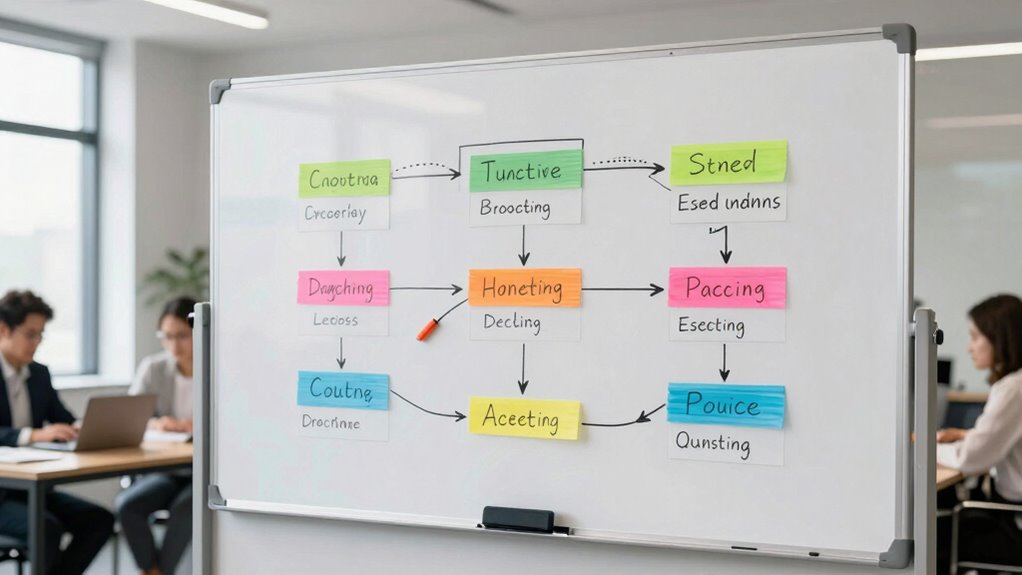
Have you ever wondered how teams stay organized and collaborate effectively? The answer often lies in the tools they use—like whiteboards, whether traditional or smart. Smart whiteboards promise seamless digital collaboration and enhanced visual communication, but their success depends heavily on the clarity of your workflow. Without a clear process, these advanced tools can become more of a distraction than a help. When your team already knows what steps to take and how to communicate, smart whiteboards amplify your efforts, making collaboration smoother and ideas more visible.
Think about it: a smart whiteboard is designed to bring your team’s ideas to life through digital collaboration. It allows you to share screens, draw diagrams, and brainstorm in real-time, whether your team is in the same room or spread across different locations. But if your workflow isn’t well-defined—if roles aren’t clear or tasks are disorganized—then the technology can overwhelm rather than assist. You might find yourselves spending more time figuring out how to use the tools than actually working on the project. That’s because smart whiteboards excel when everyone knows what to do and how to contribute, making visual communication straightforward and effective.
Smart whiteboards boost collaboration when roles and tasks are clear, preventing overwhelm and maximizing their visual communication benefits.
When your workflow is already clear, you can leverage smart whiteboards to their fullest potential. They become a central hub where ideas are captured, refined, and shared instantly. This clarity allows you to focus on the content instead of the process. For example, if your team has a set meeting agenda or project outline, you can collaboratively build on it in real-time, using visual cues and digital notes. The whiteboard then acts as a dynamic workspace that enhances your existing structure rather than trying to create order from chaos. As a result, your team can move faster, collaborate more efficiently, and achieve better outcomes.
But if your workflow is murky, using a smart whiteboard might only add confusion. Without a clear plan or communication strategy, the tool’s features can become underutilized or misused. You might struggle to keep track of ideas or miss out on the benefits of digital collaboration. That’s why it’s crucial to establish a solid workflow first. When your processes are well-understood, the transition to a smart whiteboard is seamless, and the technology truly becomes an asset rather than a burden. Understanding the importance of workflow clarity is essential for maximizing the benefits of digital tools in any team setting. Incorporating digital collaboration tools into your workflow can also support sustainable practices by reducing paper use and enhancing resource efficiency. Developing a structured approach ensures that your team can fully utilize the capabilities of smart whiteboards without confusion or frustration. Ultimately, smart whiteboards only work when your team knows where you’re headed—that clarity turns digital collaboration and visual communication into powerful tools for productivity.
smart whiteboard for team collaboration
As an affiliate, we earn on qualifying purchases.
As an affiliate, we earn on qualifying purchases.
Frequently Asked Questions
Can Smart Whiteboards Replace Traditional Project Management Tools?
Smart whiteboards can’t fully replace traditional project management tools, but they enhance digital collaboration and visual organization. You can use them for brainstorming, real-time updates, and interactive planning, making teamwork more dynamic. However, for detailed task tracking, deadlines, and resource management, traditional tools still provide structure. Integrating smart whiteboards with existing project management methods offers a seamless way to boost productivity and keep everyone aligned.
How Much Training Is Needed to Effectively Use Smart Whiteboards?
You’ll need some training to become proficient with smart whiteboards, but the complexity varies based on your familiarity with similar tools. Typically, a few hours of focused training boosts your user proficiency considerably. The training complexity isn’t too intimidating, especially if you’re comfortable with digital interfaces. Once you grasp the basics, you’ll find that smart whiteboards enhance collaboration and streamline workflows, making the learning curve well worth it.
Are Smart Whiteboards Suitable for Remote or Hybrid Teams?
Smart whiteboards are highly suitable for remote and hybrid teams, enabling seamless digital brainstorming and remote collaboration. You can share ideas instantly, visualize concepts, and interact in real-time, regardless of location. While they excel in fostering engagement, you need to guarantee your team’s workflow is clear first. When used effectively, smart whiteboards bridge physical gaps, making teamwork more dynamic and inclusive, even across distances.
What Are Common Technical Issues Faced With Smart Whiteboards?
You might face common technical issues like hardware malfunctions, which can interrupt your workflow, or connectivity issues, causing delays or disconnections during meetings. These problems can be frustrating, especially if the whiteboard suddenly stops responding or loses internet access. To minimize disruptions, make sure your device is well-maintained, software is up-to-date, and your internet connection is stable. Regular checks can help keep your smart whiteboard functioning smoothly.
How Do Smart Whiteboards Integrate With Existing Software Systems?
Smart whiteboards integrate with existing software systems through digital annotation and cloud synchronization features. You can easily connect them to your apps, allowing seamless sharing and editing of content across devices. This integration guarantees real-time updates and collaboration, making workflows more efficient. By syncing with cloud services, you access your files anytime, anywhere, enhancing productivity and reducing disruptions during meetings or brainstorming sessions.
digital whiteboard with screen sharing
As an affiliate, we earn on qualifying purchases.
As an affiliate, we earn on qualifying purchases.
Conclusion
Remember, a chain is only as strong as its weakest link. Smart whiteboards shine when your workflow is already clear, acting as powerful tools to organize and visualize ideas. Without a well-defined process, they can become cluttered, leaving you frustrated. So, before investing in this technology, make sure your workflow is streamlined. When clarity leads the way, your smart whiteboard can truly release your team’s potential and boost productivity.
interactive whiteboard for meetings
As an affiliate, we earn on qualifying purchases.
As an affiliate, we earn on qualifying purchases.
As an affiliate, we earn on qualifying purchases.
Halloween Picks
halloween
As an affiliate, we earn on qualifying purchases.