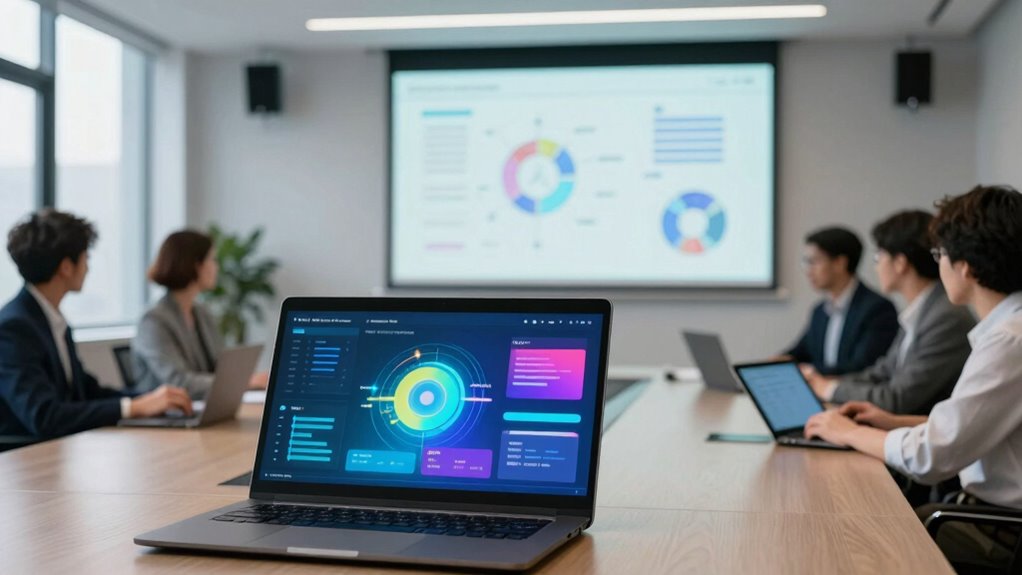

Presentation technology transforms training by making it more interactive, immersive, and accessible compared to meetings. It encourages deeper engagement through simulations, multimedia, and gamified elements that boost motivation and retention. You can connect globally in real-time, breaking down geographical barriers. Plus, advanced tools like virtual and augmented reality create realistic experiences that develop skills effectively. Keep exploring how these innovations are reshaping learning and the future of training.

Get hardware and tech essentials delivered free with Prime
- Fast, free delivery on millions of items
- Prime Video, Amazon Music and more included
- Member-only deals all year
Key Takeaways
- Presentation tech transforms training into interactive, engaging experiences, fostering deeper understanding and practical skill development.
- It enables real-time, global collaboration, breaking down geographical barriers and encouraging diverse perspectives.
- Interactive simulations and immersive scenarios provide hands-on practice without real-world risks, enhancing skill retention.
- Multimedia and gamification make training more captivating, increasing focus, motivation, and information retention.
- Advanced technologies like AR/VR create realistic, memorable training environments, surpassing traditional presentation methods.

While meetings often rely on traditional presentation methods, emerging presentation technologies are transforming how training is delivered far more than they change meetings themselves. In training environments, these tools create opportunities for deeper engagement and practical application that simply aren’t possible with slides and static videos. You’re no longer limited to passive listening; instead, you’re invited into a more interactive experience that fosters real understanding and skill development.
Emerging presentation tech transforms training into engaging, interactive experiences that foster real skills and understanding beyond passive listening.
One of the most significant ways presentation tech impacts training is through virtual collaboration. Instead of gathering everyone in a single room, you can connect learners from across the globe in real-time. This connectivity encourages diverse perspectives, immediate feedback, and shared problem-solving, making training sessions more dynamic and inclusive. Virtual collaboration platforms integrate seamlessly with presentation tools, allowing you to break down geographical barriers and foster a sense of community regardless of physical location. As a result, your training becomes more flexible, scalable, and accessible, giving learners the chance to participate actively rather than passively absorbing information. Additionally, the capability to leverage interactive engagement techniques further enhances the effectiveness of remote training sessions.
Interactive simulations are another game-changer. These advanced presentation tools enable you to create immersive learning scenarios where participants can practice skills in a safe, controlled environment. Whether it’s handling customer complaints, navigating complex procedures, or making strategic decisions, interactive simulations provide realistic practice that boosts confidence and retention. Unlike traditional training, which often involves memorization and theoretical knowledge, simulations make learning experiential. You get to see your progress in real-time, adjust scenarios on the fly, and learn from mistakes without real-world consequences. This immediate feedback loop helps reinforce learning and ensures that skills are not just learned but applied effectively. Furthermore, the engagement generated by such simulations increases motivation and helps learners better transfer skills to real-world situations. Incorporating immersive technologies like virtual reality further expands these possibilities, making training even more impactful and memorable. As the technological advancements in presentation tools continue to evolve, the potential for creating more realistic and engaging training experiences grows exponentially.
Moreover, presentation tech enhances engagement through multimedia integration—videos, animations, and gamified elements—making training sessions more captivating. When you combine this with virtual collaboration and interactive simulations, you transform passive content into a lively, participatory experience. Learners are more likely to stay focused, retain information, and develop practical skills because they’re actively involved in the process. This shift from traditional lecture-based training to interactive, tech-enabled learning ultimately leads to better outcomes, higher motivation, and a more adaptable workforce.
In essence, while presentation technology does influence meetings, its true power lies in revolutionizing training. You’re equipped with tools that promote active participation, foster collaboration across distances, and simulate real-world challenges. Additionally, modern presentation technologies, such as virtual reality and augmented reality, further amplify these capabilities by creating even more immersive and engaging learning environments. These innovations make training more effective, engaging, and tailored to the needs of modern learners, far surpassing what traditional presentation methods could ever achieve.
virtual reality training headset
As an affiliate, we earn on qualifying purchases.
As an affiliate, we earn on qualifying purchases.
Frequently Asked Questions
How Does Presentation Tech Impact Remote Training Sessions?
Presentation tech greatly impacts remote training sessions by boosting interactive engagement and visual enhancement. You can use tools like polls, breakout rooms, and live Q&A to keep participants involved and attentive. Visual aids like videos, slides, and infographics make complex concepts clearer and more memorable. This tech creates a dynamic learning environment, helping you connect with your audience, encourage participation, and guarantee better understanding and retention during remote training.
What Are the Costs Associated With Upgrading Training Presentation Technology?
Upgrading your training presentation technology is like planting seeds for growth, but it comes with a cost analysis you can’t overlook. Equipment upgrades can be expensive, involving new projectors, interactive tools, and software licenses. You might also face hidden costs like training staff or potential downtime. Weigh these expenses carefully to guarantee your investment blossoms into effective, engaging training sessions, rather than draining your resources.
How Do Employees Adapt to New Presentation Tools in Training?
You can help employees adapt to new presentation tools by fostering employee engagement and implementing effective tech adoption strategies. Encourage hands-on practice, provide clear instructions, and offer ongoing support to boost confidence. Create a positive environment where questions are welcomed, and success stories are shared. By actively involving employees in the process, you make the shift smoother, ensuring they feel comfortable and motivated to embrace the new training technology.
Are There Privacy Concerns With Advanced Presentation Tech?
You might feel like your privacy is a fragile glass in the hands of advanced presentation tech. While these tools boost engagement, they also raise privacy concerns, making you cautious about data security. Privacy policies are your shield, guiding how your information is collected and used. Stay vigilant, ask questions, and guarantee your organization prioritizes data security to prevent your personal details from slipping through the cracks.
What Training Is Needed for Trainers to Effectively Use New Tech?
To use new tech effectively, you need to focus on improving trainer proficiency and tech integration skills. You should undergo training that covers the functionalities of the new tools, troubleshooting, and how to engage learners with interactive features. Practice is key, so you can confidently navigate the technology during sessions. By enhancing your skills, you’ll create engaging, seamless training experiences that leverage the full potential of advanced presentation tools.
interactive presentation software
As an affiliate, we earn on qualifying purchases.
As an affiliate, we earn on qualifying purchases.
Conclusion
You might not realize it, but presentation technology is transforming training faster than meetings. Did you know that 75% of employees feel more engaged during interactive training sessions with tech tools? By embracing these innovations, you can boost learning retention and skill development more effectively. So, next time you’re planning training, leverage presentation tech—you’ll see better results and keep your team motivated and ahead of the curve.
augmented reality training tools
As an affiliate, we earn on qualifying purchases.
As an affiliate, we earn on qualifying purchases.
As an affiliate, we earn on qualifying purchases.
Fall Picks
fall essentials
As an affiliate, we earn on qualifying purchases.