
Bad audio quickly destroys your credibility in webinars because your audience relies heavily on sound to interpret professionalism and trust. Even if the video looks good, dull or muffled audio causes frustration and makes it hard for viewers to connect emotionally or understand your message. Clear, high-quality audio keeps your audience engaged and builds trust faster than perfect visuals ever could. Keep going to discover how you can guarantee your audio stands out and keeps viewers committed.

Get hardware and tech essentials delivered free with Prime
- Fast, free delivery on millions of items
- Prime Video, Amazon Music and more included
- Member-only deals all year
Key Takeaways
- Poor audio quality quickly diminishes professionalism, making audiences doubt the credibility of the presenter.
- Sound issues hinder emotional connection, reducing trust and engagement more rapidly than visual flaws.
- Clear audio ensures understanding and emotional resonance, which are critical for building long-term trust.
- Bad audio causes frustration and distraction, often leading viewers to disengage faster than if video quality is poor.
- Consistent, high-quality sound reinforces brand trust and authority, crucial for maintaining audience confidence.
Products Worth Considering

Bose QuietComfort Wireless Noise-Cancelling Over-Ear Headphones, Black

Sony WH-1000XM4C Wireless Noise-Cancelling Headphones, Black

Logitech MX Master 4 for Mac, Ergonomic Bluetooth Mouse with Haptic Feedback, Ultra-Fast Scrolling, USB-C Charging, for MacOS, iPadOS, Windo
As an affiliate, we earn on qualifying purchases.
Why Audio Quality Matters More Than Video in Webinars
While high-quality video can enhance the visual appeal of a webinar, poor audio quickly erodes trust and engagement. Your voice modulation plays a vital role in how your message is received, influencing audience perception markedly. Even if your visuals are sharp, dull or inconsistent audio can cause listeners to tune out or doubt your credibility. When your voice varies in tone and clarity, it helps maintain attention and conveys enthusiasm, making your content more compelling. Conversely, monotonous or muffled audio can lead to frustration, diminishing your authority. Remember, your audience primarily relies on sound to interpret your intent and professionalism. Prioritizing clear, well-modulated audio ensures your message resonates, builds trust, and keeps your audience engaged from start to finish. Additionally, addressing water damage and cleaning issues promptly can prevent long-term problems that might distract from your presentation. Proper sound quality also enhances sound healing science techniques, which can boost audience relaxation and receptivity. Consistent audio quality is also crucial for supporting audience engagement and ensuring your message is effectively communicated, helping to sustain credibility and avoid audience disengagement. A focus on audio clarity can significantly elevate the perceived professionalism of your webinar.
Common Audio Problems That Hurt Your Online Courses

Poor audio quality can quickly damage your course’s credibility, making it hard for learners to stay engaged. Background noise, sync issues, and low-quality microphones are common problems that distract and frustrate your audience. Addressing these issues is essential to build trust and guarantee your message comes across clearly. Additionally, poor audio can hinder effective emotional communication, which is vital for maintaining a strong connection with your students. Using the right DIY tools and safety tips can help you troubleshoot and improve your audio setup without risking damage or safety hazards. Ensuring your equipment is properly aligned and maintained, similar to optimizing a flywheel or engine upgrade, can significantly enhance audio clarity and reliability. Regularly inspecting your audio equipment, much like checking a window regulator replacement, can prevent issues before they affect your recordings. Incorporating landscaping and outdoor settings can also reduce unwanted noise and improve overall sound quality, especially if recording in outdoor or backyard environments.
Background Noise Distractions
Background noise can quickly derail the quality of your online courses, making it difficult for learners to focus and absorb information. Ambient distractions like traffic, pets, or household noises pull attention away from your message, reducing overall engagement. These background sounds interfere with voice clarity, forcing learners to strain to hear you. When audio isn’t clear because of unwanted noise, trust diminishes, and learners may lose confidence in your professionalism. To minimize these distractions, record in a quiet space, use noise-canceling equipment, and soundproof your environment if possible. Clear, focused audio helps maintain attention, guarantees your message comes across effectively, and keeps learners engaged. Eliminating background noise is a simple but powerful step to improve your course’s credibility and learner satisfaction. Vehicle protection accessories, like soundproofing upgrades, can also enhance your recording environment by reducing external noise interference. Properly soundproofing your space is an effective way to create a controlled environment that minimizes background disturbances, especially when utilizing studio dividers or acoustic drum shields for better sound management. Additionally, investing in cabling solutions ensures that your audio setup remains reliable and free from interference that could introduce unwanted noise. Using noise reduction techniques can further enhance audio clarity and ensure a professional sound quality in your recordings.
Audio Sync Issues
Audio sync issues happen when your voice and video don’t match up, which can make your content confusing and frustrating for learners. When the audio isn’t in sync with the video, it feels unnatural and distracts your audience, reducing engagement. Sometimes, sound distortion alongside sync problems can further degrade the quality. These issues often occur due to poor internet connections, hardware delays, or software glitches. If your microphone or camera isn’t properly configured, audio and video can become misaligned, creating a disjointed experience. Improving your setup can also enhance overall content quality and viewer satisfaction. Addressing these issues quickly restores clarity, maintains trust, and keeps your learners focused on your content rather than the technical hiccups. Additionally, understanding mythology-inspired names can add a memorable and meaningful element to your branding or course titles, making your content stand out. Fixing audio sync problems involves checking your equipment, updating drivers, and ensuring your streaming setup is stable. Regularly testing your equipment and internet connection can help prevent these issues from occurring in the first place and ensure a smoother learning experience. Being aware of common software glitches can also help you troubleshoot effectively before they impact your audience. Recognizing the importance of stable internet connection can significantly reduce the likelihood of sync issues during live sessions.
Poor Microphone Quality
When your microphone produces muffled, crackling, or inconsistent sound, it can quickly undermine the professionalism of your online courses. Proper microphone placement is vital; keep the mic close to your mouth and avoid background noise. Poor microphone quality can distract your audience, making it hard to focus on your content. If your audio sounds tinny or distorted, listeners might question your credibility. Consistent sound quality helps reinforce your audio branding, making your voice recognizable and trustworthy. Investing in a good microphone and positioning it correctly guarantees clear communication and maintains your audience’s trust. Remember, no matter how great your content is, poor microphone quality can overshadow it and make your courses seem unprofessional. Clear, quality audio keeps learners engaged and confident in your expertise. Additionally, detecting passive voice can help you craft clearer, more direct messages that enhance your overall audio presentation. For optimal results, consider understanding watt-hours, capacity, selection when choosing your equipment to ensure it meets your specific needs. Properly selecting the right microphone can make a significant difference in achieving professional sound quality.
How to Improve Audio Quality for Your Webinars
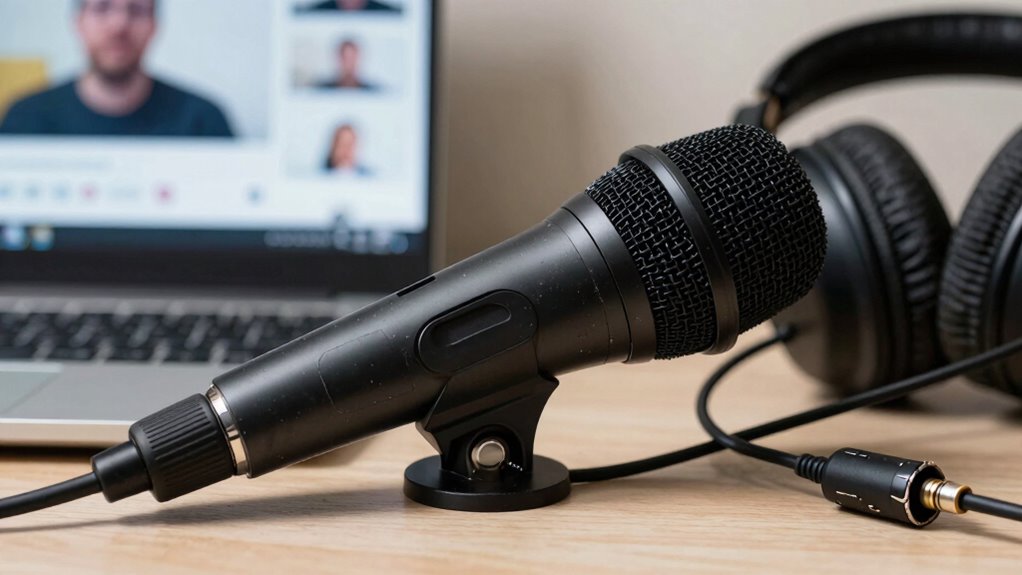
To improve your webinar audio, start with a quality microphone that captures clear sound. Make sure to minimize background noise and test your setup before going live to catch any issues. These simple steps can substantially boost your audio quality and build trust with your audience. Incorporating long-range drone technology can also enhance your content creation process by providing unique perspectives and immersive visuals.
Use Quality Microphones
Using a quality microphone is one of the most effective ways to enhance your webinar’s audio. A good microphone captures your voice clearly, reducing distractions and building trust with your audience. Proper microphone placement guarantees your voice sounds natural and consistent, avoiding muffled or distorted audio. Invest in a microphone that suits your environment to support your audio branding and professionalism.
- Position your microphone close to your mouth, about 6-12 inches away, for clear sound.
- Use a pop filter to minimize plosive sounds.
- Choose a microphone with noise-canceling features for clearer audio.
- Test your setup before going live to ensure top-notch microphone placement and sound quality.
Minimize Background Noise
Background noise can quickly undermine the quality of your webinar audio, making it difficult for your audience to focus on your message. To minimize background noise, start by controlling ambient sound in your environment. Choose a quiet space and close windows or doors to block out external noise. Use soft furnishings like curtains or carpets to absorb sound reflections. Proper microphone placement is essential—position your microphone close to your mouth, ideally just out of the direct line of ambient sound sources. This helps capture your voice clearly while reducing pickup of background noise. Avoid placing the microphone near noisy appliances or vents. By managing ambient sound and adjusting microphone placement, you guarantee your audio remains clear, professional, and engaging for your audience.
Test Audio Before Live
Before going live, it’s important to test your audio setup to catch any issues that could disrupt your presentation. Proper testing assures clear sound, which builds trust and keeps your audience engaged. Start by checking your microphone levels and adjusting for consistent volume. Use soundproofing techniques to minimize background noise, creating a professional audio environment. Listen for echoes or distortions and resolve them beforehand. Remember, strong audio branding—like a consistent intro sound—can enhance recognition. Finally, run a full test with your recording device or streaming platform to catch technical glitches early. By doing these steps, you guarantee your audio is polished, reliable, and ready for your audience, avoiding the trust-killing effects of poor sound quality.
Choosing the Right Equipment and Setting Up Your Space
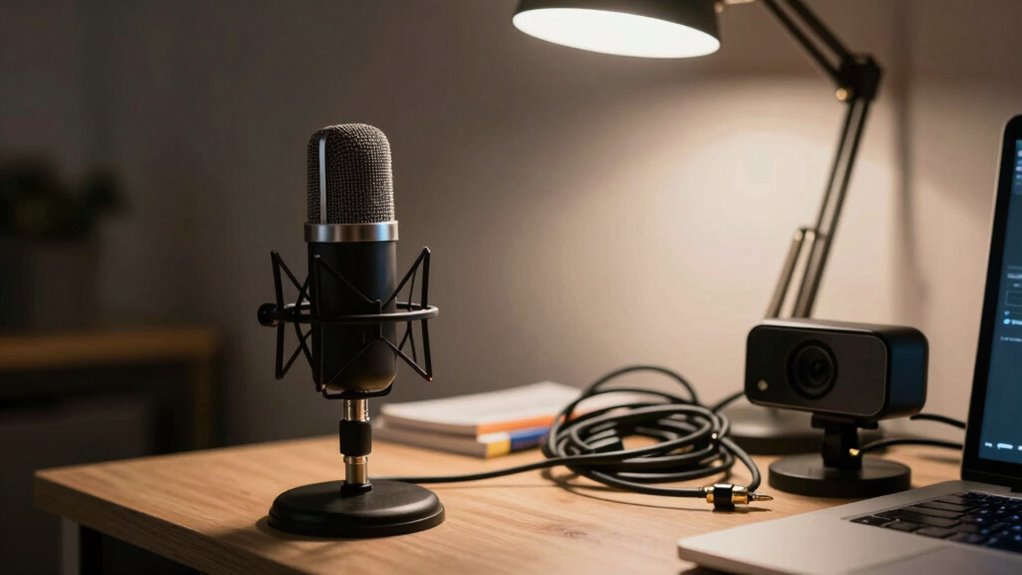
Choosing the right equipment and setting up your space is essential for delivering clear, professional-quality webinars and courses. Start by selecting a good microphone and camera to guarantee your audio and video are crisp. Invest in a reliable lighting setup that minimizes shadows and highlights your face naturally. Pay attention to space decor—minimize clutter and choose a neutral background that looks clean and distraction-free. Your environment should feel professional yet comfortable, helping you connect with your audience. Clear audio depends on quality gear and a well-organized space, so avoid noise distractions and echoes. Proper lighting and thoughtful space decor make a significant difference in how viewers perceive your presentation, boosting trust and engagement from the start.
Troubleshooting Live Audio Issues Quickly
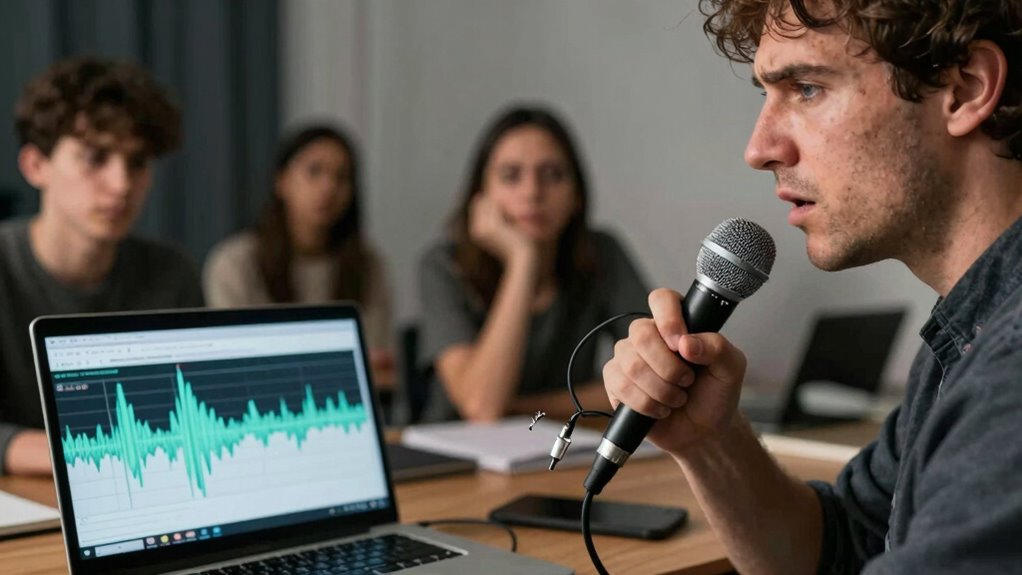
When live audio issues arise during your webinar or course, quick troubleshooting can save the session and maintain your audience’s trust. First, check your microphone connections and confirm your sound settings are correct. If audio sounds muffled or distorted, review your sound design choices and adjust levels immediately. To prevent confusion, communicate openly with your audience while resolving issues. Consider these steps:
Quickly troubleshoot microphone and sound issues to maintain trust and keep your webinar professional.
- Verify your microphone and headset connections
- Adjust audio levels and check for feedback or background noise
- Switch to backup equipment if available
- Review your audio branding elements to ensure clarity and consistency
Focusing on sound design and clear audio branding helps avoid distractions and keeps your presentation professional. Quick troubleshooting preserves your credibility and keeps your audience engaged.
Tips for Recording Clear, Professional Audio
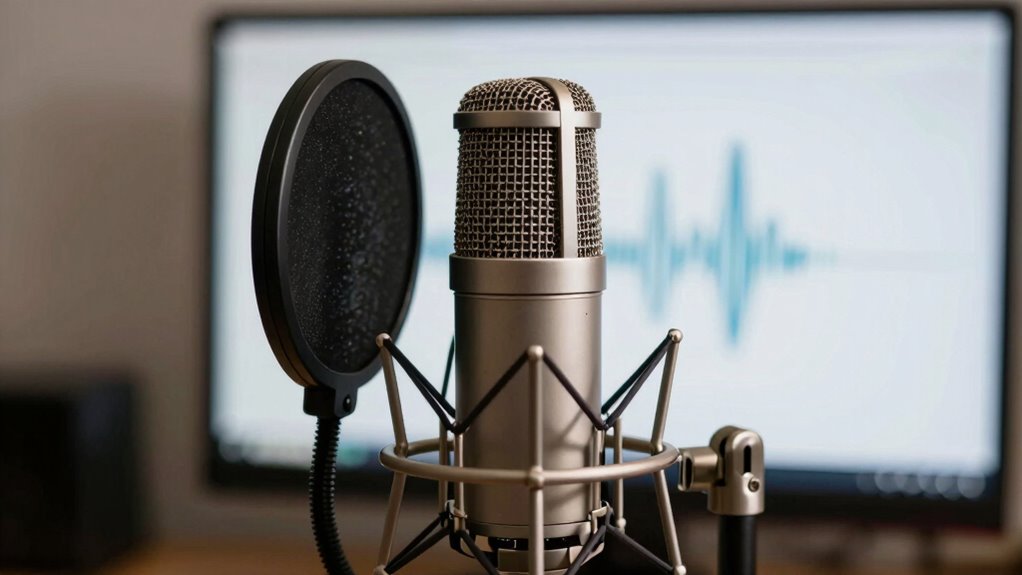
Clear, professional audio starts with quality equipment and proper setup. Invest in a good microphone that captures your voice clearly, avoiding background noise. Position the mic correctly—close enough to your mouth without causing distortion. Use soundproofing or soft materials to reduce echoes and unwanted sounds. Remember, consistent audio branding involves maintaining a steady tone and clarity, reinforcing your brand identity. Practice voice modulation to keep your delivery engaging, emphasizing key points and avoiding monotony. Test your audio beforehand to identify issues and adjust settings as needed. Clear audio fosters trust and keeps your audience engaged, so don’t overlook these details. With the right equipment and technique, you’ll deliver polished, professional recordings that resonate with your viewers.
How High-Quality Audio Builds Trust and Keeps Your Audience Engaged
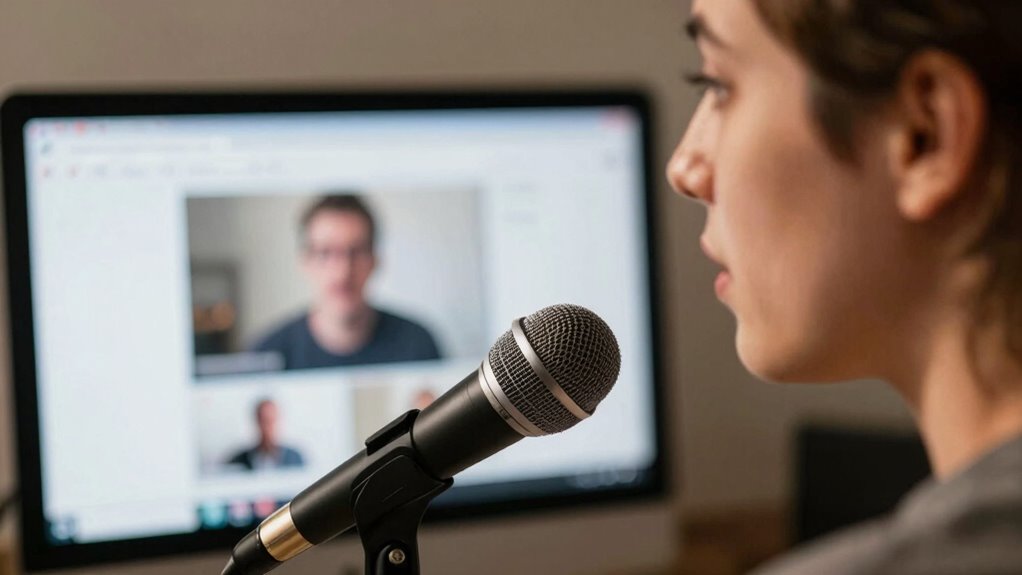
High-quality audio plays a crucial role in building trust with your audience because it guarantees they can easily understand and connect with your message. When your audio is clear, listeners feel more engaged and confident in what you’re saying. This credibility enhancement fosters an emotional connection that keeps your audience attentive and motivated to learn. Good audio minimizes distractions, encourages active participation, and shows professionalism. To boost engagement, focus on:
- Using a quality microphone for crisp sound
- Eliminating background noise
- Speaking at a steady, clear pace
- Incorporating vocal variety to maintain interest
Frequently Asked Questions
How Does Poor Audio Affect Audience Retention Rates?
Poor audio considerably lowers your audience retention rates because it hampers audio clarity, making it hard for listeners to understand your message. When sound quality is bad, listener engagement drops as people become frustrated or distracted. You lose their attention quickly, and they’re less likely to stay tuned or absorb your content. To keep your audience engaged and retain their trust, make sure your audio is clear and professional throughout your webinars or courses.
What Are the Best Budget-Friendly Microphones for Webinars?
You should consider affordable options like the Fifine K669 or the Samson Go Mic, which are beginner-friendly choices for webinars. These microphones provide good sound quality without breaking the bank, making them ideal for those just starting out. They’re easy to set up, portable, and deliver clear audio, helping you maintain your audience’s trust and engagement. Investing in these budget-friendly mics guarantees your message comes across loud and clear.
How Can I Minimize Background Noise During Live Recordings?
To minimize background noise during live recordings, focus on background noise reduction techniques and proper microphone placement. Use a directional microphone to target your voice and reduce ambient sounds. Place the microphone close to your mouth, ideally just outside your mouth’s proximity, to capture clear audio. You can also consider using noise-canceling features or a pop filter to further improve sound quality and guarantee your audience stays engaged.
What Are Common Causes of Audio Lag or Delay?
You might notice audio lag or delay, which can be caused by issues like poor audio synchronization or suboptimal microphone placement. To minimize this, make sure your microphone is positioned close to your mouth to reduce latency and check your system’s audio settings. Using a wired connection instead of wireless can also improve synchronization, ensuring your audio aligns perfectly with your visuals and creates a seamless experience for your audience.
How Often Should I Test My Audio Setup Before a Session?
You should test your audio setup at least 30 minutes before your session. During this time, perform an audio calibration to guarantee clear sound and check your microphone placement to prevent echo or background noise. Run a quick test recording or call to identify any lag or issues, then adjust as needed. Regular pre-session checks help maintain a professional, trustworthy environment and avoid disruptions caused by poor audio quality.
Conclusion
Remember, good audio is the backbone of a successful webinar or course—it’s like the foundation of a sturdy house. If your sound quality falters, your audience’s trust can crumble faster than a house of cards. By investing in quality equipment and troubleshooting issues quickly, you keep your listeners engaged and confident in what you’re sharing. Prioritize clear audio, and you’ll build stronger connections that last longer than a fleeting impression.