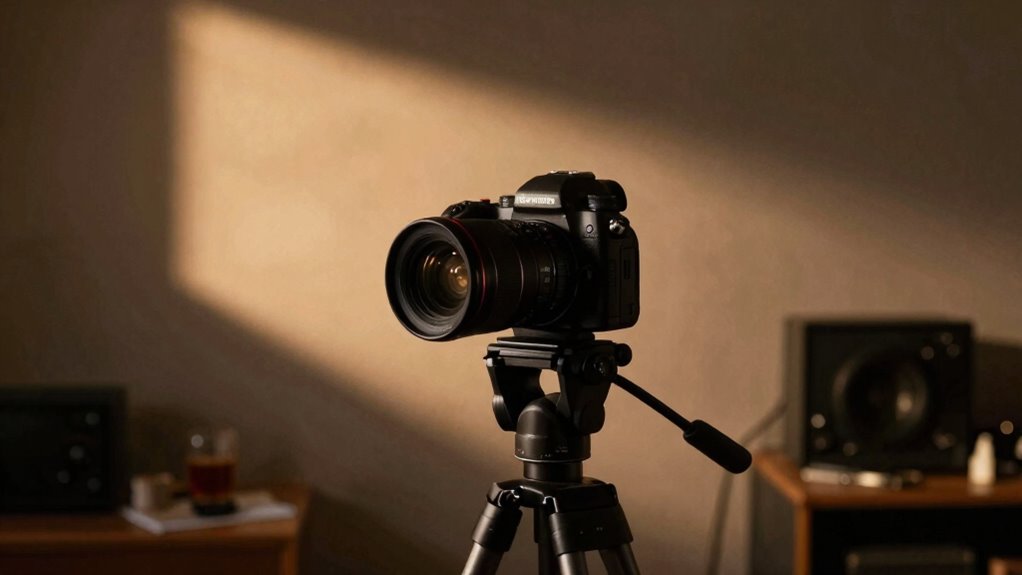

Most creators jump straight to upgrading their camera, thinking it will instantly improve their footage, but they often regret it because poor lighting washes out their visuals regardless of camera quality. Good lighting is key to setting the mood, adding depth, and highlighting subjects, making your content look professional. If you focus on mastering lighting techniques first, your videos will look better and more polished—discover how to make that happen with what’s ahead.

Get hardware and tech essentials delivered free with Prime
- Fast, free delivery on millions of items
- Prime Video, Amazon Music and more included
- Member-only deals all year
Key Takeaways
- Creators often prioritize camera upgrades, neglecting lighting, which results in dull footage regardless of camera quality.
- Poor lighting can make high-end cameras produce flat, unappealing images, leading to regret after investment.
- Upgrading cameras prematurely may overlook fundamental lighting issues that impact overall content quality.
- Effective lighting techniques are more cost-efficient and impactful than frequent camera upgrades.
- Addressing lighting first ensures better visual results, reducing the need for costly camera replacements later.
Products Worth Considering

Bose SoundLink Flex Bluetooth Speaker (2nd Gen), Portable Waterproof Speaker, Black

Samsung 32-Inch Odyssey OLED G8 (G80SH) 4K Gaming Monitor

Amazon Kindle Paperwhite (12th Generation, 2024), 16 GB, 7-inch Display, Jade
As an affiliate, we earn on qualifying purchases.
Why Lighting Matters More Than Your Camera

While upgrading your camera might seem like the best way to improve your videos, lighting actually plays a much bigger role in how your content looks. Many creators fall into camera misconceptions, thinking a better camera automatically means better quality. However, lighting psychology shows that how you light your scene influences mood, clarity, and viewer engagement far more than camera specs. Proper lighting can make your footage look professional, regardless of the camera you use. It highlights your subject, reduces noise, and creates depth. Without good lighting, even the most expensive camera can produce dull, flat images. Understanding content formats and mastering lighting techniques will give you a noticeable upgrade in your content’s overall quality and appeal before investing in a new camera. Recognizing the importance of lighting psychology can help you craft more compelling visuals that resonate with viewers, since effective lighting is a foundational element in creating visual impact.
Common Mistakes When Upgrading Cameras Before Fixing Lighting
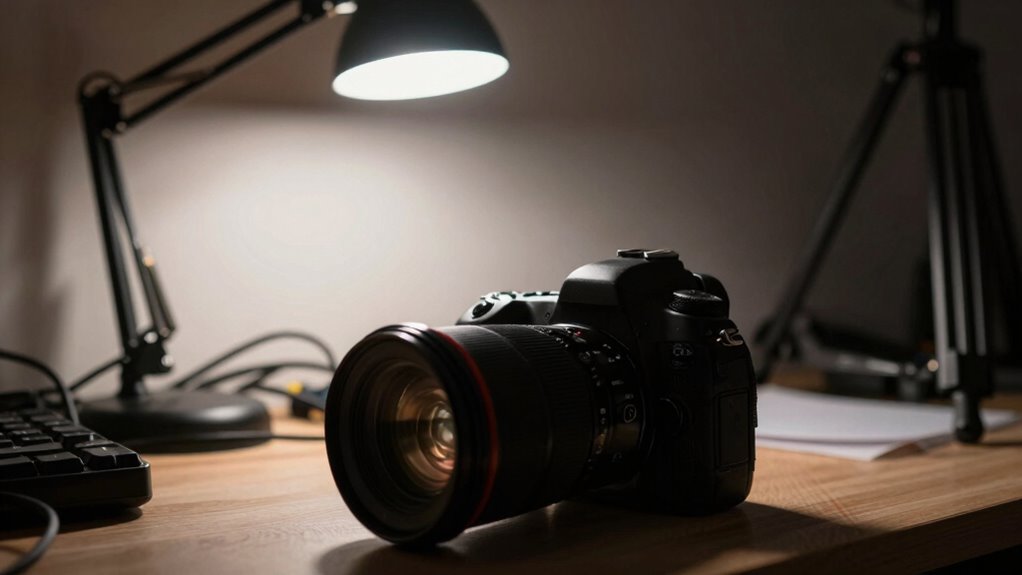
Many creators make the mistake of upgrading their camera first, thinking it will instantly improve their videos. They often overlook how camera ergonomics affects their shooting experience, leading to discomfort and shaky footage. Without proper lighting aesthetics, even the best camera struggles to deliver professional results. Upgrading prematurely can mean investing in a high-end camera that doesn’t shine due to poor lighting or awkward handling. Instead, focus on optimizing your lighting environment first, which enhances your camera’s capabilities and makes your setup more efficient. Neglecting lighting aesthetics can cause footage to look dull or uneven, no matter how advanced your camera is. Additionally, investing in reliable data storage and backup solutions ensures your footage is secure during your upgrade process. By fixing lighting first, you guarantee your new camera will perform at its best, rather than wasting money on upgrades that don’t address core issues.
Essential Lighting Techniques for Content Creators
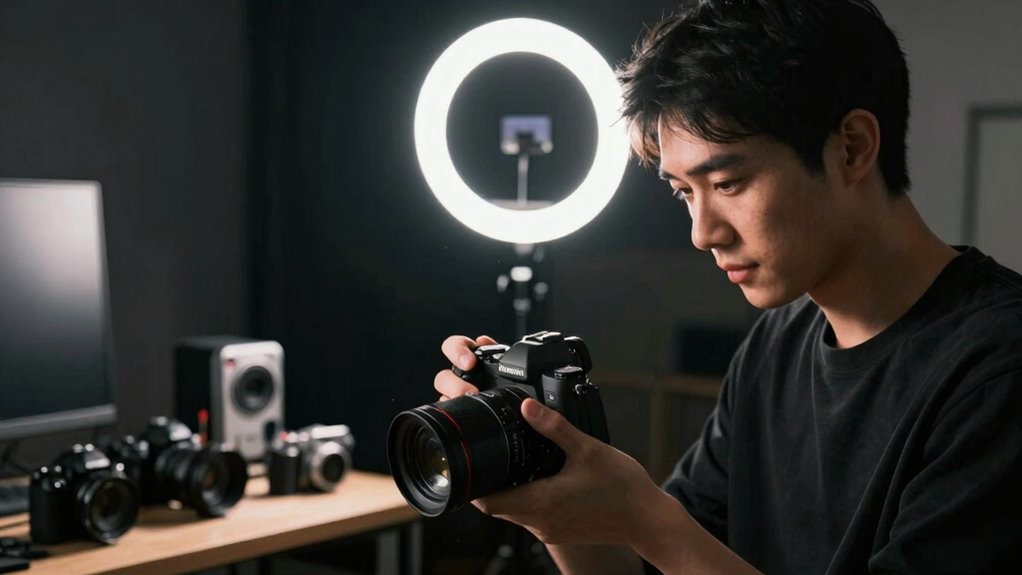
Effective lighting is essential for creating professional-looking content, as it directly impacts the clarity, mood, and overall quality of your videos. Mastering creative lighting techniques can transform simple setups into visually compelling scenes. Use softboxes and diffusers to create natural, even light that flatters your subject. Consider adjustable LED panels for versatile lighting options and durability in your equipment. Position lights at different angles to add depth and dimension. Experiment with color gels for mood and emphasis. Avoid harsh shadows by bouncing light off walls or reflectors. Invest in reliable gear that withstands regular use. Remember, good lighting enhances your camera work and saves time in post-production. Additionally, understanding solar system safety principles ensures your equipment remains protected from environmental hazards. Properly managing your lighting setup can prevent costly mistakes and improve your overall production quality. Being aware of precious metals IRA options can also be beneficial if you’re looking to diversify your investment portfolio. Incorporating lighting principles aligned with your content style can further elevate your visuals and audience engagement. Consistent practice and staying updated on lighting innovations can make a significant difference in the professionalism of your content. With these techniques, you’ll produce more engaging, professional content that resonates with your audience.
How to Check If Your Lighting Is Good Enough?
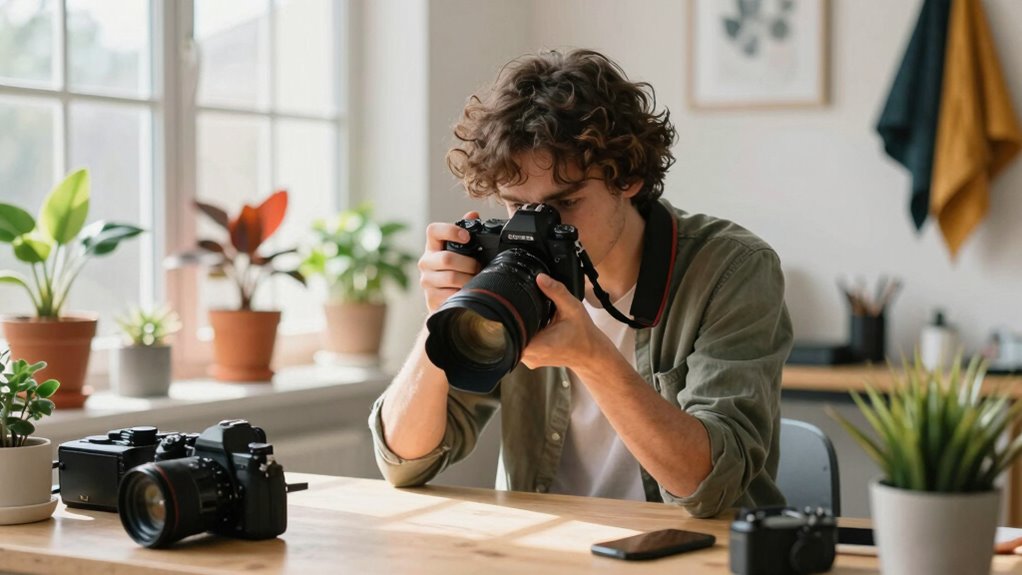
To see if your lighting is good enough, start by checking the natural light in your space—does it illuminate your face evenly without harsh shadows? Then, evaluate if your current lighting tools help create a balanced look or if you need additional equipment. If your image still looks dull or uneven, it’s time to adjust or upgrade your lighting setup. Additionally, consider how automated testing can help maintain your lighting equipment and keep your setup looking professional. Incorporating innovative lighting trends can also enhance your visual quality and ensure your content stays current. Just like choosing the right performance parts for a car upgrade, selecting the proper lighting can significantly improve your overall production quality. Exploring accessibility features can also ensure your content is more inclusive and visually effective for all viewers.
Assess Natural Light Quality
Evaluating the quality of natural light is essential before setting up your camera. Good light assessment helps you determine if your environment offers ideal natural illumination for clear, flattering footage. To check, observe how sunlight hits your space throughout the day, noting shadows and brightness levels. Look for even, soft light rather than harsh, direct sunlight that causes glare or deep shadows. Use your phone or camera to review test shots—if images look washed out or dull, the natural light isn’t optimal. Pay attention to color warmth and consistency; inconsistent lighting can ruin your shot. Remember, natural illumination varies, so assess multiple times and angles to ensure your light quality is sufficient for high-quality content. Additionally, consider how natural light quality impacts the overall mood and professionalism of your footage. Being aware of lighting consistency can help you make adjustments or supplement with additional light sources if needed, as sound healing science suggests that consistent, optimal conditions promote better focus and comfort during content creation. Recognizing the impact of light quality on mood can further guide you in creating the right atmosphere for your videos, and understanding natural light patterns can help you plan your shoots more effectively.
Use Proper Lighting Tools
Using the right lighting tools is essential to guarantee your setup provides adequate illumination for high-quality footage. Start by selecting proper lighting accessories, such as softboxes, ring lights, or LED panels, to ensure even, controlled light. Check the color temperature of your lights—ideally around 5500K for natural daylight or adjust to match your environment to avoid unnatural tones. Use a light meter or your camera’s histogram to evaluate if your lighting setup provides sufficient brightness without overexposing or casting harsh shadows. Test your setup from different angles to ensure consistent coverage. Properly calibrated lighting accessories and matching color temperature help create a professional look, making your footage appear vibrant and balanced without relying solely on camera upgrades. Incorporating lighting calibration techniques and color temperature awareness into your setup enhances overall image quality and consistency. Additionally, regularly monitor your lighting conditions to adapt as your environment or equipment changes, ensuring sustained quality over time. Remember that lighting setup is a crucial element that can significantly impact your content’s visual appeal and overall production value. Using lighting tools effectively is vital to avoid common pitfalls like under- or overexposure, which can be harder to fix in post-production.
Simple Steps to Improve Your Lighting Setup
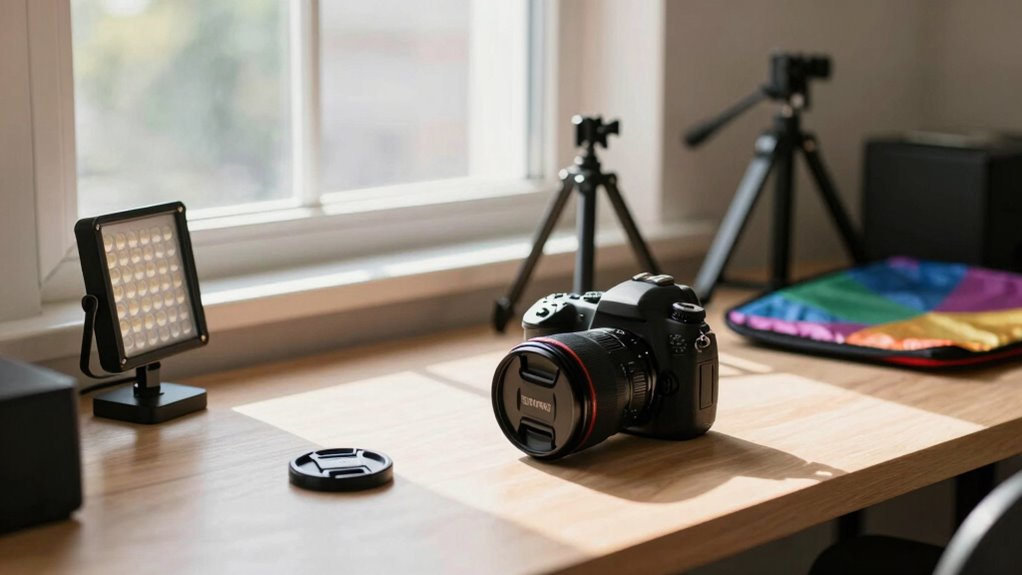
Improving your lighting setup doesn’t have to be complicated or expensive. Often, creators fall for lighting myths that suggest only costly gear can make a difference. Instead, focus on simple, creative lighting techniques to elevate your content. Here are easy steps to get started:
- Use natural light effectively—aim for golden hour or diffuse sunlight with curtains
- Add a basic fill light to soften shadows and create depth
- Experiment with different angles to find the most flattering lighting for your face
- Use inexpensive DIY reflectors like white cardboard or aluminum foil
- Play with colored gels or creative lighting setups to add mood and style
- Remember to consider content quality and user experience when refining your lighting techniques.
When Should You Upgrade Your Lighting Equipment?
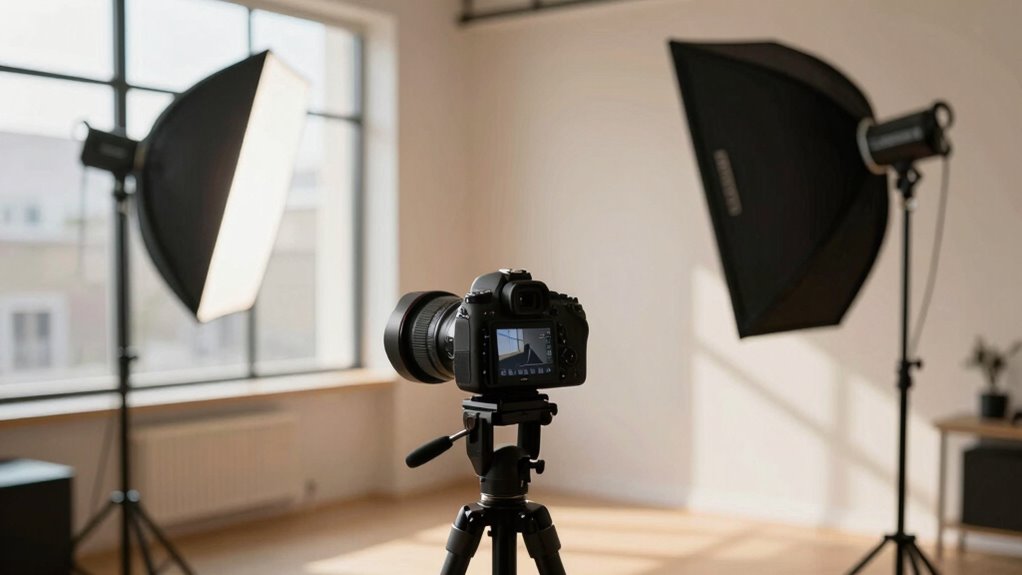
Knowing when to upgrade your lighting equipment can save you time and money, preventing unnecessary purchases. You should consider upgrading when your current setup no longer achieves your desired lighting aesthetics or creates the mood you want. If your lights are inconsistent, flicker, or produce color shifts, it’s time for an upgrade. Additionally, verify your new lighting is compatible with your existing equipment—such as dimmers, modifiers, or power sources—to avoid compatibility issues. Pay attention to whether your lights can be adjusted for brightness and color temperature smoothly. If your setup feels limited or outdated, and improvements won’t be possible with minor tweaks, it’s a clear sign that a new lighting upgrade will elevate your content quality and make your visuals more polished.
The Long-Term Benefits of Prioritizing Lighting in Your Content
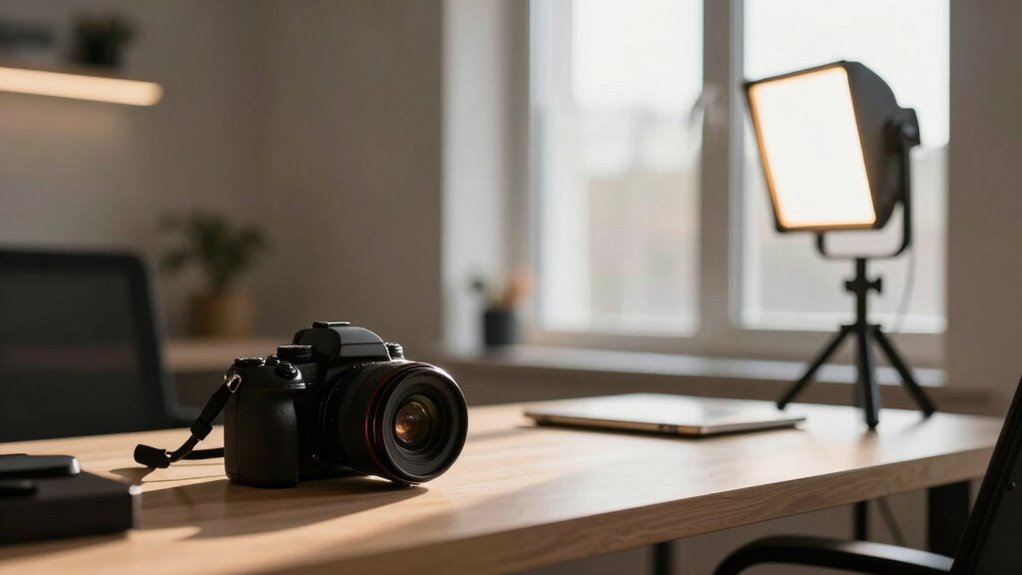
Focusing on good lighting enhances your content’s visual quality immediately and over time. It creates a consistent, professional look that attracts more viewers and keeps them engaged. Prioritizing lighting also supports sustainable growth by reducing the need for constant camera upgrades.
Enhanced Visual Quality
While upgrading your camera can boost the sharpness and detail of your videos, investing in proper lighting has a more lasting impact on your content’s visual quality. Good lighting enhances your ability to use creative angles and improves visual storytelling, making your videos more engaging. It creates depth, highlights your subject, and guarantees clarity in every shot. With quality lighting, you don’t need the latest camera to produce professional-looking content. Instead, you can focus on framing and composition, elevating your overall aesthetic. Prioritizing lighting means your footage stays visually appealing over time, regardless of camera upgrades. It’s a foundation that supports your creative vision and helps your content stand out consistently. Remember, great visuals come from thoughtful lighting first, not just high-end gear.
Sustainable Content Growth
Investing in lighting sets a strong foundation for sustainable growth in your content, far beyond quick fixes or momentary trends. Well-lit videos enhance audience engagement by making your visuals clearer and more inviting. When your lighting feels authentic, viewers connect more deeply with your message, boosting loyalty and trust. Prioritizing lighting helps you develop a consistent style, which reinforces your brand identity over time. This consistency makes your content more recognizable and reliable, attracting a broader audience. Good lighting also reduces distractions, allowing your message to shine through naturally. Over the long term, investing in quality lighting fosters genuine content authenticity, encouraging viewers to stay engaged and share your work. Ultimately, it’s a strategic move that supports sustainable growth and meaningful connections.
Frequently Asked Questions
How Do I Determine if My Lighting Setup Suits My Content Style?
To determine if your lighting setup suits your content style, first assess lighting consistency across your shots—uneven lighting can distract viewers. Next, check the color temperature; it should match your scene’s mood and your camera’s settings. Experiment with different setups, and ask for feedback to guarantee your lighting complements your content. Proper lighting enhances clarity and atmosphere, making your videos more professional and engaging.
Can Poor Lighting Affect My Audience Engagement and Retention?
Poor lighting can considerably hurt your audience retention and engagement strategies. When viewers struggle to see or understand your content, they’re likely to click away or lose interest. Good lighting keeps your audience engaged, making your message clearer and more appealing. Investing in proper lighting enhances video quality, boosts engagement, and encourages viewers to stay longer, ultimately strengthening your content’s impact and building a loyal audience.
Are There Budget-Friendly Lighting Options for Beginners?
Yes, there are affordable solutions and DIY fixes for beginner lighting. You can use natural light by filming near windows or during daylight hours, which is free and effective. Additionally, budget-friendly options like ring lights, LED panels, or even desk lamps with adjustable brightness can substantially improve your setup. These options help you create professional-looking videos without breaking the bank, enhancing your audience engagement and retention.
How Often Should I Revisit and Adjust My Lighting Setup?
Think of your lighting setup like a garden that needs regular tending; you should revisit and adjust it whenever your equipment calibration drifts or when natural light changes throughout the day. Usually, checking weekly or bi-weekly works well, especially if you’re filming indoors. Keep an eye on how your lighting interacts with different times of day and natural light utilization to keep your videos looking professional and consistent.
What Are the Signs That My Camera Upgrade Isn’T Improving Quality?
You’ll notice your camera upgrade isn’t improving quality if your images look inconsistent or lack sharpness despite adjusting camera settings. If colors seem off or skin tones aren’t natural, it might be time to revisit image calibration. Also, if your footage still appears dull or noisy, the upgrade isn’t doing its job. Focus on optimizing camera settings and proper calibration first, as these often have a bigger impact than the camera itself.
Conclusion
Remember, upgrading your camera won’t fix poor lighting—that’s an illusion. Before pouring money into new gear, get your lighting right. It’ll instantly boost your quality, making your content clearer and more professional. When you prioritize lighting first, you’ll see better results, faster. So, test, tweak, and perfect your setup. In the end, smart lighting choices will save you time and money, giving your content the shine it truly deserves.