To secure your small business, focus on employee training to spot phishing, create strong passwords, and avoid suspicious links. Implement data encryption at rest and in transit to protect sensitive information from hackers. Combine these with updated software, firewalls, and a clear incident response plan to build a solid cybersecurity foundation. Staying vigilant helps reduce risks and maintain customer trust—discover effective strategies to defend your business from cyber threats as you continue exploring.
Key Takeaways
- Employee training on recognizing phishing, using strong passwords, and avoiding suspicious links is essential for cybersecurity.
- Implement data encryption for sensitive information both at rest and during transmission to protect against breaches.
- Regularly update software and firewalls to defend against emerging cyber threats.
- Establish clear incident response plans and perform frequent data backups for quick recovery.
- Maintain a comprehensive cybersecurity strategy integrating training, encryption, and proactive security measures.
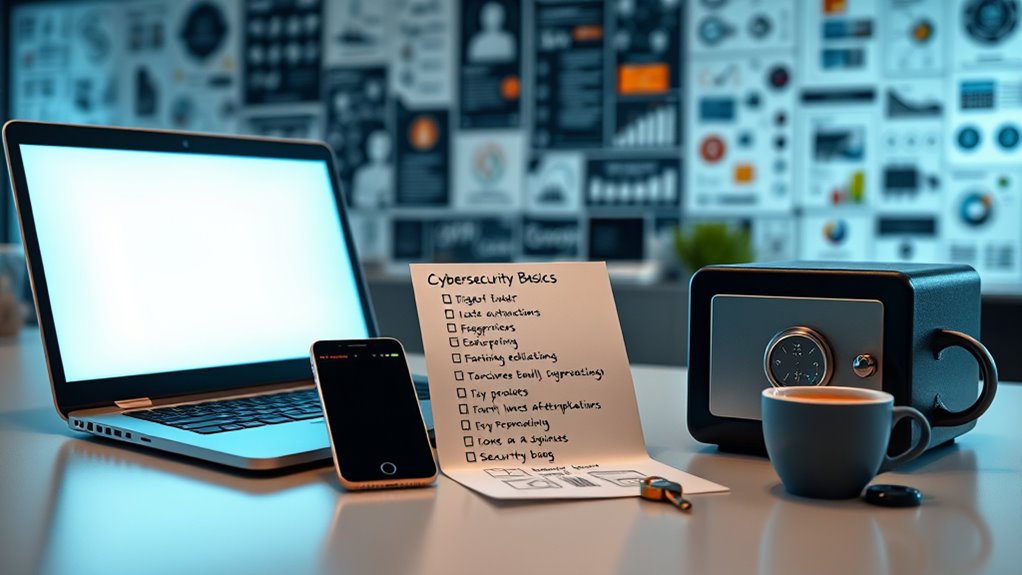
Small businesses are increasingly targeted by cybercriminals, making cybersecurity a essential part of your overall strategy. One of the most effective ways to protect your company is through exhaustive employee training. Your staff are the first line of defense against cyber threats, and without proper knowledge, they may inadvertently expose your business to risks. Regular training sessions should focus on recognizing phishing emails, understanding the importance of strong passwords, and avoiding suspicious links or downloads. Educating your employees about common attack methods helps reduce the likelihood of successful breaches. Additionally, training isn’t a one-time event; it needs to be ongoing to keep everyone updated on new threats and best practices. When your team understands cybersecurity fundamentals, they become active participants in safeguarding sensitive information.
Another essential aspect of your cybersecurity framework is data encryption. It’s a powerful tool that transforms your data into an unreadable format, making it useless to anyone who intercepts it without the decryption key. Encrypting sensitive information—such as customer data, financial records, and login credentials—adds an extra layer of security. Even if cybercriminals manage to breach your network, encrypted data remains protected. Implementing encryption at multiple levels, including data at rest and data in transit, is necessary. For example, using secure email protocols and encrypted storage solutions ensures that your business information stays confidential. In today’s digital landscape, encryption isn’t optional; it’s a fundamental safeguard that helps guarantee compliance with data protection regulations and maintains your customers’ trust. Furthermore, awareness of recent cybersecurity incidents, like the Microsoft outage, highlights the importance of having robust contingency plans in place.
While employee training and data encryption are key components, they work best when integrated into a broader cybersecurity strategy. You should also consider implementing strong firewall protections, keeping software up-to-date, and establishing clear incident response plans. Regularly backing up your data ensures you can recover quickly from ransomware attacks or hardware failures. Remember, cyber threats evolve constantly, so staying vigilant and proactive is essential. Educating your team about cybersecurity measures and deploying encryption tools not only minimizes your risk but also demonstrates your commitment to protecting your customers and your business. By taking these steps, you create a more resilient environment that can withstand cyberattacks and safeguard your company’s future.
Frequently Asked Questions
How Often Should Small Businesses Update Their Cybersecurity Protocols?
You should update your cybersecurity policy regularly, ideally every three to six months, to stay ahead of emerging threats. The update frequency depends on changes in technology, new vulnerabilities, and your business’s growth. Regular reviews guarantee your protocols remain effective and relevant. Keep your team informed about updates, and adapt quickly to any security incidents to protect your business data and maintain customer trust effectively.
What Are the Most Common Cybersecurity Threats for Small Businesses?
Did you know that 43% of cyberattacks target small businesses? You’re most at risk from phishing scams, where cybercriminals deceive you into revealing sensitive info, and insider threats, whether from disgruntled employees or accidental leaks. Staying vigilant, training your staff, and implementing strong security measures can help you defend against these common threats. Don’t underestimate the importance of ongoing cybersecurity awareness for your business’s safety.
How Can Small Businesses Train Employees on Cybersecurity Best Practices?
You can enhance employee awareness by implementing regular training programs that cover cybersecurity best practices. Make training engaging and relevant, including real-world examples of threats like phishing scams. Encourage open communication, so employees feel comfortable reporting suspicious activity. Keep training up-to-date with evolving threats and consider using online modules or workshops. Consistent, practical education guarantees your team stays vigilant and reduces the risk of security breaches.
What Budget Should Small Businesses Allocate for Cybersecurity?
You should allocate about 5-10% of your IT budget to cybersecurity, depending on your business size and risk level. Focus on smart investment strategies that prioritize essential protections like firewalls, employee training, and regular updates. By setting a realistic cybersecurity budget, you guarantee your small business remains safeguarded without overspending, giving you peace of mind and a solid foundation for growth.
Are Free Cybersecurity Tools Effective for Small Business Protection?
Free cybersecurity tools are like a sturdy shield, offering decent protection for small businesses. They can be effective for basic security needs, such as antivirus or password management. However, their effectiveness varies, and they might not cover advanced threats. While they help reduce risks, supplementing free tools with paid solutions and good security practices guarantees better overall protection for your business’s sensitive data.
Conclusion
Now that you’ve unlocked the fundamentals, think of cybersecurity as your shield in a digital battlefield. Every password is a lock, every update a sturdy wall. Stay vigilant, keep learning, and don’t let cyber threats sneak past your defenses. With each proactive step, you’re weaving a safety net that catches trouble before it strikes. Your small business can stand tall and unshaken—strong, secure, and ready to face the ever-changing landscape of cyber threats.