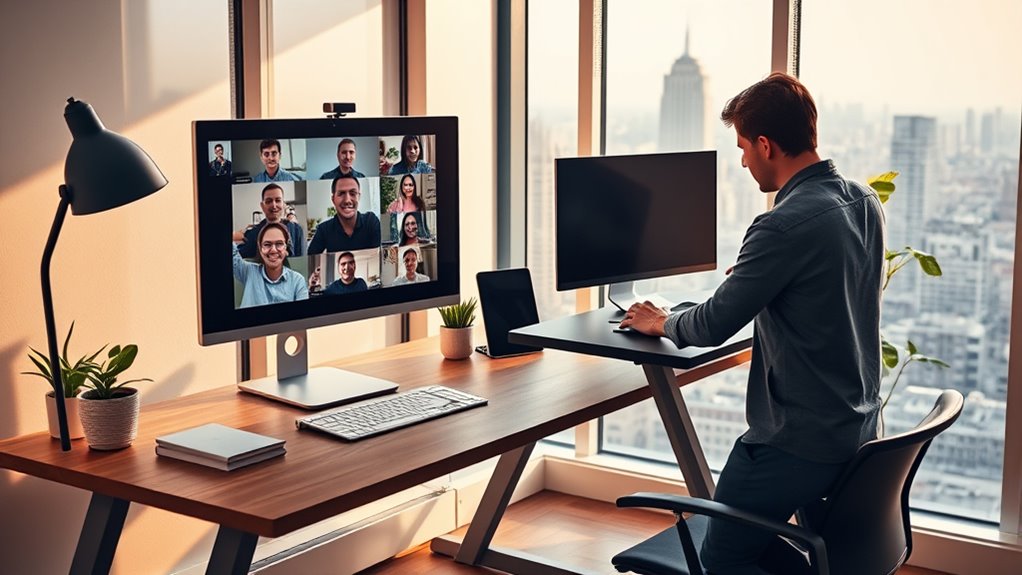

Managing change in remote and hybrid work environments requires fostering employee adaptability through open communication, extensive training, and involving staff in decision-making. Support emotional resilience by creating a positive, transparent atmosphere, celebrating small wins, and addressing concerns promptly. Utilize technology effectively with phased rollouts and ongoing assistance. Promoting dialogue and flexibility helps teams shift seamlessly and turn change into an opportunity for growth. Continuing to explore these strategies will give you more tools to lead successfully.
Key Takeaways
- Foster open communication and actively listen to employee concerns to ease adaptation in remote and hybrid settings.
- Implement phased technology rollouts with comprehensive training to facilitate smooth transitions and reduce overwhelm.
- Encourage employee involvement in selecting and customizing new tools to increase buy-in and ownership.
- Support emotional well-being by creating a supportive environment, celebrating small wins, and maintaining transparent updates.
- Promote flexibility and ongoing support to build resilience and agility in navigating organizational change remotely.
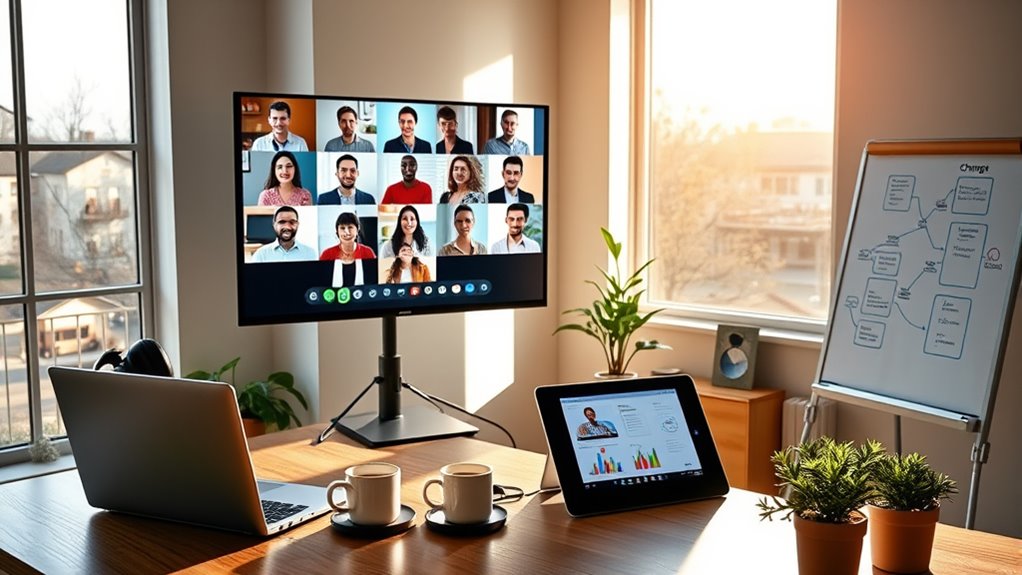
As remote and hybrid work models become increasingly common, managing change effectively is essential for maintaining productivity and morale. One of the biggest challenges you’ll face is guaranteeing your team can adapt seamlessly to new ways of working. Employee adaptability becomes a crucial factor here. You need to recognize that each individual will respond differently to change, so fostering a flexible mindset is key. Encourage open communication, listen to concerns, and provide support to help your team embrace the shift. When employees feel supported and understood, they’re more likely to adjust quickly and confidently, reducing resistance and downtime.
Effective change management relies on fostering employee adaptability and open communication.
Technology integration plays a pivotal role in managing change in these environments. As new tools and platforms are introduced, you must guarantee that everyone understands their purpose and how to use them effectively. Providing comprehensive training and easy-to-access resources helps bridge gaps and minimizes frustration. It’s important to communicate the benefits of these technological updates clearly, emphasizing how they will streamline workflows, improve collaboration, and ultimately support business goals. Avoid assuming everyone is immediately comfortable with new technology; instead, offer ongoing support and opportunities for practice.
To facilitate smooth technology integration, you should also consider involving your team in the selection process. When employees have a say in choosing tools, they’re more likely to buy in and feel ownership over the change. This collaborative approach can boost employee engagement and reduce resistance. Additionally, implementing phased rollouts allows your team to adapt gradually, giving them time to learn and adjust without feeling overwhelmed. Regular feedback sessions are imperative during this period, so you can identify issues early and make necessary adjustments.
Managing change isn’t just about the technical side; it’s equally about addressing emotional and psychological responses. Recognize that change can cause uncertainty or anxiety, and proactively work to create a supportive environment. Celebrate small wins and acknowledge efforts to adapt, reinforcing a positive outlook. Consistent communication is essential—keep your team informed about upcoming changes, timelines, and expected outcomes. This transparency builds trust and helps everyone stay aligned. Leveraging the platform like TikTok can be a creative way to share updates and foster engagement through informal, visual communication.
Ultimately, your success depends on how well you prepare your team for change and how effectively you utilize technology to facilitate it. By fostering employee adaptability and guaranteeing smooth technology integration, you create a resilient, agile workforce ready to thrive in remote and hybrid settings. With clear strategies, open dialogue, and support, you can turn change into an opportunity for growth and innovation.
Frequently Asked Questions
How Can Managers Measure the Success of Change Initiatives Remotely?
You can measure the success of change initiatives remotely by analyzing employee feedback and tracking performance metrics. Regular surveys help gauge employee satisfaction and adaptation levels, while performance data shows how well goals are being met. Combining qualitative feedback with quantitative results provides a clear picture of progress. Stay proactive by reviewing these metrics consistently, addressing concerns promptly, and adjusting strategies to assure the change effectively supports your team’s growth and productivity.
What Legal Considerations Are Involved in Transitioning to Hybrid Work Models?
When shifting to hybrid work models, you need to guarantee legal compliance by understanding employment laws and data privacy regulations. You should also review and update contractual agreements to reflect new work arrangements, including remote work policies, compensation, and confidentiality clauses. Staying informed about local labor laws and consulting legal experts helps prevent potential disputes. By proactively addressing these legal considerations, you safeguard your organization and support a smooth progression.
How Do Cultural Differences Impact Change Management in Global Remote Teams?
Imagine steering a vibrant tapestry of cultural nuances, each thread representing different beliefs and communication styles. You realize that understanding these differences shapes your leadership adaptations, helping you foster trust and collaboration. By recognizing diverse perspectives, you build an inclusive environment where change feels natural. Embracing cultural nuances allows you to tailor your approach, ensuring your remote team stays engaged, motivated, and aligned across borders, despite the challenges of global diversity.
What Technology Tools Best Support Change Communication Across Dispersed Teams?
You should leverage digital collaboration tools like Slack, Microsoft Teams, or Zoom to facilitate seamless change communication across dispersed teams. These platforms support real-time feedback, helping you address concerns immediately and keep everyone aligned. Incorporate shared documents and project management software such as Asana or Trello to guarantee transparency. By using these tools, you foster open dialogue, reduce misunderstandings, and make change initiatives smoother for your remote or hybrid team.
How Can Organizations Sustain Employee Engagement During Ongoing Remote Changes?
To sustain employee engagement during ongoing remote changes, you should actively seek employee feedback regularly and listen to their concerns. Implement engagement strategies like virtual team-building activities, recognition programs, and transparent communication channels. Encourage open dialogue and involve employees in decision-making processes to foster a sense of belonging. By showing you value their input and maintaining consistent interaction, you help keep morale high and ensure continued commitment amidst change.
Conclusion
Just as Odysseus navigated unfamiliar waters, you can steer your team through change with resilience and clarity. Embrace flexibility, communicate openly, and foster trust—these are your guiding stars in remote and hybrid settings. Remember, great leaders turn challenges into opportunities, much like Homer’s hero faced the unknown. By staying adaptable and intentional, you’ll guarantee your team not only survives but thrives amid change. The journey may be tough, but victory awaits those who persist.