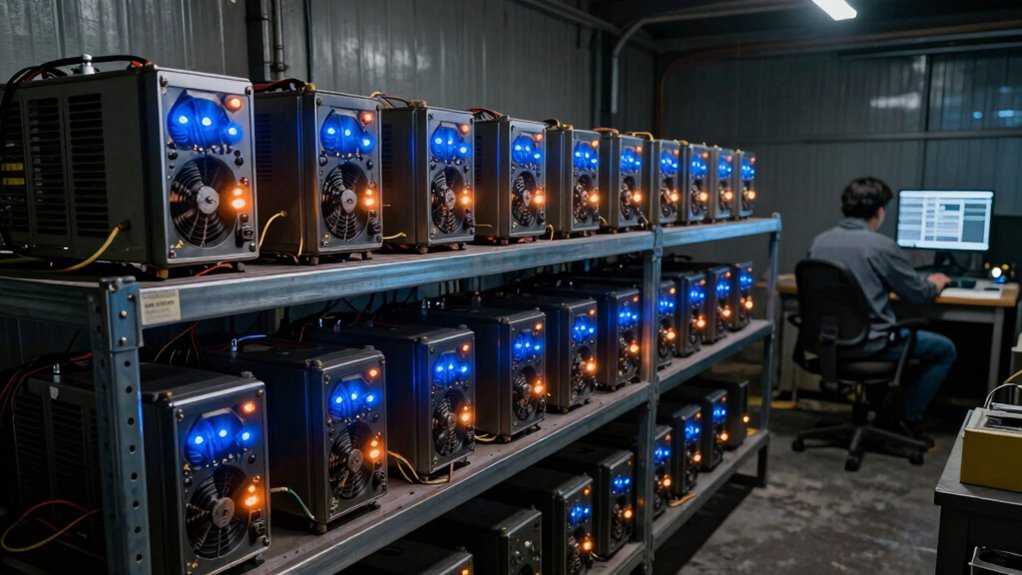

In 2026, smaller Bitcoin miners still hold an important place because you can leverage sustainability, quick adaptability, and niche markets to stay competitive. By focusing on renewable energy, innovative cooling, and eco-friendly practices, you can reduce costs and meet stricter regulations. Your ability to respond rapidly to changing policies and explore emerging technologies keeps you ahead. Keep exploring, and you’ll discover how these strategies can help you thrive in the evolving mining landscape.

Get hardware and tech essentials delivered free with Prime
- Fast, free delivery on millions of items
- Prime Video, Amazon Music and more included
- Member-only deals all year
Key Takeaways
- Smaller miners can quickly adapt to evolving regulations by implementing sustainable and compliant practices.
- They leverage niche markets and less regulated regions for strategic advantages.
- Innovative, eco-friendly technologies reduce operational costs and enhance competitiveness.
- Community engagement and industry collaboration build resilience and influence favorable policies.
- Their agility and focus on sustainability position them as responsible, long-term participants in the mining ecosystem.

As Bitcoin mining continues to evolve, smaller miners are carving out a niche in 2026 by adapting to a landscape dominated by larger, more efficient operations. While the industry often seems to favor massive farms with industrial-scale equipment, smaller miners find ways to stay relevant by focusing on agility, innovation, and community resilience. One reason you might still succeed as a smaller miner today is your ability to minimize environmental impact. Unlike large-scale operations that consume enormous amounts of energy, you can prioritize sustainable practices, such as using renewable energy sources or optimizing your hardware to reduce power consumption. This not only helps you stay compliant with increasing environmental regulations but also appeals to a growing base of eco-conscious investors and supporters. Governments and regulatory bodies are becoming more vigilant about the environmental footprint of crypto mining, imposing stricter rules on energy use and emissions. As a smaller miner, you’re in a better position to adapt quickly, whether that means shifting to greener energy sources or implementing innovative cooling and efficiency measures. These efforts can give you a competitive edge, especially as larger players face scrutiny and potential restrictions. Additionally, embracing renewable energy can significantly reduce operational costs and environmental impact, further strengthening your position in the market. Leveraging your ability to operate in niche markets or less regulated regions can provide opportunities that bigger miners might overlook, making your approach more adaptable and resilient. Incorporating environmentally sustainable practices can also enhance your reputation and attract like-minded partners or investors, strengthening your long-term viability. Moreover, you can explore emerging technologies that may offer more efficient or eco-friendly ways to mine cryptocurrencies, keeping you ahead of the curve. Furthermore, staying informed about emerging regulatory trends can help you anticipate changes and adapt proactively, giving you a strategic advantage over less flexible competitors.
However, regulatory challenges remain a significant hurdle. Large miners often have teams dedicated to steering legal frameworks, but smaller operations must be more flexible and proactive. You need to stay informed about evolving policies in your jurisdiction and be ready to comply with new standards. This might involve securing permits, adhering to energy consumption limits, or participating in industry advocacy to shape future regulations. Despite these hurdles, your size can be an advantage; you can react faster to regulatory changes and implement new protocols with less red tape. Moreover, your ability to operate in niche markets or less regulated regions can offer opportunities that big players overlook. You might focus on proof-of-stake alternatives or other innovative consensus mechanisms that face fewer regulatory barriers, helping you sustain operations even as the legal landscape shifts. Staying connected with your local community and industry networks can also provide early insights and support for navigating regulatory shifts.
In this environment, your flexibility, commitment to sustainability, and community connections are essential. Instead of competing solely on scale, you carve out a sustainable, compliant, and resilient space in the mining ecosystem. This approach not only helps you mitigate environmental impact and regulatory challenges but also positions you as a responsible and adaptable participant in the evolving world of Bitcoin mining. As the industry continues to change, your ability to innovate and stay compliant makes you valuable—proof that smaller miners still have an indispensable role in 2026.
Products Worth Considering

Logitech MX Mechanical Wireless Illuminated Keyboard, Tactile Quiet, Graphite

Amazon Kindle Scribe Colorsoft 64GB (1st Generation)

Bose SoundLink Flex Bluetooth Speaker (2nd Gen), Portable Waterproof Speaker, Black
As an affiliate, we earn on qualifying purchases.
Frequently Asked Questions
How Do Smaller Miners Impact Bitcoin Network Decentralization?
Smaller miners boost Bitcoin network decentralization by avoiding reliance on large mining pools, which can concentrate power. You can optimize your hardware to compete effectively, promoting a more distributed network. When individual miners operate independently, they reduce the risk of centralization, ensuring a resilient and secure system. Your participation keeps control dispersed, strengthening the network’s integrity and preventing dominance by a few large players.
What Are the Main Costs for Small-Scale Bitcoin Mining?
The main costs for small-scale Bitcoin mining are energy efficiency and hardware upgrades. You’ll find that energy consumption can skyrocket if your setup isn’t efficient, making it your biggest expense. Regular hardware upgrades are essential to stay competitive, but they can drain your wallet quickly. Balancing these costs requires smart choices and staying updated on the latest technology, ensuring your mining efforts remain profitable and sustainable.
Can Smaller Miners Still Be Profitable in 2026?
Yes, smaller miners can still be profitable in 2026 by leveraging mining pools to share rewards and reduce variance risks. Focusing on energy efficiency is essential, as it lowers operational costs and boosts margins. You should also consider using more advanced hardware and optimizing your energy sources. These strategies help you stay competitive, even as the industry evolves and larger players dominate the market.
How Do Regulatory Changes Affect Small Bitcoin Miners?
Regulatory changes can shake small miners like leaves in a storm, impacting your access to mining hardware and energy efficiency incentives. Stricter rules might mean higher compliance costs or restrictions on hardware usage, making profitability harder. You need to stay adaptable, investing in energy-efficient equipment and keeping abreast of policy shifts. By doing so, you can weather regulatory tempests and keep your mining operations humming along smoothly.
What Innovations Are Helping Small Miners Compete?
Innovations like advanced mining hardware and improved energy efficiency help you stay competitive as a small miner. Upgrading to newer, more efficient mining rigs reduces power consumption and boosts your hashing power, making it easier to compete with larger operations. Additionally, energy-efficient hardware lowers operational costs, enabling you to maximize profits even during market fluctuations. These technological advances guarantee you can remain viable and profitable in the evolving Bitcoin mining landscape.
Conclusion
Even in 2026, smaller Bitcoin miners can thrive by leveraging niche markets and innovative strategies. While some argue large-scale operations dominate, history suggests decentralization fosters resilience and security. A possible theory is that smaller miners, with their agility, could adapt faster to technological shifts or regulatory changes, maintaining their relevance. So, don’t dismiss their role; these miners might just be the unsung heroes ensuring Bitcoin’s decentralized future.