
To use Bitcoin, start by choosing a digital wallet to send and receive BTC. To send, enter the recipient’s wallet address and specify the amount. To receive, share your wallet address openly. Store your Bitcoin securely in hot wallets for quick access or cold wallets for better protection. Understanding transaction processes and security measures helps protect your funds. Keep exploring to learn more about optimizing your Bitcoin experience and staying compliant.
Key Takeaways
- Use a digital wallet to initiate transactions by entering the recipient’s wallet address and specifying the amount.
- Share your wallet address correctly to receive Bitcoin, and verify transaction confirmations via blockchain explorers.
- Confirm transactions on the blockchain to ensure funds are securely added, especially for large amounts.
- Store Bitcoin in hot wallets for quick access or cold wallets like hardware devices for enhanced security.
- Keep private keys safe to prevent unauthorized access and understand blockchain technology for transaction security.
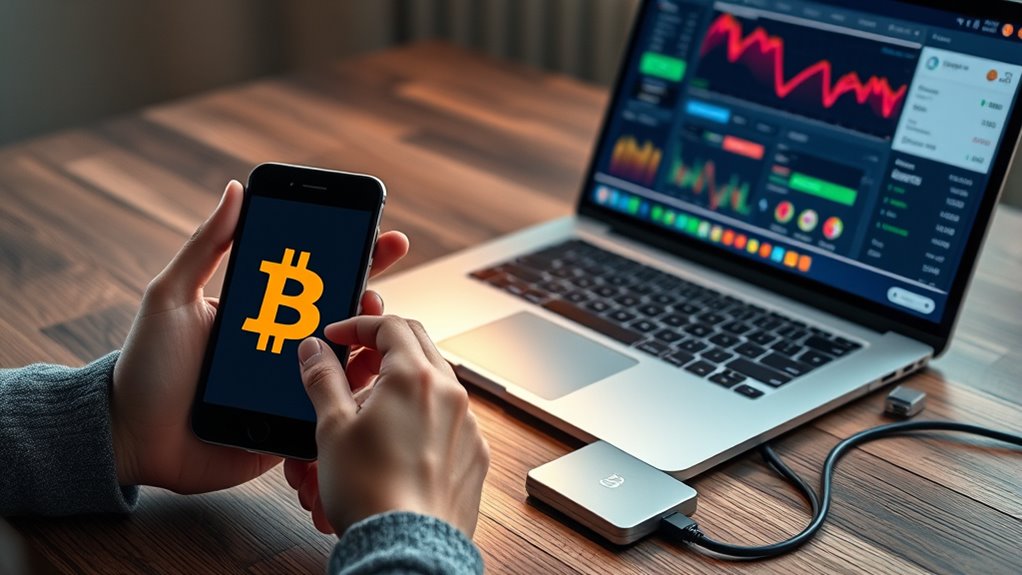
Using Bitcoin has become an accessible way to make digital transactions without relying on traditional banks. You can send or receive BTC quickly, often with lower fees compared to conventional banking methods. However, before diving into transactions, it’s essential to understand the landscape of cryptocurrency regulations. Governments around the world are establishing rules to govern how cryptocurrencies are used, which can influence your ability to buy, sell, or hold Bitcoin. Some countries have embraced it fully, creating clear legal frameworks, while others impose restrictions or outright bans. As a user, staying informed about local cryptocurrency regulations helps you avoid legal pitfalls and ensures your transactions remain compliant. Additionally, understanding these regulations can impact your decision on how to store your Bitcoin securely and whether to use centralized exchanges or decentralized wallets.
When you want to send Bitcoin, you initiate a transaction through your digital wallet. This process involves entering the recipient’s wallet address and the amount you want to transfer. Once confirmed, your transaction gets broadcasted to the Bitcoin network. Miners verify these transactions through the Bitcoin mining processes, which involve solving complex cryptographic puzzles to add new blocks to the blockchain. This process not only secures the network but also confirms your transaction. Keep in mind that transaction times can vary based on network congestion and the size of the fee you attach. Higher fees typically result in faster processing, especially during busy periods. Once confirmed, the recipient’s wallet reflects the new BTC, and the transaction becomes part of the immutable blockchain. Learning about blockchain technology can help you better understand how your transactions are secured and verified.
Receiving Bitcoin is straightforward. You simply share your wallet address with the sender, ensuring it’s correct to avoid losing funds. When the sender completes their transaction, you’ll see the BTC arrive in your wallet once it’s confirmed on the blockchain. It’s wise to verify the transaction status through a blockchain explorer, especially for larger amounts, to confirm it’s fully settled. Storing Bitcoin securely is another critical step. You can keep your BTC in a hot wallet for quick access or opt for a cold wallet, like a hardware device, which offers increased security against hacking attempts. Remember, your private keys are the keys to your Bitcoin; safeguard them diligently to prevent unauthorized access.
Understanding the intricacies of cryptocurrency regulations and the bitcoin mining processes helps you navigate the digital currency landscape confidently. Whether sending, receiving, or storing Bitcoin, staying informed ensures you make smart choices that protect your assets and keep your transactions smooth. As the ecosystem evolves, keeping up with legal changes and technological updates will empower you to use Bitcoin effectively and securely.
Frequently Asked Questions
How Secure Are Bitcoin Transactions Against Hacking?
Bitcoin transactions are generally secure because blockchain encryption protects data, making it difficult for hackers to tamper. You can trust transaction verification processes that confirm each transfer’s authenticity before approval. However, your security depends on how carefully you manage your private keys and wallets. By keeping your keys private and using reputable platforms, you minimize risks, ensuring your Bitcoin transactions stay protected against hacking attempts.
Can I Use Bitcoin Anonymously?
You can chase the illusion of anonymity with Bitcoin, but it’s more like hiding behind a frosted glass—privacy concerns are real, yet transaction anonymity isn’t guaranteed. While you can use tools like mixers and privacy-focused wallets, savvy observers might still trace your steps. So, if you crave true anonymity, be prepared to navigate this digital maze carefully, understanding that Bitcoin’s transparency can sometimes reveal more than you’d like.
What Fees Are Involved in Sending Bitcoin?
When you send Bitcoin, you’ll encounter transaction fees, which vary based on network congestion. During times of high congestion, fees increase to prioritize your transaction. To save on costs, you can choose a lower fee, but it might take longer to confirm. Always check current network conditions before sending, so you can balance speed and cost effectively.
How Do Bitcoin Forks Affect My Holdings?
Bitcoin forks can impact your holdings through fork implications that may create new coins or alter your wallet’s compatibility. When a fork occurs, you might gain access to additional tokens if your wallet supports the new chain. However, if your wallet isn’t compatible with the fork, you could miss out on these new assets. Always verify your wallet is updated and understand the fork implications before the event to safeguard your holdings.
Is Bitcoin Legal Everywhere?
Is Bitcoin legal everywhere? The answer is a resounding no. While it’s embraced in some countries, others impose strict regulatory challenges or outright bans, making its international legality uncertain. Think of it as a wild frontier—you’ll need to navigate local laws carefully. Before investing or using Bitcoin, research your country’s stance to avoid legal trouble. Remember, what’s legal today might change tomorrow, so stay informed.
Conclusion
Now that you know how to send, receive, and store Bitcoin, you’ll feel more confident managing your crypto. Sure, it might seem complex at first, but think of it like digital cash in your pocket—just with a few extra security steps. Imagine your BTC as a treasure chest: with the right wallet, safeguarding your coins is simple and secure. Jump in, practice, and watch your crypto confidence grow!