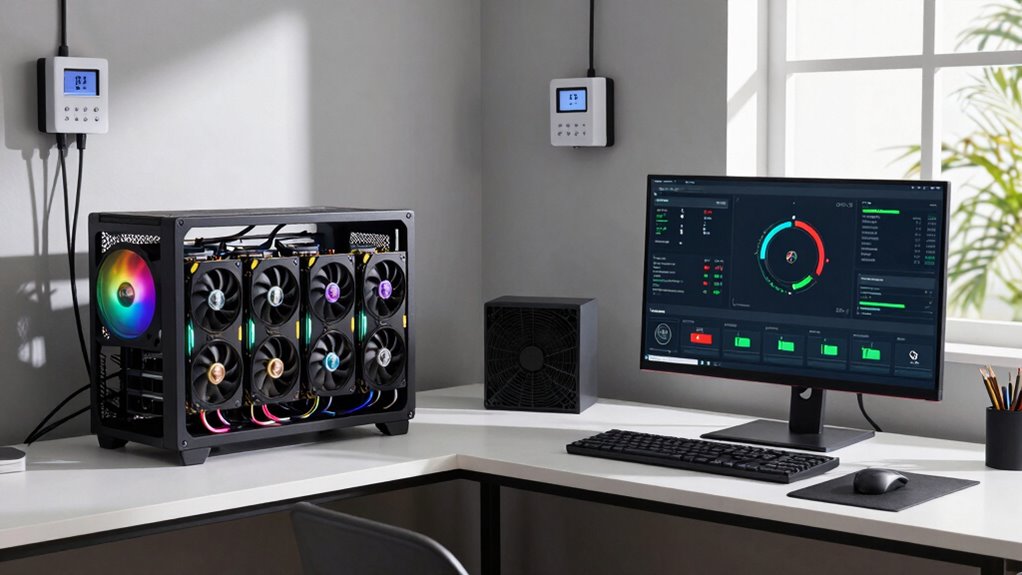

To judge if a home mining setup is practical, start by evaluating the energy costs compared to potential profits, focusing on hardware efficiency and electricity rates. Consider noise levels and whether they’ll disrupt your space or neighbors, and make sure you have enough room and cooling solutions to prevent overheating. Factor in upfront expenses, ongoing costs, and market fluctuations. Keep an eye on local regulations, too. If you want to make smarter decisions, there’s more to explore in these key areas.

Get hardware and tech essentials delivered free with Prime
- Fast, free delivery on millions of items
- Prime Video, Amazon Music and more included
- Member-only deals all year
Key Takeaways
- Assess energy efficiency by comparing hash rate to power consumption to ensure profitability.
- Consider noise levels and whether soundproofing or quiet models are necessary for your environment.
- Evaluate space and cooling needs to prevent overheating and maintain hardware longevity.
- Perform a detailed cost-benefit analysis factoring upfront costs, ongoing expenses, and potential rewards.
- Stay informed about local regulations and market conditions that could impact long-term mining viability.

Deciding whether a home mining setup is practical requires carefully evaluating several key factors. First, you need to assess the energy efficiency of the hardware you plan to use. Mining consumes a significant amount of electricity, so understanding how much power your equipment requires and how that translates into operational costs is vital. Look at the hash rate versus power consumption—more efficient miners produce higher output with less energy. If your electricity costs are high or your hardware isn’t energy-efficient, mining may quickly become unprofitable. Additionally, consider the long-term sustainability of your setup; energy prices can fluctuate, affecting your overall profitability.
Assess hardware energy efficiency and operational costs to determine if home mining is profitable long-term.
Next, you should evaluate noise levels, as mining rigs can generate considerable noise during operation. Some mining hardware produces loud fan noise, which can be disruptive if your setup is in a shared living space or close to bedrooms. Noise can also influence your decision if you live in an apartment or have neighbors nearby. To determine whether noise levels are manageable, research the specific models you’re interested in and look for reviews or specifications that mention decibel ratings. Keep in mind that some miners come with noise reduction features or can be housed in soundproof cases, but these solutions add extra costs and complexity.
Beyond energy efficiency and noise levels, you need to contemplate your available space and cooling options. Mining hardware generates heat, requiring effective cooling to prevent overheating. If your home isn’t equipped with sufficient ventilation or air conditioning, you might face higher electricity bills or hardware failures. Space constraints also matter; large mining rigs need adequate room to operate safely and comfortably without obstructing pathways or damaging other household items. Proper ventilation and cooling solutions are crucial to maintaining hardware longevity and efficiency. Incorporating proper ventilation techniques can significantly improve the overall performance and durability of your mining setup. Considering the potential for hardware failure due to inadequate cooling is important for long-term planning. Additionally, understanding the hardware durability of your equipment can help prevent costly replacements and downtime, ensuring your investment remains viable over time.
Financial considerations are vital as well. Calculate your upfront investment, including hardware costs, power supplies, cooling solutions, and potential modifications to your home. Then, project ongoing expenses like electricity and maintenance. Compare these costs against expected mining rewards, factoring in current cryptocurrency prices and network difficulty. Remember, cryptocurrency markets are volatile, and profitability can shift quickly. A comprehensive cost-benefit analysis can help you determine if the setup is financially viable in the long run. It’s also wise to stay informed about regulatory developments that might impact the legality and sustainability of home mining in your area.
Bitcoin mining hardware energy efficient
As an affiliate, we earn on qualifying purchases.
As an affiliate, we earn on qualifying purchases.
Frequently Asked Questions
What Are the Initial Costs Involved in Setting up a Home Mining Rig?
The initial costs for your home mining rig include hardware like GPUs or ASIC miners, which vary based on hardware efficiency. You also need power supplies and cooling solutions, which can add to expenses. Noise mitigation is essential, so consider soundproofing or quieter fans. Don’t forget ongoing costs, but the initial investment mainly covers hardware, setup, and ensuring your system runs efficiently and quietly for ideal mining performance.
How Much Electricity Does a Typical Home Mining Setup Consume?
A typical home mining setup consumes between 1,200 to 2,500 watts of energy, depending on the hardware and efficiency. You should consider energy consumption and power efficiency when evaluating costs; more efficient rigs use less electricity for the same output, saving you money. Keep in mind that higher energy use can considerably increase your electricity bill, so balancing performance with power efficiency is key to making your mining setup practical.
Can Home Mining Setups Be Profitable Long-Term?
Home mining setups can be profitable long-term if you consider your remote location and equipment noise. In remote areas, lower electricity costs boost profitability, but equipment noise might disturb neighbors or family. You need to weigh these factors carefully, ensuring your setup is efficient and sustainable. Regular maintenance and monitoring your mining rewards help maintain profitability, but be prepared for fluctuations in cryptocurrency markets that can impact your long-term gains.
What Are the Common Technical Challenges Faced by Home Miners?
You’ll often face technical challenges with home mining, especially related to mining hardware and cooling requirements. Your hardware can generate significant heat, making proper cooling essential to prevent overheating and damage. Additionally, mining equipment demands consistent power and reliable internet, which can strain your home setup. Managing noise levels from mining rigs and ensuring adequate ventilation are also common hurdles, requiring careful planning to maintain an efficient and sustainable mining environment.
How Does Local Climate Affect Mining Equipment Performance?
Climate impact profoundly affects your mining equipment’s performance and durability. Hot or humid environments can cause overheating, reduce efficiency, and shorten equipment lifespan, making maintenance more frequent and costly. Cold climates might improve cooling but risk moisture buildup and condensation. Adjust your setup accordingly, ensuring proper ventilation and climate control. By understanding these factors, you can optimize your home mining system’s reliability and longevity, preventing costly damage and downtime.
noise reducing mining rig enclosure
As an affiliate, we earn on qualifying purchases.
As an affiliate, we earn on qualifying purchases.
Conclusion
So, when you’re deciding on your home mining setup, picture it as planting a seed in your own backyard. Will it grow steadily, or struggle under the weight of high energy bills and equipment noise? By honestly evaluating your space, costs, and goals, you’re nurturing a future where your mining garden can flourish. Remember, practicality isn’t just about today’s harvest—it’s about cultivating a sustainable, thriving venture that can stand the test of time.
As an affiliate, we earn on qualifying purchases.
high hash rate cryptocurrency miner
As an affiliate, we earn on qualifying purchases.
As an affiliate, we earn on qualifying purchases.
Halloween Picks
halloween
As an affiliate, we earn on qualifying purchases.