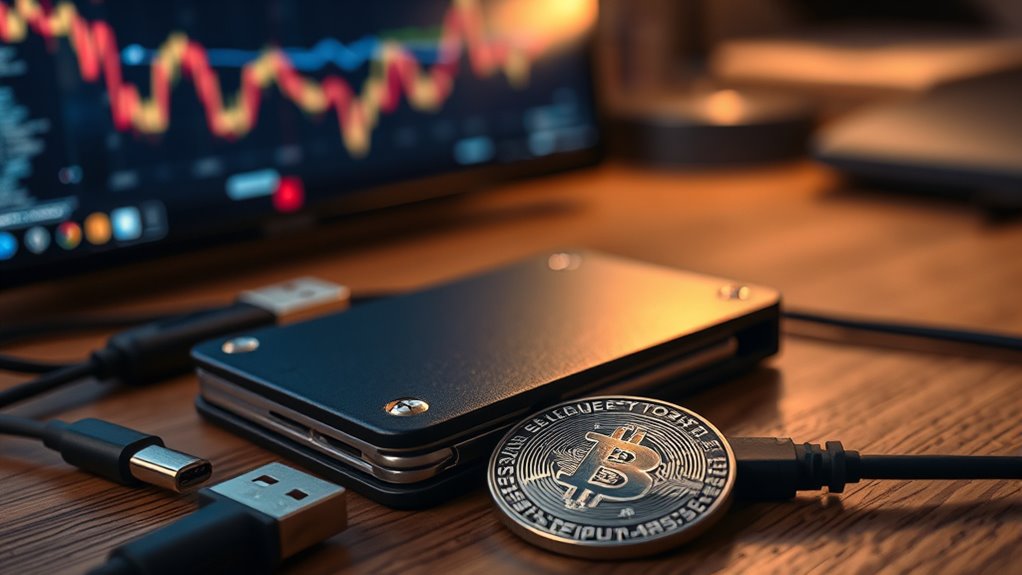

To secure your Bitcoin, use cold storage solutions like hardware wallets kept offline in safes or safety deposit boxes, reducing online hacking risks. Implement multi-signature wallets that require multiple approvals for transactions, adding an extra layer of protection. Regularly backup your private keys or seed phrases offline in secure locations, avoiding digital storage. Combine these practices with a layered security approach and stay informed on new threats—your security strategy can be strengthened even further as you explore more tips.
Key Takeaways
- Use hardware wallets for offline storage of private keys, minimizing online hacking risks.
- Implement multi signature wallets requiring multiple approvals for transactions.
- Store private keys and seed phrases securely offline in safes or safety deposit boxes.
- Regularly update security practices and avoid sharing sensitive information about your holdings.
- Combine cold storage with layered security measures for comprehensive protection.

In today’s digital economy, securing your Bitcoin is essential to protect your investment from theft and hacking. The most reliable way to do this is by utilizing cold storage solutions. Cold storage keeps your Bitcoin offline, away from internet-connected devices that are vulnerable to cyberattacks. Hardware wallets, such as specialized USB devices, are a popular form of cold storage because they store your private keys securely and are immune to online malware. By transferring your Bitcoin into a hardware wallet, you drastically reduce the risk of someone hacking into your account remotely. Remember, though, that physical security is still critical; keep your hardware wallet in a safe place, like a secure safe or safety deposit box, and ensure it’s only accessible to you.
Secure your Bitcoin with cold storage and hardware wallets—keep your private keys offline and protected from cyber threats.
Another highly effective method to safeguard your Bitcoin is by using multi signature wallets. Unlike traditional wallets that rely on a single private key, multi signature wallets require multiple keys to authorize a transaction. This means even if one key gets compromised, your Bitcoin remains protected because an attacker would still need access to the additional keys. Setting up a multi signature wallet involves distributing these keys across different locations or trusted parties, adding an extra layer of security. For example, you can hold one key yourself, store another with a trusted family member, and keep a third in a secure location. This setup not only prevents accidental loss but also guards against theft because no single person or device can move your funds unilaterally. Additionally, insurance options for digital assets are emerging as a way to further mitigate risks associated with theft or loss, providing an extra layer of security for your holdings.
Implementing cold storage and multi signature wallets together offers a thorough security strategy. Cold storage keeps your Bitcoin offline, shielding it from online threats, while multi signature wallets ensure that no single entity controls access to your funds. This dual approach makes it considerably more difficult for hackers to compromise your assets. When managing your Bitcoin, always remember to generate backup copies of your private keys or seed phrases in secure, offline locations. Never store these backups digitally or online, as that defeats the purpose of cold storage and increases vulnerability.
Ultimately, securing your Bitcoin isn’t just about choosing the right tools but also about maintaining disciplined security habits. Regularly update your security practices, stay informed about new threats, and avoid sharing sensitive information. By combining cold storage with multi signature wallets, you create a layered defense that makes unauthorized access exceedingly difficult, giving you peace of mind knowing your investment is well protected.
Frequently Asked Questions
What Are the Common Mistakes to Avoid When Securing Bitcoin?
You should avoid falling for phishing scams that trick you into revealing your private keys or login details. Also, don’t use weak passwords or reuse them across multiple accounts, as hackers can easily access your funds. Keep your software updated and enable two-factor authentication whenever possible. By staying vigilant against scams and strengthening your passwords, you markedly reduce the risk of losing your Bitcoin to cyber threats.
How Often Should I Update My Bitcoin Security Measures?
Think of your Bitcoin security like a garden that needs constant tending. You should update your passwords regularly—at least every three to six months—to keep threats at bay. Additionally, review your backup frequency to make sure your wallets are protected from data loss. Staying vigilant and updating your security measures keeps your digital assets safe, just like pruning keeps a garden healthy and thriving.
Can Hardware Wallets Be Physically Stolen, and How to Prevent It?
Yes, hardware wallets can be physically stolen, so theft prevention is essential. To protect your device, keep it in a secure, hidden location and avoid public places when handling it. Use a strong PIN or password, enable two-factor authentication if available, and consider a safe or locked drawer for storage. Regularly check for signs of tampering, and only purchase from reputable sources to prevent counterfeit devices.
What Are the Signs of a Compromised Bitcoin Wallet?
Watch for warning signs of a compromised wallet, like strange transactions, suspicious alerts, or unexpected password prompts. If your wallet encryption suddenly changes or you receive phishing alerts, it’s a red flag. Protect your assets by regularly reviewing your transaction history, updating security settings, and staying alert to anomalies. Recognizing these signals helps you react quickly and reinforce your defenses before damage spreads, safeguarding your Bitcoin effectively.
Is Multi-Signature Security More Effective Than Single-Key Solutions?
Multi-signature wallets are more effective than single-key solutions because they require multiple approvals before a transaction completes, reducing single key vulnerabilities. If one key gets compromised, your funds stay safe because additional signatures are needed. You, as a user, benefit from enhanced security and control. While single-key solutions are simpler, multi-signature wallets offer a robust defense against hacking attempts and accidental loss, making them a smarter choice for securing your Bitcoin.
Conclusion
Now that you’ve learned the best ways to protect your Bitcoin, think of your wallet as a treasure chest guarding your digital gold. Keep your keys hidden like a secret map, and stay vigilant against lurking threats. With these best practices, you’re forging an unbreakable fortress around your investment. Remember, in the wild frontier of cryptocurrency, your vigilance is the sword that keeps your riches safe and sound. Guard it well, and your digital fortune will shine bright.