
Block’s latest Bitcoin mining release combines open-source software with modular hardware, allowing you to upgrade and maintain your equipment more efficiently. Its innovative design lets you swap individual components like hashboards instead of the entire system, extending hardware lifespan and reducing costs. The Proto Fleet Management platform offers real-time monitoring and analytics, enhancing operational uptime. Keep exploring to discover how this approach is transforming the future of sustainable and cost-effective mining.
Key Takeaways
- Block’s Bitcoin mining hardware features modular design, allowing component swaps instead of entire systems, enhancing upgradeability and lifespan.
- The open-source Proto Fleet Management Platform offers real-time monitoring and customizable tools for large-scale mining operations.
- Combining free software with modular hardware reduces costs, minimizes e-waste, and improves operational efficiency and sustainability.
- The hardware’s durability and upgradeability set new industry standards, supported by collaborations with companies like Core Scientific.
- This integrated approach promotes more eco-friendly, cost-effective, and flexible mining practices through software and hardware innovation.

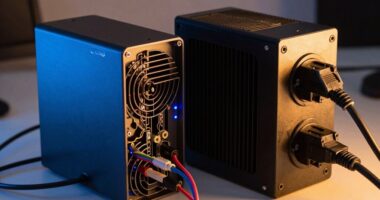
Block’s latest Bitcoin mining release combines free, open-source software with innovative modular hardware, transforming how miners manage and upgrade their rigs. The Proto Rig’s modular design lets you replace individual components like hashboards instead of scrapping the entire system. This approach extends the hardware’s lifespan to around 10 years, a significant improvement over the typical 3-5 year cycle of traditional rigs. By swapping out just parts rather than entire units, you cut costs by up to 20% per upgrade and reduce e-waste, making your operations more sustainable. The modular system also simplifies maintenance and repairs, boosting uptime and ensuring your mining activity remains steady and efficient over the long term. Addressing the capital-intensive nature of Bitcoin mining, this design helps you get more value out of your equipment by extending its usability. Modular hardware’s durability further enhances the economic viability of long-term mining investments. Additionally, investing in whole-house water filtration systems can improve the quality of water used for cooling systems in mining operations.
Modular Bitcoin mining rigs extend lifespan, cut costs, and reduce e-waste with easy component upgrades.
Alongside the hardware, Block introduces Proto Fleet, an open-source fleet management platform designed to streamline large-scale mining operations. With real-time monitoring and operational analytics, you can oversee multiple rigs effortlessly, quickly identify issues, and optimize power consumption. The open-source nature encourages community contributions, improving interoperability and transparency while reducing vendor lock-in. You gain customizable tools that adapt to your specific needs, enabling more precise control over your mining environment. This transparency helps you make informed decisions, avoid unnecessary expenses, and maintain competitive efficiency despite market fluctuations.
The combination of modular hardware and open software drives significant cost savings and operational improvements. Swapping individual parts instead of entire rigs cuts upgrade costs and extends equipment lifespans, lowering your capital expenditure over time. The software tools included in Proto Fleet help minimize downtime, optimize power usage, and manage your fleet more effectively. These efficiencies are vital as electricity prices rise and Bitcoin prices fluctuate, allowing you to stay competitive without sacrificing profitability. The integrated approach addresses common inefficiencies seen in legacy hardware, where costly upgrades often lead to full system replacements, wasting resources and time.
This release also positions Block as a major player in the mining hardware industry, especially with its recent introduction of a proprietary 3-nanometer Bitcoin mining chip. Collaborations with companies like Core Scientific bolster manufacturing and distribution, giving you reliable access to cutting-edge technology. The innovations signal a shift toward longer-lasting, upgradeable rigs that meet the industry’s evolving needs. By focusing on durability and flexibility, Block is setting higher standards for hardware lifecycle and operational agility. This strategic move aims to improve the economics of Bitcoin mining, even amid rising AI integration and increasing hardware demands. With its focus on technical performance, environmental sustainability, and market positioning, Block’s new release could reshape how you approach hardware investment and maintenance, making mining more efficient, eco-friendly, and cost-effective.
Frequently Asked Questions
How Does Modular Hardware Improve Bitcoin Mining Efficiency?
Modular hardware boosts your Bitcoin mining efficiency by enabling quick upgrades, easy maintenance, and scalable deployment. You can add or remove units without disrupting operations, allowing you to adapt to market changes swiftly. Integrated advanced cooling systems reduce energy consumption and hardware wear, while AI-powered management optimizes power use and airflow. This flexibility, combined with mobility and energy-efficient designs, helps you maximize performance while minimizing costs and downtime.
What Are the Security Benefits of Free Software in Mining Hardware?
You gain increased security benefits by using free software in mining hardware. For example, imagine discovering a hidden vulnerability in closed-source firmware; with open software, you can inspect, audit, and patch it yourself. This transparency helps prevent backdoors, reduces reliance on vendors, and guarantees timely security updates. Features like encryption and two-factor authentication further protect your operations, making your mining setup more resilient against attacks and malicious exploits.
Can Users Customize Hardware Components in Block’s Mining System?
Yes, you can customize hardware components in Block’s mining system. The modular design allows you to easily swap or upgrade parts like hashboards and ASIC chips without replacing the entire rig. This setup offers tool-free repairs, so you can maintain or enhance your hardware on your own. Plus, the open-source Proto Fleet software helps you monitor and control these components, giving you greater flexibility and optimization options.
How Does This Release Impact Global Bitcoin Mining Decentralization?
Imagine a rising tide lifting all boats—you, small or large, can now participate more equally in Bitcoin mining. This release fosters decentralization by making hardware affordable and manageable, breaking down the fortress of industry giants. With longer-lasting, modular rigs and open-source software, you gain control, reduce costs, and spread mining power geographically. Ultimately, it’s a wave that spreads opportunity wider, strengthening Bitcoin’s resilience through broader, more diverse participation.
What Are the Initial Costs Associated With Adopting Modular Mining Hardware?
You’ll find that initial costs for adopting modular mining hardware can vary widely, typically ranging from around $2,630 to over $23,850 depending on scale and hardware choices. You’ll save money over time by upgrading parts instead of entire rigs, but expect to invest in reliable power supplies, cooling, and stable internet. Open-source management tools help cut software costs, making modular setups more affordable and flexible upfront.
Conclusion
As you explore Block’s new modular Bitcoin mining system, remember that like Icarus reaching for the sun, innovation can elevate you or lead to downfall. Embracing free software and adaptable hardware empowers you to shape your destiny, but don’t forget the lessons of balance and caution. By harnessing these tools wisely, you can soar higher in the cryptoverse, forging a future where technology serves your vision—just as the phoenix rises anew from its ashes.