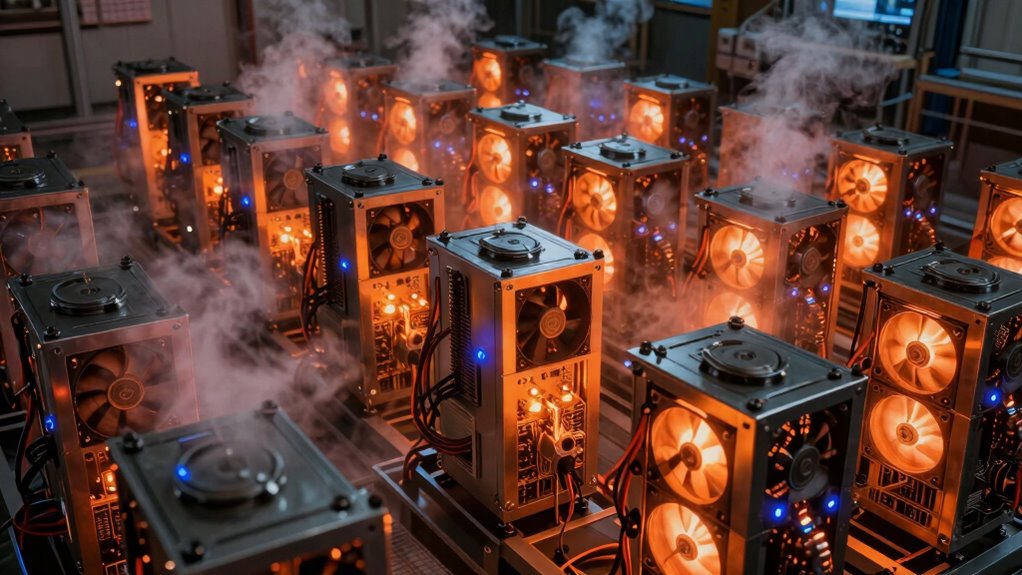
Many new miners underestimate how heat and noise can eat into profits before they even start. Overlooking proper cooling and thermal management leads to higher energy costs and equipment wear, reducing your returns. Noise can also cause complaints or legal issues if not managed well. Hidden costs like soundproofing and cooling efficiency add up fast, impacting your break-even point. If you want to stay profitable, it’s essential to understand and plan for these factors—there’s more to learn to keep your operation sustainable.
Key Takeaways
- Many new miners underestimate the high heat output requiring advanced cooling, which increases energy costs and equipment lifespan concerns.
- Noise levels from mining hardware are often overlooked, potentially causing disturbances and requiring soundproofing measures.
- Break-even calculations frequently neglect ongoing expenses like cooling, maintenance, and electricity fluctuations, skewing profitability estimates.
- Insufficient thermal management leads to overheating, hardware failures, and unexpected downtime, impacting long-term return on investment.
- New miners often ignore the cumulative impact of heat and noise mitigation costs on overall operational profitability.
Introduction: Getting Started With Sustainable Bitcoin Mining

Ever wondered how to start mining Bitcoin responsibly? The first step is understanding mining regulations in your area. These rules help you stay compliant and avoid legal issues, so research local laws before diving in. Community engagement is equally important—connecting with local residents and industry groups fosters support and transparency. Respecting your neighbors by managing noise and heat can prevent conflicts and promote sustainable practices. Setting up a responsible mining operation isn’t just about hardware; it’s about accountability. Educate yourself on environmental impacts and best practices for energy use. Being aware of digital content formats can also help you stay informed about industry developments. Additionally, understanding the impact of cookies can guide you in maintaining privacy and managing data responsibly. Staying informed about industry standards can help you align your operations with best practices and regulations. Incorporating contrast ratio considerations into your setup can improve visibility and efficiency. By following regulations and engaging your community, you build a foundation for long-term success that benefits everyone involved. Responsible mining begins with awareness, cooperation, and a commitment to sustainability.
Hardware Choices: Which Miners Offer the Best Value?
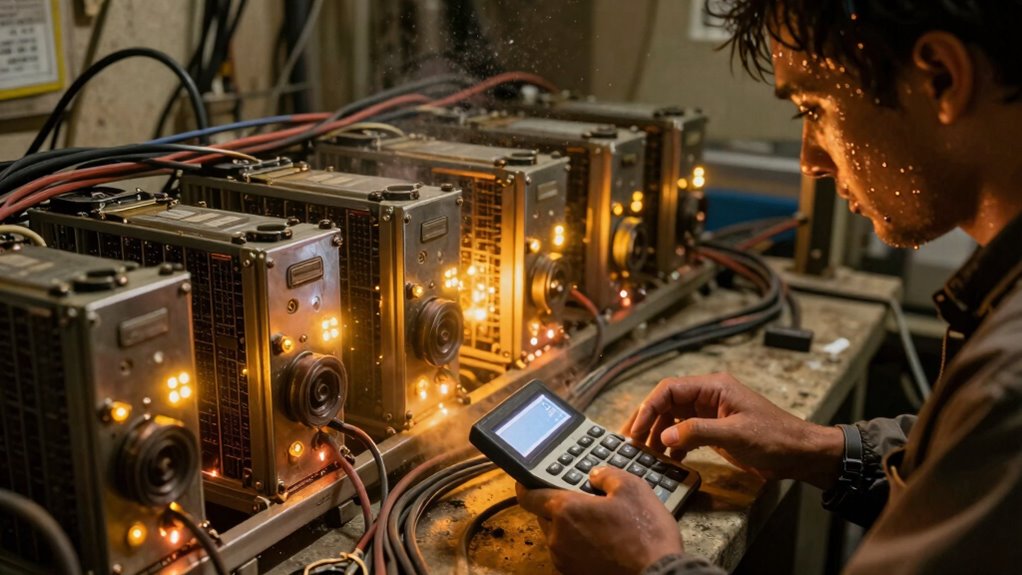
Choosing the right mining hardware is essential for maximizing your investment’s value, especially when you’re just starting out. You want equipment with solid hardware durability to guarantee it withstands prolonged operation without frequent replacements, saving you money over time. You look for miners known for their reliability and build quality, as these factors directly impact long-term profitability. Additionally, consider miner scalability—how easily you can upgrade or expand your setup as your mining operation grows. Some models offer modular designs or compatibility with newer chips, making future upgrades smoother. Balancing initial costs with durability and scalability helps you avoid frequent hardware replacements and minimizes disruptions. Recognizing hardware durability as a key factor can significantly influence your overall success and longevity in the competitive mining landscape. Furthermore, understanding mining hardware specifications can help you choose equipment optimized for efficiency and power consumption, which are crucial for maintaining profitability. Paying attention to hardware compatibility ensures your setup remains flexible and adaptable to new advancements in mining technology. Incorporating hardware testing and quality assurance processes can also help identify potential issues early, extending the lifespan of your mining equipment. Additionally, evaluating hardware resilience can help ensure your equipment remains operational under varying environmental conditions.
Managing Heat and Cooling Costs Effectively

Managing heat and cooling costs is essential because inefficient cooling can eat into your mining profits. Good thermal management improves cooling efficiency, reducing energy waste and equipment wear. To optimize, consider airflow design, ambient temperature, and cooling methods. Proper placement of miners prevents hotspots and maximizes heat dissipation. Here’s a quick guide:
| Cooling Method | Pros | Cons |
|---|---|---|
| Air cooling | Low cost, simple setup | Less efficient in hot climates |
| Liquid cooling | High thermal management | Higher initial investment |
| Ventilation upgrades | Improves airflow | May require structural changes |
| Evaporative cooling | Energy-efficient | Limited in humid areas |
| Heat recycling | Cost-saving, eco-friendly | Complex installation |
Focus on improving cooling efficiency to keep your equipment running smoothly and your costs in check. Additionally, thermal management is a crucial aspect that can significantly impact your equipment’s longevity and efficiency. Understanding the underlying principles of heat dissipation can help you make better decisions about cooling strategies. Properly designed airflow systems are vital for maintaining consistent temperatures and preventing hotspots. Regular maintenance of cooling components also contributes to optimal thermal performance.
Reducing Noise and Maintaining a Peaceful Mine
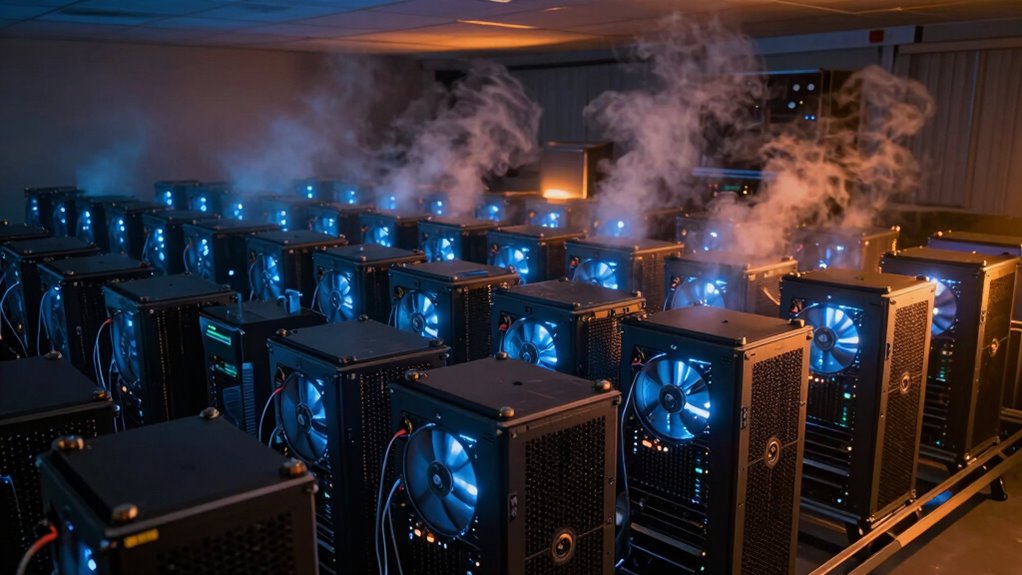
While effective cooling keeps your mining operation running smoothly, it can also generate significant noise, turning your setup into a noisy environment. To maintain a peaceful mine, focus on reducing ambient noise with acoustic insulation. Installing soundproof panels or barriers around your mining rig helps absorb vibrations and minimize sound escape. Position noisy equipment away from workspaces or living areas to lower disturbance. Regular maintenance, like tightening loose parts, can also cut down on unnecessary noise. Additionally, using quieter fans or vibration dampers can further reduce sound levels. Creating a calmer environment not only improves your peace of mind but also helps maintain good relations with neighbors. Considering cooling techniques and natural filtration systems in your setup design may optimize cooling efficiency and reduce heat-related noise. Understanding noise mitigation strategies is crucial for designing an effective and peaceful mining operation. Incorporating acoustic treatments can significantly enhance sound absorption and overall quietness. With these strategies, you can keep your mining operation efficient without sacrificing tranquility.
Calculating Your Bitcoin Mining Break-Even Point
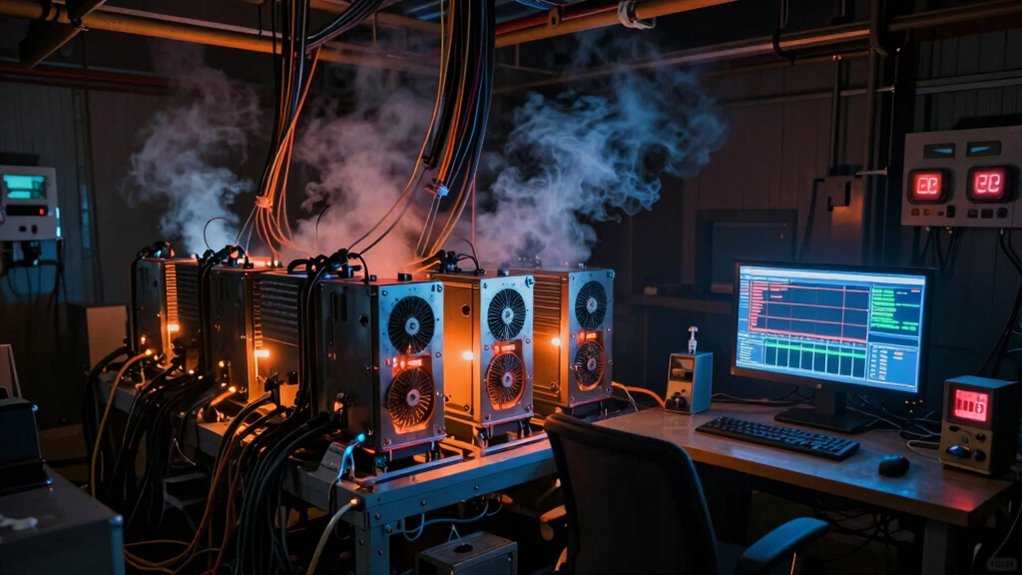
To figure out your mining break-even point, you need to account for your power costs and how they affect your overall expenses. Keep in mind, Bitcoin’s price can fluctuate wildly, impacting your potential profits. By understanding these factors, you can better determine if mining will be profitable for you in the long run. Monitoring your energy consumption and staying informed about current market trends can also help optimize your mining strategy. Additionally, considering power efficiency can help reduce your operational costs and improve your profitability. Understanding the capacity of your battery inverter generator can ensure that it can handle your mining rig’s power demands effectively. A solid grasp of sound quality principles can aid in maintaining optimal hardware operation and avoiding unnecessary wear. Incorporating lubricant specs verification practices into your equipment maintenance can prolong your hardware lifespan and maintain optimal performance.
Power Consumption Costs
Have you ever wondered how much your electricity bill impacts your mining profitability? Power consumption costs can considerably eat into your earnings. To understand this, focus on energy efficiency—using hardware that delivers maximum hashing power with minimal energy use. Effective power management helps you control operational costs, ensuring your setup doesn’t waste electricity. Calculate your expected power draw by checking your mining equipment’s wattage and multiplying it by your estimated run time. Then, multiply that number by your local electricity rate to find your monthly expense. Remember, even small improvements in energy efficiency can reduce your overall costs and improve your break-even point. Keeping power consumption in check is essential for maintaining profitability in the competitive world of Bitcoin mining. Additionally, understanding air purifier maintenance can help you optimize your environment and maintain equipment performance, especially since proper airflow is crucial for preventing overheating.
Bitcoin Price Volatility
Power consumption costs are a steady expense, but Bitcoin price fluctuations can suddenly shift your mining profitability. Market sentiment drives these price swings, making profitability unpredictable. When prices surge, your mining efforts become more profitable; when they plummet, losses can quickly pile up. The regulatory environment also influences price stability, as new laws or restrictions can cause sudden declines or boosts in Bitcoin’s value. To accurately calculate your break-even point, you need to contemplate these factors alongside your operational costs. Keep an eye on market trends and regulatory news, as they can impact Bitcoin’s price more than you’d expect. Planning for volatility helps you set realistic expectations and manage risk, ensuring you’re prepared for both sudden gains and steep declines.
Power Costs and How They Impact Your Profits

Ever wondered how much your electricity bill could eat into your mining profits? Power costs are a significant factor in your overall expenses, and they can make or break your profitability. To maximize gains, focus on energy efficiency and power optimization. Choosing energy-efficient hardware reduces electricity consumption, directly boosting your margins. Additionally, optimizing your setup—like using cooler environments or better power supplies—can lower energy waste. Remember, even small improvements in efficiency can lead to substantial savings over time. Keep a close eye on your energy usage and costs, as they fluctuate with market rates. By carefully managing power costs, you can guarantee your mining operation stays profitable, even when Bitcoin prices dip or network difficulty rises.
Tracking Performance Metrics for Better Mining Results

Tracking key metrics helps you understand how your mining setup performs in real time. By analyzing performance data, you can identify inefficiencies and optimize your operations. Staying on top of these numbers guarantees you maximize your mining results and improve profitability.
Monitoring Key Metrics
Monitoring key metrics is essential for optimizing your mining operations and maximizing profitability. By tracking hash rate, power consumption, and temperature, you gain insights into your equipment’s performance and efficiency. Staying aware of cryptocurrency regulations helps guarantee your setup remains compliant, avoiding costly fines or shutdowns. Additionally, monitoring these metrics enhances blockchain security by detecting anomalies or potential vulnerabilities early. Regularly reviewing your data allows you to make informed decisions, such as adjusting cooling systems or optimizing energy use. This proactive approach minimizes downtime and reduces operational costs, ultimately improving your bottom line. Keeping a close eye on performance metrics also helps you adapt quickly to market fluctuations, ensuring your mining activity remains sustainable and profitable over time.
Analyzing Performance Data
To improve your mining results, analyzing performance data is essential because it reveals how effectively your equipment operates under real-world conditions. Tracking key metrics helps you identify areas where energy efficiency can be optimized, reducing operational costs and heat output. Monitoring hardware durability ensures your equipment isn’t pushed beyond safe limits, preventing premature failures that can be costly. By regularly reviewing hash rates, power consumption, and temperature data, you gain insights into your setup’s overall health. This allows you to make informed adjustments—whether tuning cooling systems or upgrading components—to maximize efficiency and extend hardware lifespan. In turn, these practices help you stay competitive, reduce downtime, and improve your return on investment over time.
Common Mistakes in Estimating Mining Profits and How to Avoid Them
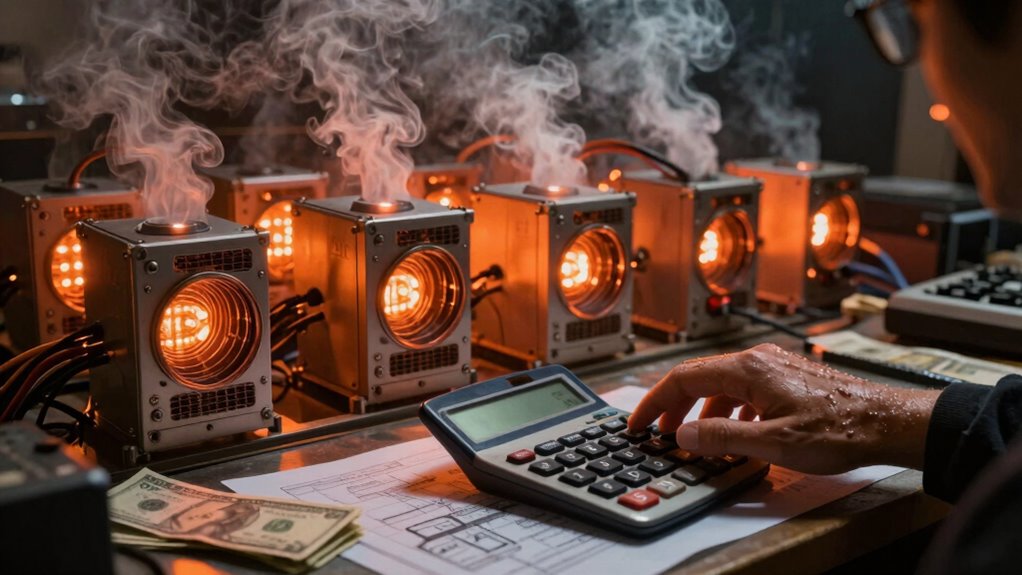
Many new Bitcoin miners make the mistake of overestimating their profits by ignoring key variables like electricity costs, hardware efficiency, and network difficulty fluctuations. A common error is underestimating electricity tariffs, which can *substantially* eat into profits. Your mining hardware’s efficiency directly impacts how much electricity it consumes for each unit of hashing power, so choosing the right equipment matters. Failing to account for the rising or fluctuating network difficulty can also lead to overly optimistic profit calculations. To avoid these mistakes, research your electricity rates carefully, select energy-efficient hardware, and regularly update your calculations based on current network conditions. Accurate estimates require thorough analysis; otherwise, you risk running unprofitable operations or misallocating resources.
Tips for Long-Term Sustainability in Bitcoin Mining

To guarantee your mining operation remains sustainable long-term, consider switching to renewable energy sources to cut costs and reduce environmental impact. Implementing efficient cooling systems can lower energy use and extend your hardware’s lifespan. Embracing these strategies helps you stay profitable while supporting a greener, more resilient mining setup.
Renewable Energy Adoption
Adopting renewable energy sources is essential for ensuring the long-term sustainability of Bitcoin mining operations. Solar integration can markedly reduce your reliance on traditional energy grids, lowering operational costs and carbon footprint. By generating your own power, you gain grid independence, which shields you from energy price fluctuations and supply disruptions. Investing in solar panels and energy storage not only boosts your operational resilience but also aligns your mining activities with eco-friendly practices. Keep in mind, renewable energy sources require upfront planning and investment, but the long-term benefits—cost stability, environmental compliance, and enhanced reputation—are well worth it. Embracing renewable energy isn’t just a trend; it’s a strategic move toward sustainable and profitable mining.
Efficient Cooling Solutions
Effective cooling solutions are essential for maintaining the long-term sustainability of your Bitcoin mining operation, especially as equipment runs continuously at high intensity. Focus on enhancing thermal management to prevent overheating and ensure consistent performance. Implementing advanced cooling methods, like liquid cooling or immersion cooling, can considerably reduce heat buildup. Additionally, improving ventilation efficiency helps move hot air out quickly and brings in cooler air, lowering overall temperature. Regularly maintaining fans, vents, and filters ensures ideal airflow. Consider using temperature sensors to monitor heat levels in real-time, allowing you to adjust cooling strategies proactively. By prioritizing effective thermal management and ventilation efficiency, you can extend equipment lifespan, reduce energy costs, and keep your mining operation running smoothly for the long haul.
Final Tips: Staying Profitable and Sustainable Over Time

Maintaining profitability and sustainability in Bitcoin mining requires ongoing vigilance and strategic adjustments. You must monitor your energy consumption to assure environmental impact, which can also improve your reputation within the community. Engaging with local stakeholders helps foster support and can lead to better regulatory conditions. Invest in efficient hardware that balances performance with energy use, reducing costs over time. Stay updated on market trends and mining difficulty changes to optimize your operations. Prioritize sustainable practices, such as using renewable energy sources, to guarantee long-term viability. Remember, transparency with your community and responsible environmental practices can boost your reputation and offer resilience against regulatory shifts. Consistent evaluation and adaptation are key to staying profitable and sustainable in the competitive world of Bitcoin mining.
Frequently Asked Questions
How Does Ambient Temperature Affect Mining Hardware Efficiency?
Ambient temperature directly affects your mining hardware’s efficiency. Higher temperatures can cause thermal management issues, leading to overheating and potential hardware failure. To optimize energy use, you need effective cooling solutions that maintain ideal thermal conditions. Cooler environments help your equipment run smoothly and efficiently, reducing energy consumption and extending hardware lifespan. Ignoring ambient temperature risks higher energy costs and decreased mining performance, making proper thermal management essential for maximizing your mining profitability.
What Are the Hidden Costs of Cooling Systems?
The hidden costs of cooling systems include increased energy consumption, which raises your operational expenses and environmental impact. You might overlook the long-term costs of maintaining and upgrading cooling infrastructure, and the energy needed to power fans or liquid cooling solutions can substantially add up. These factors can erode profit margins, making your mining operation less sustainable and more costly over time.
How Does Hardware Lifespan Influence Long-Term Profitability?
Your hardware lifespan directly impacts your long-term profitability by influencing hardware depreciation and maintenance scheduling. As your equipment ages, depreciation reduces its resale value, and increased maintenance costs can eat into profits. You need to plan for timely upgrades and maintenance to maximize efficiency and minimize downtime. By understanding these factors, you can better forecast expenses and guarantee your mining operation remains profitable over the long run.
Can Noise Levels Impact Local Regulations or Community Relations?
Yes, noise levels can impact your community acceptance and regulatory compliance. If your mining operation generates excessive noise, neighbors may complain, leading to stricter local regulations or even shutdowns. To maintain good relations and stay compliant, you should invest in quieter hardware, soundproofing, and adhere to noise ordinances. Proactively managing noise helps prevent conflicts, fosters community support, and guarantees your mining activities remain sustainable and legally compliant.
What Are the Best Practices for Scaling a Mining Operation Sustainably?
You should prioritize energy efficiency and plan for regular hardware upgrades to scale sustainably. Some might worry about costs, but investing in energy-efficient equipment reduces long-term expenses. Maintain a balance between expanding your operations and managing energy consumption, ensuring your hardware is optimized. By staying adaptable and environmentally conscious, you’ll minimize risks and build a resilient mining operation that grows responsibly over time.
Conclusion
To succeed in Bitcoin mining, you need to choose wisely, manage heat and noise effectively, track your performance diligently, and stay realistic about costs and profits. Embrace sustainable practices, learn from mistakes, and plan for the long term. Keep your focus sharp, your equipment optimized, and your expectations grounded. Because in this game, consistency, knowledge, and adaptation are your best allies—helping you stay profitable, sustainable, and ahead of the curve.