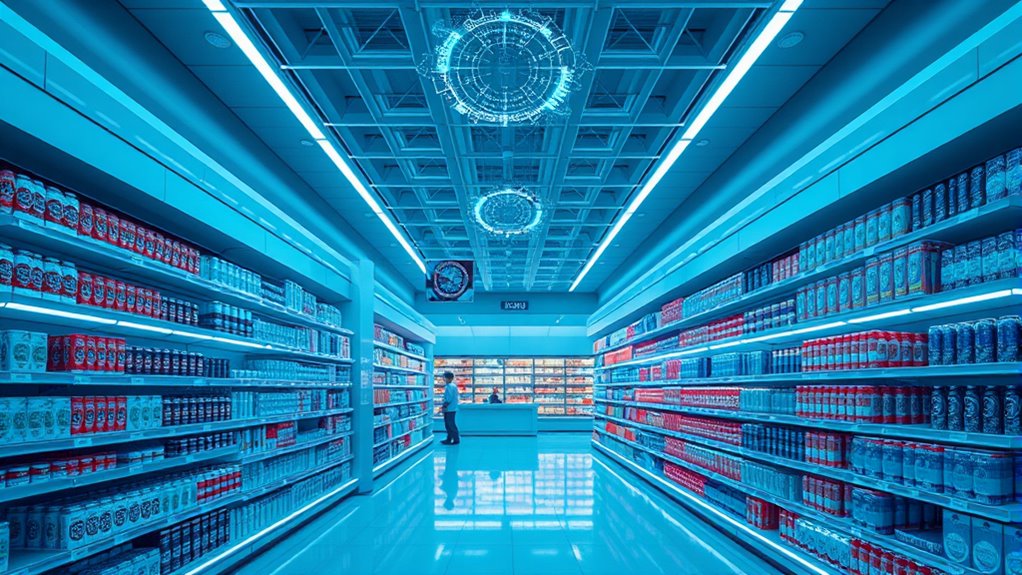

When every store runs on algorithms instead of people, your shopping experience becomes highly personalized and efficient, with AI managing inventory, recommendations, and logistics seamlessly. However, you might miss the human touch, warmth, and trust that come from real interaction. While transactions become faster and smarter, there’s a risk of losing authenticity and emotional connection. If you want to see how this shift impacts your shopping journey further, keep exploring what’s behind these technological changes.
Key Takeaways
- Customer experiences become highly personalized through data-driven recommendations, filters, and visual search technologies.
- Human staff may be replaced or supported by AI for tasks like inventory management and customer service.
- Stores operate more efficiently with automated supply chain, demand forecasting, and real-time inventory monitoring.
- Personalization and automation can reduce human error but may diminish the human touch in shopping interactions.
- Decision-making shifts from intuition to algorithms, potentially impacting creativity, empathy, and nuanced customer understanding.

Have you ever wondered how stores seem to know exactly what you want before you even ask? It’s not magic — it’s algorithms working behind the scenes. Retailers now analyze massive amounts of data, including your purchase history, browsing patterns, and preferences, to create a highly personalized shopping experience. When you visit an online store, AI-powered filters automatically highlight sizes, colors, or styles you tend to prefer, making it easier to find what you want without endless scrolling. Natural language processing helps search bars understand your descriptive queries beyond simple keywords, so when you type “comfortable running shoes,” the system matches your request more accurately. Visual search technology takes this a step further, allowing you to upload an image or snap a photo to find similar products, catering to those moments when your search terms are vague or unknown.
This level of personalization isn’t limited to online stores. Retailers integrate these algorithms across both digital and physical channels to meet rising consumer expectations for seamless experiences. Whether you’re shopping on your phone, laptop, or in-store kiosk, the system adapts to your behavior in real-time, offering tailored recommendations and streamlined interactions. This creates a consistent, intuitive journey that feels almost intuitive — because it is, thanks to sophisticated AI.
Demand forecasting also benefits from this tech. Retailers use AI to incorporate current trends, external factors, and customer behavior into their predictions, which outperforms traditional models. As a result, they can better anticipate what you’ll want to buy and when. Real-time analytics help minimize risks of overstocking or running out of popular items, allowing stores to adjust inventories automatically based on demand fluctuations. This agility makes supply chains more resilient, helping retailers respond swiftly to disruptions like geopolitical tensions or climate events, preventing delays and stockouts.
AI doesn’t stop at forecasting; it optimizes entire supply chains. Algorithms predict demand, automate procurement, and respond quickly to disruptions, all while reducing manual tasks. Intelligent automation improves responsiveness in logistics and stock replenishment, keeping shelves stocked without excess inventory. Modular AI models let retailers upgrade or swap algorithms to better suit their specific needs, increasing flexibility. They also provide real-time visibility into inventory levels and supply chain health, enabling proactive decisions that keep the store running smoothly.
All these advancements hinge on seamless data integration. Retailers merge online and offline customer data to craft unified profiles. This holistic view uncovers insights into the entire customer journey, allowing for more effective personalization and targeted marketing. Omnichannel shoppers tend to spend considerably more, incentivizing stores to invest in integrated data strategies. By synthesizing sales, social media, and in-store interactions, retailers can adapt quickly to changing consumer preferences and stay competitive. Additionally, understanding environmental considerations can help retailers implement sustainable practices that appeal to eco-conscious consumers.
When every store runs on algorithms instead of people, shopping becomes more efficient and personalized, but it also raises questions about the human touch in retail. Still, with AI handling logistics, recommendations, and inventory, you get a smoother, more responsive experience — one that’s shaped by data, not just intuition.
Frequently Asked Questions
How Do Algorithms Influence Customer Shopping Choices?
Algorithms influence your shopping choices by analyzing your browsing, purchase history, and social media activity to predict what you’ll like. They personalize product recommendations and marketing messages, making suggestions based on your habits. Dynamic pricing adjusts prices in real-time, offering discounts or higher costs depending on demand and behavior. This continuous data collection and tailored content steer your decisions, often making shopping more convenient but also subtly guiding what you buy and how much you spend.
What Privacy Concerns Arise From Algorithm-Driven Stores?
It’s like stepping into a digital Big Brother’s lair. In algorithm-driven stores, you face privacy concerns like constant surveillance, with your purchase history, browsing habits, and biometric data collected without clear consent. This data can be misused or breached, risking your personal info. Plus, unclear policies and lack of control make it hard for you to trust how your data is handled, raising serious privacy alarms.
Can Algorithms Replace All Human Store Employees Effectively?
Algorithms can’t substitute all human store employees effectively. While they excel at automating inventory, streamlining operations, and personalizing online experiences, they lack emotional intelligence and adaptability for complex or unpredictable situations. You’ll still need humans for empathetic customer service, creative problem-solving, and building trust. Balancing automation with human oversight ensures smoother operations and better customer satisfaction, making a hybrid approach the most practical and effective solution for retail stores today.
How Do Algorithms Adapt to New or Unexpected Products?
You might think algorithms are set in stone, but they actually learn as they go. When faced with new or unexpected products, they use image recognition, metadata, and customer feedback to identify and classify items. They keep evolving through continuous learning, adjusting pricing, and updating inventories based on real-time data. While not perfect, these systems get better over time, helping stores stay ahead of surprises—turning a wild card into a winning hand.
What Happens if the Algorithms Malfunction or Make Errors?
When algorithms malfunction or make errors, you’ll notice irrelevant search results, wrong product recommendations, and inaccurate information, frustrating your shopping experience. These mistakes can lead to lower trust in the platform, decreased sales, and higher return rates. If errors persist, your confidence in the brand drops, and you might seek alternatives. Poor algorithm performance damages reputation, making it harder for the store to retain loyal customers and attract new ones.
Conclusion
So, as you walk into a store run entirely by algorithms, imagine stepping into a future where human touch is a distant memory—a world where every decision is driven by code. You might feel like you’re in the heart of a digital universe, with machines predicting your every move. While efficiency soars, remember, this is just the beginning of a revolution so powerful, it could reshape shopping forever—faster than you can blink.