
To start mining cryptocurrency at home, choose the right hardware like GPUs or ASICs based on your budget and the coins you want to mine. Monitor electricity costs and opt for energy-efficient equipment to maximize profits. Set up your hardware, join a mining pool for steady rewards, and guarantee proper cooling. Regularly check performance and adjust settings for ideal results. Keep exploring to discover tips that can help boost your mining success.
Key Takeaways
- Choose suitable hardware like GPUs or ASICs based on your budget and the coins you want to mine.
- Calculate electricity costs and select energy-efficient hardware to maximize profitability.
- Install mining software, join a mining pool, and ensure proper cooling and ventilation for your setup.
- Regularly monitor hardware performance, electricity usage, and mining difficulty to maintain optimal operations.
- Plan your setup carefully to balance costs and potential earnings, turning your home into a profitable mining space.
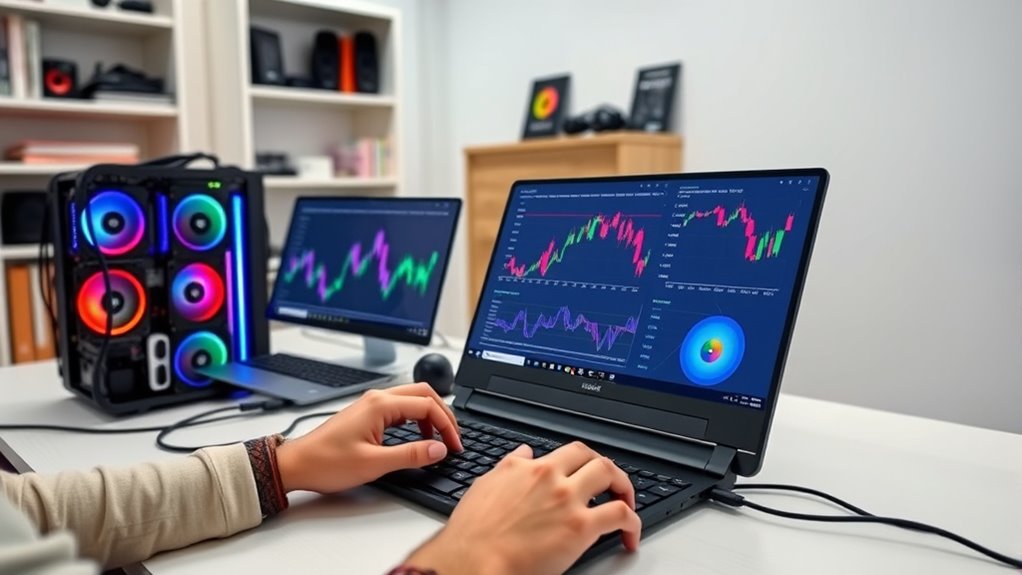
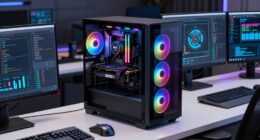
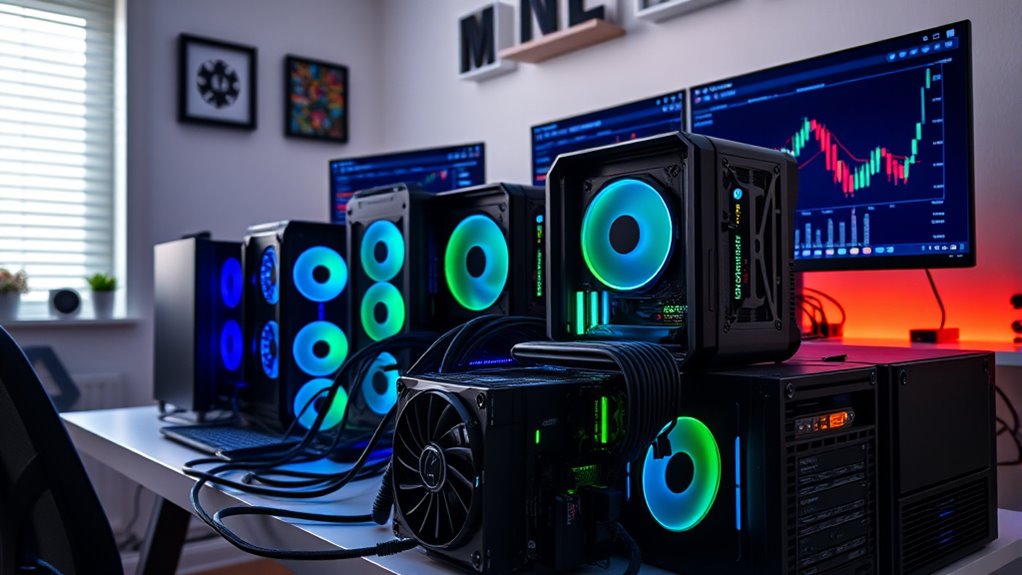
Mining cryptocurrency at home might seem complex, but with the right guidance, it can be a straightforward way to earn digital assets. The first step is understanding the importance of mining hardware. Your choice of hardware directly impacts your mining efficiency and profitability. You can choose between GPUs, ASICs, or even CPUs, depending on the cryptocurrency you want to mine. GPUs are versatile and work well for a variety of coins, while ASICs are specialized devices designed for specific algorithms, offering higher performance but at a higher cost. When selecting your hardware, consider your budget, the mining difficulty of your target coin, and the potential return on investment.
Once you’ve chosen your hardware, you need to think about electricity costs. Mining consumes a substantial amount of power, and electricity prices vary greatly depending on your location. Lower electricity rates mean higher profit margins, so it’s crucial to calculate your expected power consumption and compare it to your local rates before investing. Keep in mind that high-performance mining hardware tends to draw more power, so even a small difference in electricity costs can considerably affect your overall profitability. You might want to explore options like using energy-efficient hardware or setting up your mining rig in a location with cheaper electricity to optimize your costs.
Evaluate your energy costs carefully to maximize mining profitability and consider energy-efficient hardware options.
Setting up your mining hardware requires a bit of technical know-how. You’ll need to connect your devices to a power source, install mining software, and join a mining pool if you decide not to mine solo. Joining a pool increases your chances of earning consistent rewards, although the payout will be shared among members. Make sure your hardware is properly cooled, as mining generates heat that can shorten the lifespan of your equipment if not managed well. Proper ventilation and cooling solutions are vital to keep everything running smoothly and to avoid overheating. Additionally, understanding the role of contrast ratio in your setup can help you optimize your hardware performance for better efficiency.
Finally, keep an eye on your electricity costs and hardware performance regularly. As mining difficulty fluctuates and hardware ages, your profitability can change. Regularly monitor your setup, optimize your software settings, and consider upgrading components when necessary. With careful planning around your mining hardware and electricity costs, you can turn your home into a mini mining operation that earns you digital assets without breaking the bank. While it requires some investment upfront, understanding these key factors will help you maximize your efforts and make mining at home a manageable, potentially rewarding venture.
Frequently Asked Questions
Is Cryptocurrency Mining Profitable for Beginners?
Cryptocurrency mining can be profitable for beginners if you conduct a thorough profitability analysis and risk assessment. You need to evaluate your hardware costs, electricity expenses, and potential rewards. While mining offers opportunities, it also involves risks like fluctuating coin values and high energy consumption. If you’re prepared to monitor these factors carefully, mining could generate steady income, but always weigh the initial investment against potential returns.
What Are the Initial Costs to Start Mining at Home?
Coincidences happen when you realize your initial investment in mining hardware can range from a few hundred to several thousand dollars, depending on your goals. To start mining at home, you’ll need reliable mining hardware, which is your biggest initial cost. Besides hardware, consider expenses for electricity, cooling, and setup. That initial investment determines how quickly you can see potential profits, so choose your hardware wisely and plan your budget carefully.
Which Cryptocurrencies Are Easiest for Beginners to Mine?
You’ll find that Bitcoin and Ethereum are among the easiest cryptocurrencies for beginners to mine, especially using accessible mining hardware like GPUs. Joining mining pools can boost your chances of earning rewards consistently. These pools combine resources from multiple miners, making it easier to mine successfully. Start with beginner-friendly hardware and choose a reputable mining pool to maximize your chances of earning cryptocurrency without overwhelming complexity.
How Much Electricity Does Home Mining Typically Consume?
Thinking of mining at home? Be prepared for quite the energy consumption; your setup might sip as much power as a small household. This hefty energy use increases your environmental impact, turning your hobby into a small-scale power plant. While you chase those digital coins, remember your electricity bill will reflect your new role as an amateur power generator, leaving a bigger carbon footprint than you might expect.
Are There Any Legal Restrictions on Home Cryptocurrency Mining?
Yes, there are legal restrictions on home cryptocurrency mining. You need to verify legal compliance by checking regional regulations in your area, as laws vary widely. Some regions may require licenses or have restrictions on energy use, while others might ban mining altogether. It’s important to research your local laws beforehand to avoid penalties or legal issues, and stay updated on any changes that could affect your mining activities.
Conclusion
Mining cryptocurrency at home is like planting a seed—you start small, nurture it, and with patience, it can grow into a fruitful tree. Remember, each step you take is a drop in the vast ocean of the digital world. Stay curious, keep learning, and soon you’ll see your efforts blossom into rewards. Like a lighthouse guiding ships safely ashore, your dedication will light the way through this exciting journey into crypto mining.