

To buy your first cryptocurrency, start by choosing a secure, user-friendly wallet—software for convenience or hardware for security. Research market trends and select a reputable exchange like Coinbase or Binance, and verify your account. Make your first purchase with small amounts, then transfer your crypto to your personal wallet for safety. Building confidence takes time, so keep learning about market movements and best security practices as you begin your crypto journey.
Key Takeaways
- Choose a reputable, user-friendly exchange platform like Coinbase or Binance to create and verify your account.
- Conduct market research to understand trends, historical performance, and recent news before investing.
- Select a secure wallet type—software for ease or hardware for long-term security—and transfer your crypto promptly.
- Start with small investments, using market or limit orders, to manage risk while gaining experience.
- Keep private keys and recovery phrases secure, avoiding online storage to protect your assets.
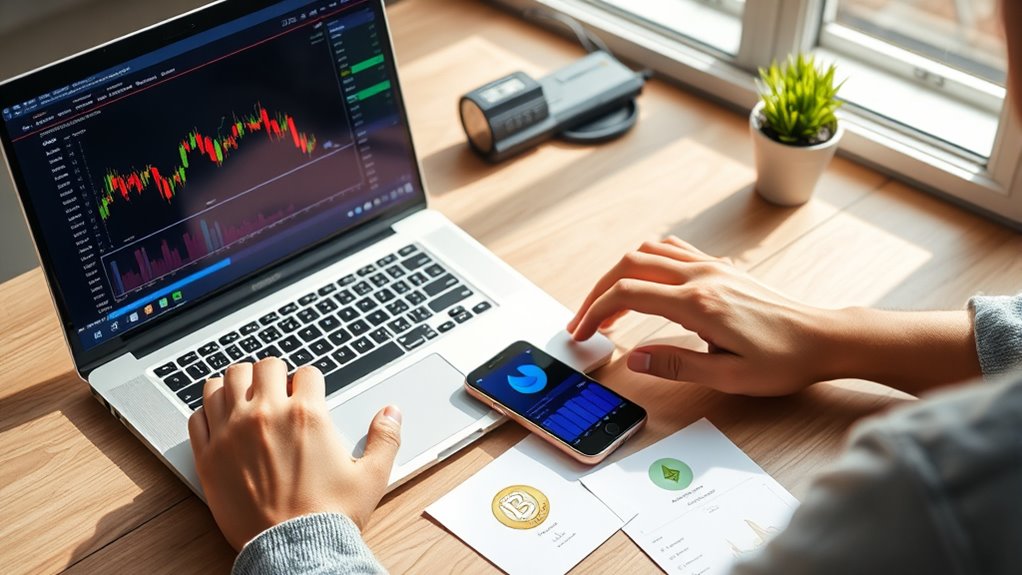
If you’re new to the world of digital money, buying your first cryptocurrency might seem intimidating at first. The landscape is full of unfamiliar terms, platforms, and security concerns, but once you understand the basics, you’ll see it’s more straightforward than it appears. Your first step is to choose a reliable cryptocurrency wallet. These wallets act as your digital bank account, securely storing your digital assets and giving you control over your private keys. There are different types of wallets—software wallets for easy access on your computer or phone, hardware wallets for enhanced security, and online wallets provided by exchanges. For beginners, a reputable software wallet often strikes the right balance between convenience and security.
Before you jump into buying, it’s essential to do some market analysis. This doesn’t mean obsessing over every price fluctuation, but understanding the overall trends and what factors influence the market. Look at different cryptocurrencies’ historical performance, recent news, and expert opinions to get a sense of which assets are potentially stable or promising. Cryptocurrency prices can be volatile, so having a grasp of market trends helps you make informed decisions and avoid impulsive buys. It’s also helpful to compare different exchanges, checking their transaction fees, security measures, and ease of use.
Understanding market trends and news helps you make informed, confident cryptocurrency decisions.
Once you’ve chosen your wallet and done some market analysis, you’ll need to pick an exchange to buy your cryptocurrency. Most beginner-friendly platforms include Coinbase, Binance, and Kraken, which offer user-friendly interfaces and multiple payment options. Set up your account by verifying your identity and linking your bank account or credit card. When funding your account, consider starting with a small amount that you’re willing to lose, especially as you’re just learning. After depositing funds, you can place a market order to buy your chosen cryptocurrency at the current price or set a limit order to buy at a specific price point.
After your purchase, transfer your crypto to your wallet for safekeeping, especially if you plan to hold long-term. Keeping your assets in an exchange wallet might be convenient for trading, but it’s less secure than storing them in your personal wallet. Remember, always keep your private keys and recovery phrases secure and private—sharing them or storing them online can lead to theft. As you gain experience, you’ll become more comfortable charting the market, analyzing trends, and managing your digital assets confidently. Starting with a cautious approach and thorough research sets a solid foundation for your crypto journey. Additionally, understanding the importance of color accuracy in projectors can help you create a more immersive viewing environment if you decide to incorporate visual displays into your setup.
Frequently Asked Questions
What Are the Safest Methods to Store My Cryptocurrency?
To keep your cryptocurrency safe, use cold storage methods like hardware wallets, which store your private keys offline. Hardware wallets are highly secure because they’re not connected to the internet, reducing hacking risks. Always buy hardware wallets from reputable brands and keep your recovery seed secure. Avoid keeping large amounts on exchanges or online wallets, as these are more vulnerable to cyberattacks. Cold storage is your best bet for long-term security.
How Do I Avoid Common Scams When Buying Crypto?
To avoid common scams when buying crypto, you should follow security tips like verifying the platform’s legitimacy and avoiding deals that seem too good to be true. Always use official websites, enable two-factor authentication, and beware of scam warnings such as pressure to act quickly or requests for private keys. Staying cautious and informed helps safeguard your investments from scams and ensures a safer buying experience.
What Are the Tax Implications of Cryptocurrency Investments?
You should know that cryptocurrency investments have tax implications, especially with tax reporting and capital gains. When you sell or trade crypto, you might owe taxes on profits, just like with stocks. Keep detailed records of your transactions to accurately report capital gains or losses. Failing to do so can lead to penalties. Staying informed about local tax laws helps you avoid surprises and guarantees you adhere to regulations.
How Do I Choose the Best Cryptocurrency Exchange?
You should choose a cryptocurrency exchange that complies with local cryptocurrency regulations and offers a user-friendly platform. Look for one with high trading volume, ensuring liquidity and better prices. Check their security measures to protect your funds and verify their reputation through reviews. Also, consider the range of cryptocurrencies available and fee structures. Picking an exchange that aligns with your trading goals helps you make informed, confident decisions.
Can I Buy Cryptocurrency With Cash or Only Digital Payments?
Did you know that around 20% of global transactions still involve cash? You can buy cryptocurrency with cash through physical wallets and in-person exchanges, making it accessible even if you prefer cash transactions. Some services allow you to convert cash into digital currency at local shops or ATMs. Just remember, using cash requires more steps and caution, but it’s a viable option if you don’t want digital payments.
Conclusion
Now that you’ve navigated the nuts and bolts of buying your first cryptocurrency, you’re ready to revel in the rewarding world of digital assets. Remember, research and patience are your best friends on this journey. With confidence and caution, you can confidently carve your path, creating a clear course through the crypto chaos. So, step forward securely, seize the spark of savvy, and start shaping your financial future with fearless foresight!