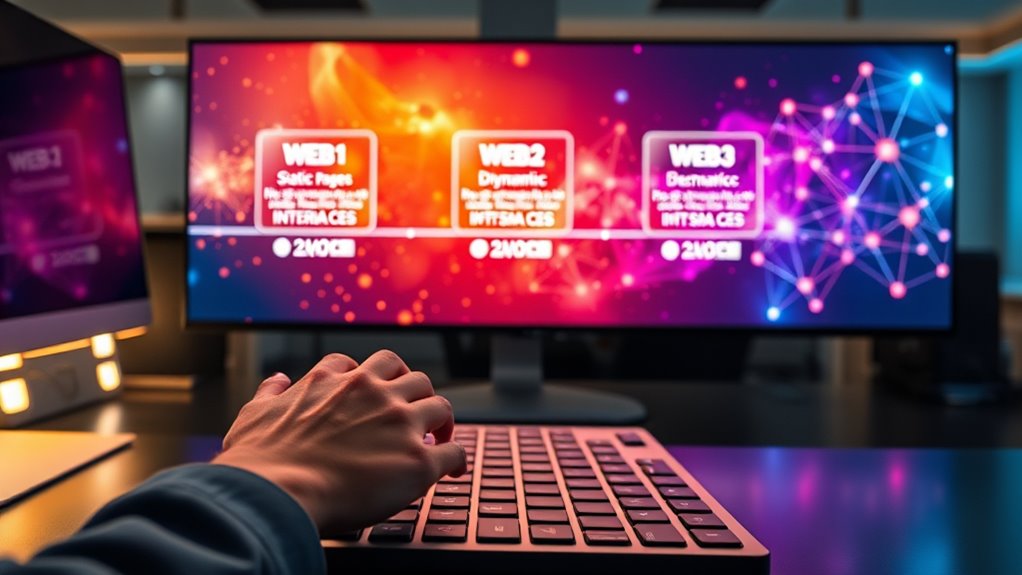

The internet started out as Web 1.0, with static pages that mostly provided info for passive viewers. Then came Web 2.0, which made sites interactive and social, letting users create content and connect worldwide. Now, Web 3.0 emphasizes decentralization and smarter, personalized experiences through blockchain technology. Each stage builds on the last, transforming how you share, communicate, and participate online. Keep exploring to discover how these changes shape your digital world.
Key Takeaways
- Web 1.0 featured static pages with limited interaction, mainly for information consumption by users.
- Web 2.0 introduced social media, enabling user participation, content sharing, and real-time collaboration.
- Web 2.0 tools transformed users from consumers to active content creators and community members.
- Web 3.0 emphasizes decentralization, blockchain, and personalized, intelligent online experiences.
- The internet’s evolution reflects a shift from static information to interactive and decentralized digital ecosystems.
Ever wondered how the internet transformed from a simple research project into the global network we rely on today? In its early days, the internet was mainly used by academics and scientists, but it quickly evolved into something much bigger. During the Web 1.0 era, the internet was mostly static. You browsed websites that rarely changed, and interaction was minimal. It was like flipping through pages in an online magazine. At this stage, most content was created by a few organizations, and users mainly consumed information. There wasn’t much room for interaction or user-generated content.
As the internet grew, Web 2.0 arrived, revolutionizing how you use online spaces. Now, social media platforms like Facebook, Twitter, and Instagram emerged, allowing you to connect with friends, share your thoughts, and collaborate with others. This era introduced dynamic websites and interactive content, making the internet more engaging and social. You could now comment on posts, upload videos, and participate in online communities. Cloud computing also became a game-changer during this period, enabling data storage and processing to shift from local devices to remote servers. This meant you could access your files from anywhere with an internet connection, making collaboration and data management much easier. The rise of social media further fueled the shift towards a more connected world, where you’re not just a passive viewer but an active participant. You could share moments instantly, curate your digital identity, and stay updated with real-time information. This interactive nature transformed the internet into a social space, where your voice could reach a global audience. The advancements in content creation tools during this era empowered users to produce and share their own content more effortlessly than ever before.
Moving into Web 3.0, the internet’s next phase, emphasizes decentralization, blockchain technology, and more intelligent, personalized experiences. But understanding Web 1.0 and 2.0 gives you a clear picture of how we’ve arrived here. The initial static pages laid the foundation, while the social media boom and advancements in cloud computing shaped a more participatory and connected environment. Today, you benefit from these developments as you browse, communicate, and share online. The internet now feels more like a living, breathing ecosystem—one that evolves constantly to serve your needs better. This journey from static pages to social media-driven platforms and cloud-powered services illustrates the rapid, transformative power of the internet in your daily life.
Frequently Asked Questions
How Will Web3 Impact Daily Online Privacy?
Web3 will considerably improve your online privacy by promoting decentralized identity and data sovereignty. You’ll have more control over your personal information, deciding what to share and with whom. This shift reduces reliance on centralized platforms, making it harder for third parties to track or misuse your data. As a result, your online interactions become more secure and private, empowering you to protect your digital footprint effectively.
What Are the Main Differences Between Web2 and Web3?
Web2 relies on centralized platforms where companies control data and user interactions. In contrast, Web3 emphasizes decentralization benefits, giving you more control over your data. You gain user sovereignty, meaning you manage your digital identity without relying on centralized authorities. This shift allows for more transparent, secure online experiences, empowering you to participate directly in digital ecosystems and reducing dependency on big tech corporations.
Will Web3 Replace Current Social Media Platforms?
Web3 could eventually replace current social media platforms, but it’s not guaranteed. You’ll likely see more decentralized social networks emphasizing user ownership, giving you control over your data and content. As Web3 grows, it may offer more transparency and privacy, transforming how you interact online. However, widespread adoption depends on user familiarity, platform stability, and how quickly developers can address challenges.
How Secure Is Blockchain Technology in Web3?
Blockchain technology in Web3 is quite secure, with over 80% of hacks targeted at centralized systems, highlighting decentralization benefits. While blockchain’s decentralized nature reduces single points of failure, vulnerabilities like smart contract bugs and 51% attacks still exist. You can enhance security by staying updated on protocol improvements and best practices. Overall, blockchain offers a robust foundation, but it is crucial to remain vigilant about potential vulnerabilities.
What Skills Are Needed to Develop Web3 Applications?
To develop Web3 applications, you need skills in decentralized coding and smart contract development. You should understand blockchain platforms like Ethereum and Solidity, which enable smart contract creation. Learning how to write secure, efficient code is essential, along with knowledge of decentralized storage and peer-to-peer networks. Additionally, familiarity with cryptography and understanding how to interact with blockchain APIs will help you build robust, innovative Web3 applications.
Conclusion
Just like a river flowing and constantly changing, the internet has evolved from Web1 to Web3, shaping how you connect, share, and grow. Each phase brought new opportunities and challenges, transforming the digital world into a dynamic space. As you explore this journey, remember that you’re part of its ongoing story—your actions help shape the future. Embrace the changes, and enjoy riding the waves of the internet’s exciting evolution.