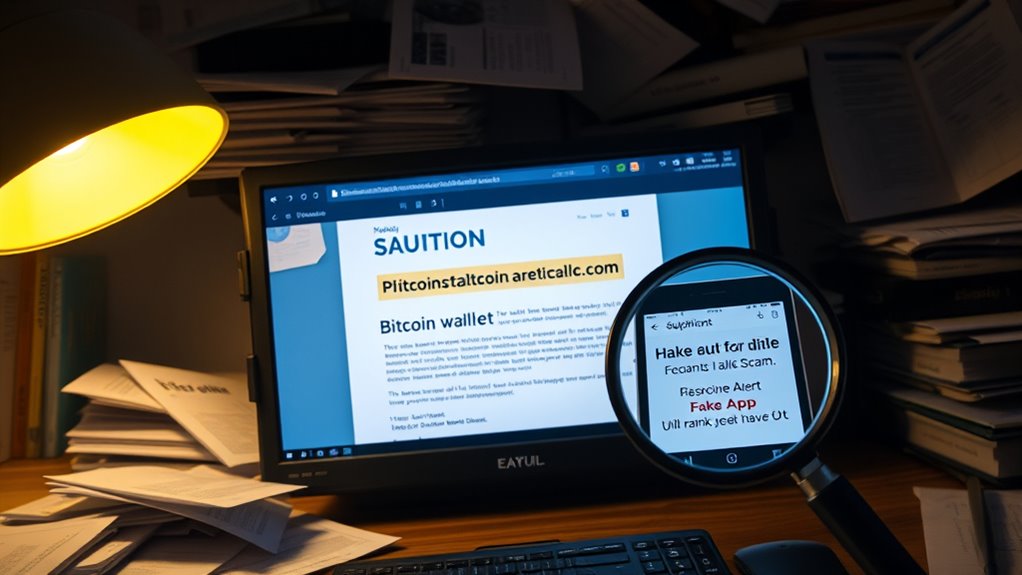

Be cautious of common Bitcoin scams like phishing emails, fake wallet apps, and Ponzi schemes. Always verify sender details, avoid clicking suspicious links, and only download wallet apps from official sources. Never share your private keys or seed phrases with anyone. Enable two-factor authentication and keep your software updated. Stay alert to false promises of high returns or urgent requests to verify accounts. Knowing these tactics helps protect your holdings—if you continue, you’ll discover more ways to stay secure.
Key Takeaways
- Verify sender authenticity and avoid clicking suspicious links to prevent phishing scams.
- Download wallet apps only from official sources and never share seed phrases or private keys.
- Be skeptical of fake giveaways and offers promising high returns with little risk.
- Enable two-factor authentication and use strong, unique passwords for added security.
- Stay informed about common scam tactics and always verify website and app legitimacy before sharing sensitive info.
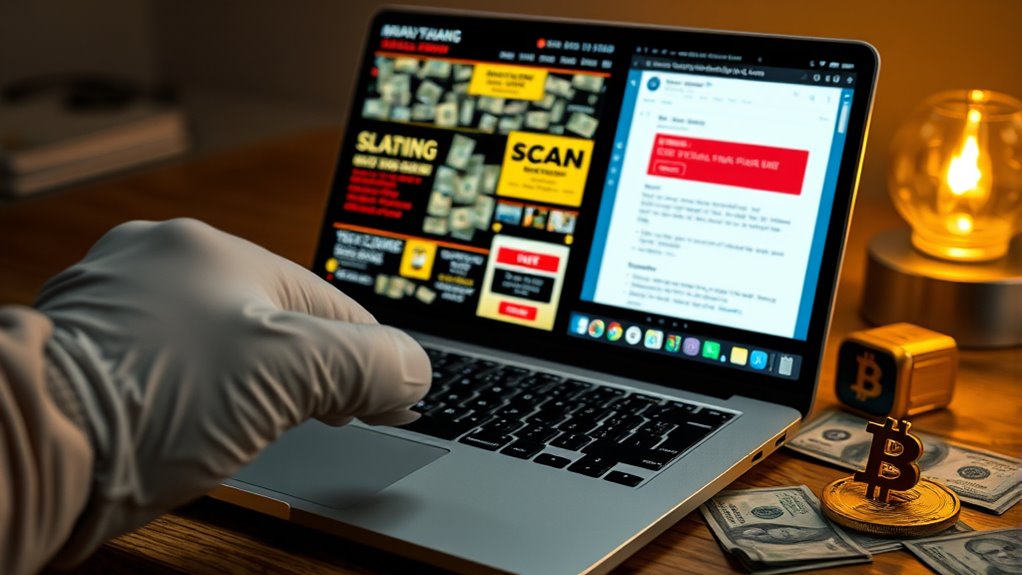
With the rise of Bitcoin’s popularity, scammers have become increasingly sophisticated in their tactics to steal your funds. One of the most common methods they use involves cryptocurrency phishing. You might receive emails or messages that look legitimate, prompting you to click on links or enter your private keys on fake websites designed to mimic genuine exchanges or wallets. These scams aim to trick you into revealing sensitive information, which scammers then use to access your Bitcoin holdings. Always verify the sender’s email address and avoid clicking on suspicious links. Remember, reputable companies will never ask for your private keys or passwords through email. Be cautious of urgent messages claiming you need to verify your account immediately, as this is a common phishing tactic.
Be cautious of phishing emails asking for private keys or urgent account verification.
Another prevalent scam involves fake wallet apps. Scammers develop counterfeit applications that appear identical to official Bitcoin wallet apps. They spread these through shady links, third-party app stores, or even malicious ads. When you download a fake wallet app, it might prompt you to enter your seed phrase or private keys, which scammers then steal and use to drain your actual Bitcoin wallet. To avoid falling for this, only download wallet apps from official app stores or the official websites of reputable providers. Always double-check the developer’s credentials and reviews before installing. If a wallet app asks for your seed phrase or private keys, this is a red flag—never share this information with anyone.
Phishing and fake wallet apps are just the tip of the iceberg. Scammers also use social engineering, fake giveaways, and Ponzi schemes to lure victims. They might promise high returns with little risk, but these are often scams designed to steal your funds. Always approach offers that sound too good to be true with skepticism. Use strong, unique passwords for your wallet and enable two-factor authentication whenever possible. Keep your software and wallet apps updated, as updates often include security patches that protect against new scams. Educating yourself about common Dog names and their characteristics can also help you recognize suspicious activity related to targeted scams.
Staying vigilant is your best defense. Never rush into transactions or share your private information online. Confirm the authenticity of websites and apps before providing any sensitive data. Educate yourself regularly about new scams and tactics scammers use to stay one step ahead. By taking these precautions, you markedly reduce your chances of falling victim to cryptocurrency phishing, fake wallet apps, and other scams targeting Bitcoin users. Remember, safeguarding your assets requires constant awareness and careful verification at every step.
Frequently Asked Questions
How Can I Verify a Bitcoin Wallet’s Legitimacy Before Sending Funds?
To verify a bitcoin wallet’s legitimacy before sending funds, start with a thorough wallet verification process. Check the wallet’s public address and confirm it matches official sources or trusted platforms. Conduct a legitimacy assessment by researching the wallet’s reputation, user reviews, and transaction history. Use reputable blockchain explorers to review past transactions. Never send funds to unverified or suspicious wallets, and always double-check details to protect your assets.
Are There Warning Signs of a Bitcoin Investment Scam?
Yes, there are warning signs of a Bitcoin investment scam. You should watch for red flags like promises of guaranteed high returns, pressure to invest quickly, and unprofessional websites. Scam indicators also include lack of transparency, suspicious contact methods, and vague details about the investment. Don’t ignore these signs—staying vigilant helps you avoid falling victim to scams. Trust your instincts and do thorough research before investing.
What Steps Should I Take if I Suspect I’ve Been Scammed?
If you suspect you’ve been scammed, act quickly by reporting the incident to authorities and your platform’s support team. Seek scam recovery options through professional services specializing in cryptocurrency fraud. Connect with victim support groups for guidance and emotional help. Keep detailed records of all transactions and communications. Taking these steps promptly can improve your chances of recovering funds and getting the support you need during this stressful situation.
Can Bitcoin Scams Affect My Personal Information Security?
Think of your personal information as a delicate web that scammers can unravel through Bitcoin scams. Phishing attacks, for instance, can steal your login details, putting you at risk of identity theft. Once scammers access your info, they can misuse it, causing serious harm. Staying vigilant and avoiding suspicious links helps protect your personal data, ensuring scammers don’t turn your digital web into a trap that compromises your security.
How Do I Report a Bitcoin Scam to Authorities?
You should report a Bitcoin scam to authorities by using official scam reporting tools like the FTC’s Complaint Assistant or local law enforcement websites. Follow their reporting procedures carefully, providing all relevant details such as transaction records and communication history. This helps authorities investigate effectively. Promptly reporting guarantees you contribute to stopping scammers and protect others from falling victim to similar schemes.
Conclusion
Stay vigilant because, surprisingly, over 70% of Bitcoin scams go unreported. By staying informed and cautious, you can protect your investments from common scams like phishing, Ponzi schemes, or fake exchanges. Always double-check URLs, avoid sharing private keys, and verify sources before making transactions. Remember, if something sounds too good to be true, it probably is. Protecting your crypto assets is your best defense against scammers—stay alert and keep your investments safe.