

Big Tech’s newest project focuses on transforming teachers into AI-savvy educators by providing extensive training and practical tools. They aim to equip you with skills to confidently incorporate AI into your classroom, from personalized learning to automation. These initiatives emphasize hands-on experience, ethical considerations, and fostering confidence to adapt to future innovations. If you keep exploring, you’ll discover how these programs could shape your teaching approach and boost student engagement.
Key Takeaways
- Big Tech is developing targeted training programs to help teachers become proficient in AI tools and concepts.
- These initiatives focus on hands-on workshops, online courses, and peer collaboration for practical learning.
- The projects emphasize ethical use, data privacy, and responsible AI integration into classroom practices.
- The goal is to shift teachers’ mindset from viewing AI as intimidating to seeing it as a vital educational resource.
- Overall, these efforts aim to foster continuous professional growth and prepare educators for future technological advancements.
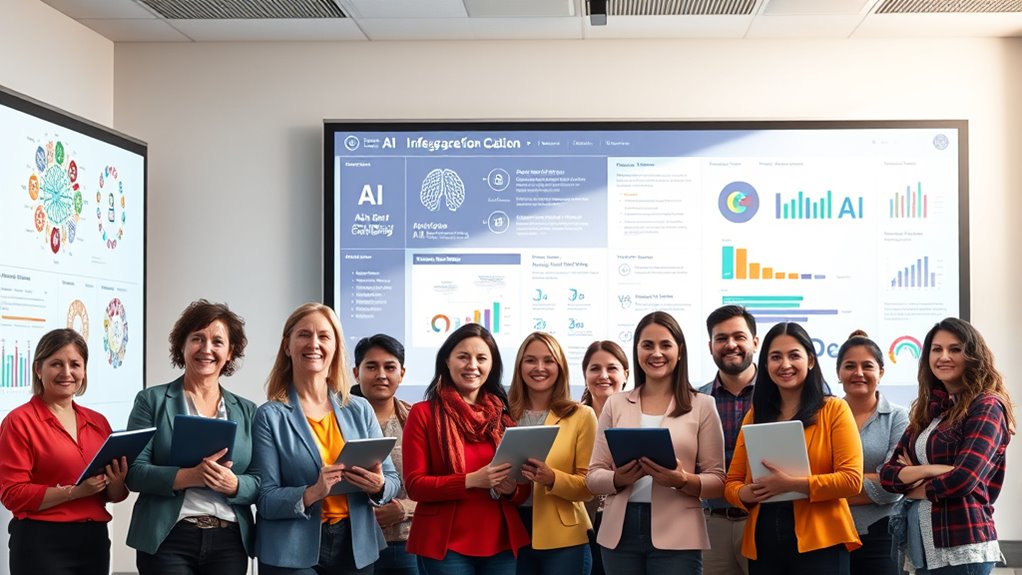
As Big Tech companies roll out their latest initiatives, they’re focusing on transforming teachers into AI-savvy educators. This shift aims to equip you with the skills necessary to navigate and utilize artificial intelligence effectively in the classroom. AI literacy is now considered a crucial component of modern teacher training, ensuring you can confidently integrate AI tools into your teaching practices. The goal is to make AI an aid rather than a hindrance, helping you personalize learning, automate administrative tasks, and foster critical thinking among students. To do this, tech giants are developing extensive training programs designed specifically for educators like you, emphasizing hands-on experience and practical application.
Big Tech is empowering teachers with AI literacy through practical, hands-on training to enhance classroom innovation and student success.
These initiatives recognize that many teachers may feel overwhelmed by the rapid pace of technological change. Hence, the focus is on providing accessible, targeted teacher training that demystifies AI concepts and demonstrates how they can be incorporated into everyday teaching. You’ll learn not only the technical aspects but also ethical considerations, data privacy, and ways to promote responsible AI use. The idea is to empower you to be proactive rather than reactive, transforming you into a confident user of AI tools. Teacher training sessions often include workshops, online courses, and peer collaboration, all aimed at building your AI literacy gradually and comfortably. This approach ensures you’re not just aware of AI but also capable of leveraging it to improve student engagement and learning outcomes.
Big Tech’s focus on AI literacy for teachers is also about fostering a mindset shift. You’ll move from viewing AI as an intimidating or distant technology to seeing it as an integral part of your teaching toolkit. As you become more familiar with AI applications, you can experiment with adaptive learning platforms, intelligent tutoring systems, and data-driven insights to tailor lessons to individual student needs. This not only enhances your effectiveness but also boosts student motivation and achievement. With ongoing updates and new tools, continuous professional development becomes essential, and these initiatives aim to embed AI literacy into your long-term growth as an educator. Additionally, understanding tent camping locations and how to choose sustainable sites can foster a deeper appreciation for the environments you might incorporate into outdoor learning experiences.
In the end, the success of this project depends on your willingness to embrace change and commit to ongoing learning. Big Tech’s investment in AI literacy and teacher training reflects a broader vision: to create an educational environment where technology supports your efforts, enriches your teaching, and ultimately benefits your students. As you develop your AI skills, you’ll find yourself better equipped to navigate the future of education, making your classroom more innovative, inclusive, and responsive to every learner’s needs.
Frequently Asked Questions
How Will This Project Impact Student Privacy?
This project could put student privacy at risk if data security isn’t prioritized. You might find that sensitive student information gets collected or shared without proper safeguards, leading to potential breaches. To protect student privacy, it’s essential that strict data security measures are in place, ensuring that personal data remains confidential. If these safeguards aren’t maintained, students’ privacy could be compromised, diminishing trust and raising ethical concerns.
What Specific AI Tools Will Teachers Learn to Use?
You’ll learn to use AI tools like adaptive learning platforms, chatbots for student support, and data analytics to enhance lesson planning. These tools help you personalize lessons, making them more engaging and tailored to individual student needs. As you master these AI applications, you’ll boost student engagement, streamline your teaching process, and create a more interactive classroom environment. This training empowers you to integrate AI seamlessly into your teaching practices.
Will There Be Ongoing Support for Teachers After Training?
Imagine a steady stream of support flowing like a gentle river, boosting your confidence as you navigate AI tools. Yes, ongoing support is planned to help you adapt your curriculum confidently, offering resources, workshops, and mentorship. This continuous guidance guarantees you stay current, troubleshoot challenges, and refine your skills, empowering you to integrate AI seamlessly into your teaching and inspire your students with innovative learning experiences.
How Will This Initiative Address Potential Biases in AI?
You’ll find that the initiative emphasizes algorithm fairness and bias mitigation to reduce AI biases. By training teachers to recognize and address potential biases, they can better evaluate AI tools and guarantee fair student treatment. Ongoing support will include resources and updates on bias mitigation strategies, helping you stay informed and confident. This proactive approach empowers you to create an equitable classroom environment, leveraging AI responsibly and ethically.
What Are the Long-Term Goals of Integrating AI in Classrooms?
Think of AI integration as planting seeds for a smarter future. Your goal is to foster AI literacy, empowering students to navigate technology confidently. Long-term, you aim to create classrooms where AI tools enhance personalized learning, critical thinking, and creativity. By integrating AI thoughtfully, you prepare learners to thrive in a digital world, ensuring they’re not just passive users but active innovators shaping tomorrow’s tech landscape.
Conclusion
As you step into this new era, think of yourself as a lighthouse guiding students through the digital storm. By becoming AI-savvy, you’re not just learning tools—you’re illuminating paths to knowledge, shaping future explorers. Embrace this transformation, for you’re forging a beacon of innovation in education’s vast ocean. With each lesson, you help navigate young minds toward brighter horizons, turning technology into a symbol of hope and endless discovery.