

Virtual reality (VR) immerses you in a digital environment using a headset with displays, sensors, and controllers, creating a fully immersive experience. Augmented reality (AR), on the other hand, overlays digital content onto your real-world view through smartphones, tablets, or glasses, adding interactive elements. Both technologies are becoming more accessible and user-friendly, making it easier to explore and enjoy immersive digital content. Keep exploring to discover how to make the most of these exciting digital worlds.
Key Takeaways
- Virtual Reality (VR) creates fully immersive digital environments using headsets with displays and sensors.
- Augmented Reality (AR) overlays digital content onto real-world views via smartphones or AR glasses.
- VR hardware includes headsets, motion tracking, and controllers for interaction and realism.
- AR is widely accessible through smartphones, enhancing real surroundings with interactive information.
- Both VR and AR are becoming more user-friendly, offering beginner-friendly apps and experiences to explore digital content.
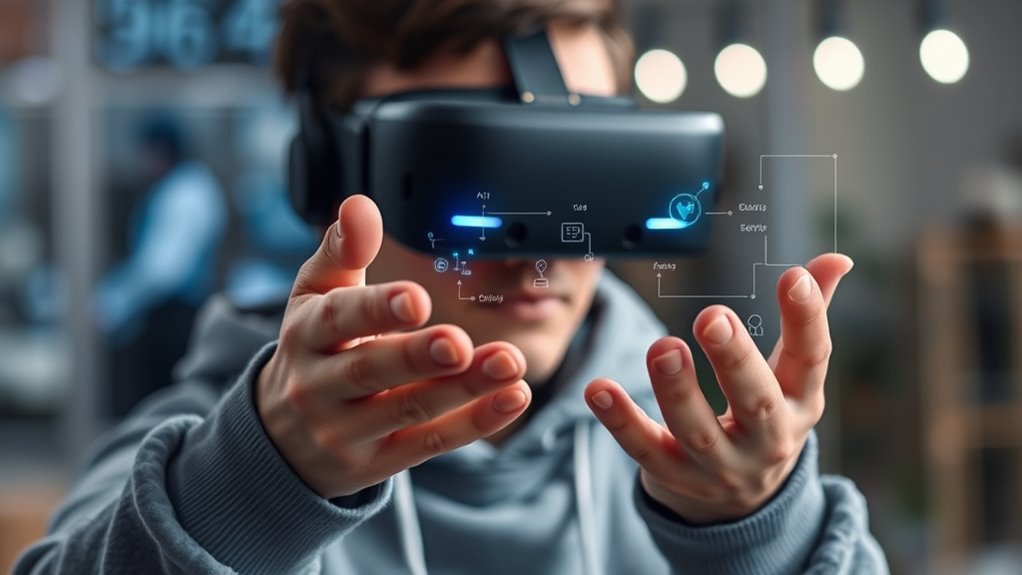
Curious about how virtual reality (VR) and augmented reality (AR) are transforming the way we experience digital content? You’re not alone. These technologies are rapidly evolving and changing everything from gaming and entertainment to education and business. At the core of this shift are the different VR hardware options and AR applications that bring digital content into your real-world environment. Understanding these basics helps you grasp how immersive experiences are created and how you can start exploring them yourself.
VR hardware is essential for plunging into virtual worlds. Typically, it involves a headset equipped with a display, sensors, and controllers that track your movements. These headsets create a fully immersive environment, blocking out your physical surroundings and replacing them with a digital universe. Some popular VR hardware options include Oculus Quest, HTC Vive, and PlayStation VR. Each offers different features, but all aim to deliver a seamless experience where you can look around, interact, and feel present in the virtual space. High-quality VR hardware often includes motion tracking, haptic feedback, and ergonomic designs to keep you comfortable during extended sessions. As a beginner, you’ll want to take into account your budget, space, and intended use when choosing your VR hardware.
VR headsets like Oculus Quest, HTC Vive, and PlayStation VR create immersive digital worlds with motion tracking and comfort features.
On the other hand, AR applications overlay digital content onto your real-world view through devices like smartphones, tablets, or specialized glasses. Unlike VR, which transports you to a completely different environment, AR enhances your current surroundings with relevant information or interactive elements. For example, AR applications can help you try on virtual clothes, visualize furniture in your room, or access real-time translations while traveling. Many AR apps are accessible via smartphones, making them easy to experiment with without additional hardware. Augmented reality is also integrated into enterprise tools for training, maintenance, and design, making it a versatile technology with broad applications. You don’t need a dedicated headset for most AR experiences; your device’s camera and screen are often enough to get started.
Both VR hardware and AR applications are constantly advancing, making these technologies more accessible and user-friendly. As a beginner, you should start with the basics—try out some free AR apps on your phone or consider a standalone VR headset that doesn’t require a powerful PC or console. This way, you’ll get a feel for how immersive and engaging digital content can be. Additionally, understanding the role of hardware in creating realistic and comfortable experiences is essential as you explore further. Whether you’re exploring virtual worlds or blending digital elements into your everyday environment, understanding the fundamentals of VR hardware and AR applications empowers you to plunge into these exciting, evolving experiences confidently.
Frequently Asked Questions
How Does Virtual Reality Differ From Augmented Reality?
Virtual reality creates fully immersive experiences by replacing your surroundings with a simulated environment, making you feel like you’re really there. Augmented reality, on the other hand, overlays digital elements onto your real-world view through devices like smartphones or glasses. You experience seamless technology integration in AR while still interacting with your actual environment. VR immerses you completely, whereas AR enhances reality without disconnecting you from it.
What Are the Best Devices for Beginners?
Imagine stepping into a new world—it’s that exciting! For beginners, the best devices are affordable options like the Oculus Quest 2 or the HTC Vive Focus, which serve as excellent entry-level headsets. These devices are easy to set up, budget-friendly, and provide immersive experiences. You won’t need to break the bank to plunge into VR, making them perfect for exploring virtual worlds without overwhelming complexity.
Is VR Safe for Long-Term Use?
VR is generally safe for long-term use if you take proper precautions. While some health concerns and potential long-term effects, like eye strain or dizziness, exist, regular breaks and correct device fit can minimize risks. You should listen to your body and limit extended sessions. If you experience discomfort or vision issues, it’s best to consult a healthcare professional. Staying mindful of these factors helps promote a safer, enjoyable VR experience.
Can VR and AR Be Used for Education?
Yes, VR and AR are great for education. You can engage in immersive storytelling and explore virtual classrooms that make learning more interactive and fun. These technologies allow you to visualize complex concepts, participate in realistic simulations, and collaborate with others in a virtual space. As a result, you stay motivated, retain information better, and experience a more dynamic learning environment that enhances your educational journey.
What ARe the Costs Associated With Starting VR and AR?
The costs for starting VR and AR depend on your goals, but a thorough cost analysis helps you plan your budget effectively. You’ll need to take into account hardware like headsets and controllers, software development, and ongoing maintenance. Entry-level setups can be affordable, but advanced projects may require significant investment. By doing careful budget planning, you can identify necessary expenses and allocate resources wisely to ensure your VR and AR initiatives succeed without overspending.
Conclusion
Now that you’ve unsealed the basics of virtual reality and AR, you’re ready to step into these exciting worlds. Think of it as opening a door to endless adventures—each experience more immersive than the last. With a little curiosity and some practice, you’ll soon navigate these digital landscapes with confidence. Remember, the journey is just beginning, and every new discovery is like adding a new star to your digital sky. Happy exploring!