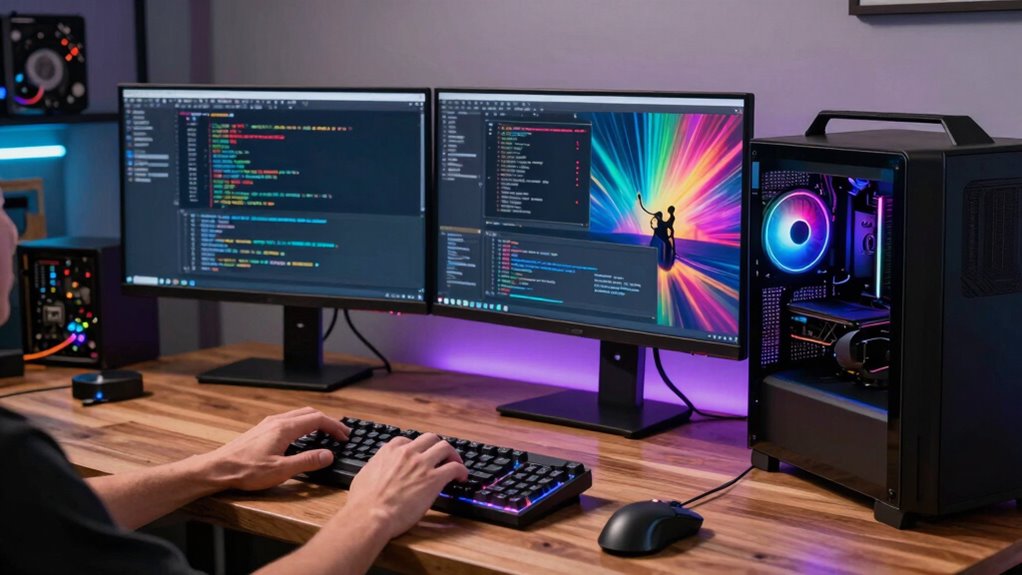

An AI-curious PC is built for experimentation with high-end GPUs and complex simulations, often requiring advanced hardware and technical skills. A truly useful PC prioritizes reliability, ease of use, and everyday tasks, focusing on user-friendly interfaces and simple upgrades. While the AI-focused system supports cutting-edge research, the practical PC is tailored for productivity and long-term versatility. To understand how these approaches differ and which suits your needs best, explore the details ahead.

Get hardware and tech essentials delivered free with Prime
- Fast, free delivery on millions of items
- Prime Video, Amazon Music and more included
- Member-only deals all year
Key Takeaways
- AI-curious PCs prioritize high-end hardware for experimentation, while useful PCs focus on balanced, reliable components for daily tasks.
- AI systems often have complex, developer-centric interfaces; useful PCs emphasize simple, user-friendly interfaces.
- Hardware upgrades in AI PCs aim for maximum performance and experimentation, whereas useful PCs prioritize compatibility and longevity for routine use.
- AI-focused setups may require manual tweaks and technical knowledge; useful PCs are designed for straightforward operation.
- The primary distinction lies in serving experimental AI exploration versus supporting reliable, everyday productivity.
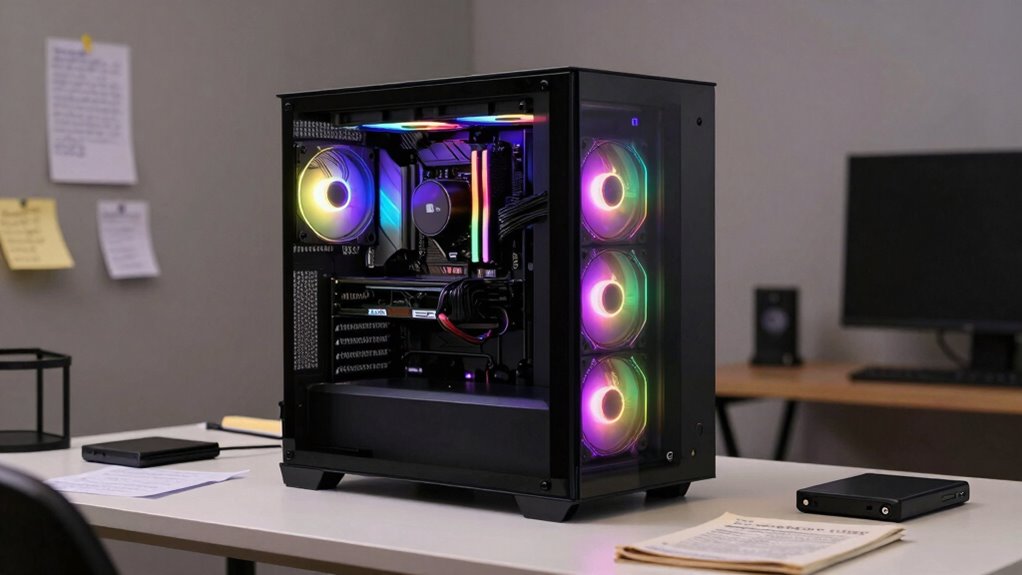
In today’s tech landscape, you often face a choice between a PC designed to satisfy your curiosity about artificial intelligence and one built for practical, everyday use. An AI-curious PC typically boasts cutting-edge hardware upgrades—powerful GPUs, ample RAM, and advanced processors—that enable you to experiment with machine learning models or run complex simulations. These machines are often tailored for exploration, featuring high-end components that can handle intensive computational tasks, but they might fall short when it comes to user-friendly design or everyday functionality. On the other hand, a truly useful PC focuses on delivering a seamless user interface, making daily tasks straightforward and efficient. It strikes a balance between performance and usability, ensuring that you don’t have to be a tech expert to operate it comfortably.
The key difference lies in their intent. An AI-curious PC is optimized for experimentation, often requiring you to manually tweak hardware settings or navigate complex software environments. Its user interface might lean towards technical or developer-centric tools, which can be intimidating if you’re not deeply familiar with AI workflows. Conversely, a useful PC emphasizes an intuitive user interface—simple, clean, and accessible—so you can focus on your tasks rather than grappling with the system itself. Hardware upgrades on a useful PC are carefully selected to support daily productivity, rather than pushing the limits of machine learning capabilities. It’s about creating a system that’s reliable, fast, and easy to operate, rather than one that’s solely designed for AI experimentation. Additionally, hardware flexibility plays a crucial role in determining how adaptable a PC is for future needs and upgrades. When considering a PC, understanding the importance of upgradability can help ensure your system remains relevant and adaptable over time. Moreover, a focus on user-centric design ensures that even with hardware upgrades, the overall user experience remains straightforward and accessible. A well-designed software interface can significantly reduce the learning curve, making everyday tasks more intuitive.
A truly useful PC also benefits from software simplicity, which minimizes unnecessary complexity and enhances overall productivity. If you’re looking for a machine that can be both a playground for AI projects and a dependable workhorse, you’ll need to consider how flexible its hardware upgrades are and how user-friendly its interface remains after those upgrades. An AI-curious PC might offer the latest GPU technology but could be less optimized for routine tasks, leading to a steeper learning curve. A truly useful PC, however, prioritizes an adaptable user interface that minimizes complexity and maximizes productivity, even if it doesn’t have the absolute latest hardware. Ultimately, what separates these two types of PCs is not just their hardware, but how they serve your needs—whether you’re exploring AI or simply aiming for a reliable, everyday companion.
high-end gaming PC with powerful GPU
As an affiliate, we earn on qualifying purchases.
As an affiliate, we earn on qualifying purchases.
Frequently Asked Questions
Can an Ai-Curious PC Handle High-End Gaming?
An AI-curious PC can handle high-end gaming if it features solid hardware compatibility and supports AI integration. While it’s not specifically designed for gaming, a powerful GPU, ample RAM, and a fast CPU ensure smooth gameplay. AI features might enhance performance or graphics, but for top-tier gaming, focus on hardware upgrades. An AI-curious PC can be quite capable, but its true gaming potential hinges on the components you select.
What Software Enhances AI Curiosity in a PC?
Think of software that enhances AI curiosity as your compass, guiding your PC through uncharted digital waters. You’ll want tools that improve hardware compatibility, like AI frameworks and APIs, and user interface enhancements that make exploration intuitive. Platforms like TensorFlow or PyTorch, combined with user-friendly dashboards, release your PC’s potential for learning and discovery. These programs turn curiosity into capability, transforming your machine into a true AI explorer.
Is an Ai-Curious PC Suitable for Professional Work?
An AI-curious PC can be suitable for professional work if it offers strong AI integration and hardware compatibility. You’ll want a machine with a powerful processor, ample RAM, and compatible GPUs to handle AI applications efficiently. While it can boost productivity, verify the system supports the software you rely on. If your tasks involve AI development or data analysis, an AI-curious PC can be a valuable tool, provided it meets your professional needs.
How Much Does Upgrading Improve AI Capabilities?
Upgrading your PC can substantially boost AI capabilities, but hardware compatibility is vital; guarantee new components like GPUs or CPUs integrate smoothly. Expect improved processing speed, enabling faster AI tasks. However, consider power consumption, as more powerful hardware often uses more energy. The right upgrades make your system more efficient for AI work, but balancing performance with energy use is essential for long-term benefits.
Do Ai-Curious PCS Require Special Maintenance?
AI-curious PCs don’t require special maintenance, but you should regularly check hardware compatibility and cooling requirements. Make sure your system’s hardware stays compatible with the latest AI software updates and upgrade components as needed. Keep cooling systems clean and functioning well to prevent overheating, especially during intensive AI tasks. Routine maintenance like dusting, updating drivers, and monitoring temperatures helps keep your AI-focused PC running smoothly and efficiently.
user-friendly desktop computer for productivity
As an affiliate, we earn on qualifying purchases.
As an affiliate, we earn on qualifying purchases.
Conclusion
To truly transform your PC from AI-curious to undeniably useful, focus on fostering functionality over fascination. Embrace essential enhancements, streamline your setup, and fine-tune features to fit your needs. Don’t just dabble in digital dreams—drive your device to deliver dependable, dynamic results. With deliberate dedication and determined decision-making, you’ll develop a powerful partner that not only piques your interest but also practically propels your productivity. Make your machine meaningful, and watch your work and wonder weave seamlessly together.
upgradeable desktop PC for everyday use
As an affiliate, we earn on qualifying purchases.
As an affiliate, we earn on qualifying purchases.
As an affiliate, we earn on qualifying purchases.
Halloween Picks
halloween
As an affiliate, we earn on qualifying purchases.